Which AI Stock Screener Is Best for Finding Undervalued Growth Stocks to Buy?
Reviewed by Jay Rocco, Chief Editor
AI Stock Screener for Undervalued Stocks: Cheap and Still Growing
Read the transcript
Cheap is easy to find. Cheap and still growing is the hard part.
So, what's the best AI stock screener for undervalued stocks? Stock Rover for most investors, thanks to its sector-relative valuation percentiles and seven-metric GARP framework. Danelfin is the pick for traders who want AI performance forecasts layered on top of valuation filters. Both beat generic screeners because they look at cheapness and growth together.
What does a GARP screener do? GARP means growth at a reasonable price. It finds companies growing earnings and sales that still trade at a fair valuation.
This guide covers the best screeners for the job, the filters to start with, how to avoid value traps, and a free GARP filter builder you can copy.
My five favorite features.
One. Stock Rover's seven core metrics: forward P/E, PEG, price-to-sales, EPS growth, sales growth, debt-to-equity and ROE.
Two. Danelfin's dedicated AI Stock Screener, launched October 28, 2026, with more than 80 filters across valuation, profitability, technicals, sentiment and AI forecasts.
Three. Danelfin's natural-language assistant in 9 languages, with 10 free questions a month.
Four. Amsflow Screener 2.0, shipped November 4, 2026, with more than 830 metrics and 1,390 filters across 11 global markets.
Five. The free GARP Filter Builder on this page: set your thresholds and copy a ready-to-paste screen.
How to pick: start with a PEG under 1.0, a forward P/E under 20, and revenue growth over 15 percent. Add the other forty filters only after those three are working.
What to watch out for. No screener can tell you why a stock is cheap. A value trap looks cheap and stays cheap, or gets cheaper, because the market has priced in a problem your screen can't see. A low P/E with falling revenue isn't a bargain. It's a business in decline with a discount sticker.
The best value is often hiding under the business everyone's looking at. ... "You don't build an empire off a 1.4 percent cut of a 15-cent hamburger." ... The Founder. Look past the burger. Find what's actually worth something.
Investopedia's November 2026 review tested 13 screeners against 25 criteria and named Stock Rover best for buy-and-hold investors.
One move for tonight. Build the three-filter GARP screen, then read the last two earnings reports for your top five results. Cut any company whose revenue is shrinking. The full screener ranking sits right below this player. Prices change, so check it for current numbers.
This is education, not financial advice. Your market edge starts with the right tool. Stay alpha.
Quick Answer: The best ai stock screener for undervalued stocks in 2026 is Stock Rover for most investors, thanks to its sector-relative valuation percentiles and seven-metric GARP framework, with Danelfin as the strongest pick for traders who want AI performance forecasts layered on top of valuation filters. Both beat generic screeners because they combine cheapness and growth instead of treating them as separate searches.
Most screeners answer one question. Is this stock cheap, or is this stock growing? The honest problem is that you need both, at the same time, and almost nothing is built to show you that overlap clean.
Key Takeaways
- Stock Rover's screening engine ranks companies against 7 core metrics, forward P/E, PEG, price-to-sales, EPS growth, sales growth, debt-to-equity, and ROE, to separate real value from statistical noise.
- Danelfin launched a dedicated AI Stock Screener on October 28, 2026, covering more than 80 filters across valuation, profitability, technicals, sentiment, and AI performance forecasts.
- Investopedia's November 2026 review tested 13 screeners against 25 criteria and named Stock Rover best for buy-and-hold investors, Finviz best for swing traders, and
TradingView best free and global option.
- Amsflow Screener 2.0, shipped November 4, 2026, added over 830 metrics and 1,390 filters, plus natural-language screen building across 11 global markets.
- Danelfin's natural-language assistant runs in 9 languages and caps free users at 10 monthly questions, while Plus, Pro, and Elite tiers get unlimited questions within plan limits.
- A PEG ratio under 1.0 is the textbook threshold value investors use to flag a stock that may be underpriced relative to its growth rate.
What Is the Best AI Stock Screener for Undervalued Stocks?
Here's the uncomfortable truth: there isn't one universal winner, and anyone telling you otherwise is selling something. The best ai stock screener for undervalued stocks depends on whether you're a buy-and-hold investor, a swing trader, or someone who wants AI doing the heavy lifting on forecasts.
Investopedia's late-2026 teardown ran 13 screeners through 25 criteria and landed on different winners for different jobs: Stock Rover for buy-and-hold investors, 
For the specific job of hunting undervalued growth, the GARP style, Growth At a Reasonable Price, the field narrows fast. You need valuation depth (forward P/E, PEG, price-to-sales), growth data (EPS and sales growth), and ideally an AI layer that scores quality or forecasts near-term performance instead of just sorting a spreadsheet. That combination is rare. Most screeners nail one side and phone in the other.
Below is a side-by-side look at the seven tools worth your time, followed by a full breakdown of each.
| Tool | Valuation Metrics | AI Features | Price | Best For |
|---|---|---|---|---|
 Stock Rover | P/E, PEG, P/S, sector percentiles | Warren Buffett & growth scoring models | Free to $49/mo billed annually | Buy-and-hold value investors |
 Danelfin | 80+ filters incl. valuation | AI Score, 1-12mo forecasts, NL screener | Free to $80/mo billed annually | Growth-plus-timing traders |
 Seeking Alpha Quant | Quant valuation grade | Factor-grade scoring (A-F) | $299/yr Premium | Fundamentals-first readers |
 Koyfin | P/E, EV/EBITDA, comps | AI chart and dashboard builder | Free to $79/mo | Chart-heavy comparative research |
 Simply Wall St | DCF-based fair value | Visual snowflake score | Free; paid plans shown at checkout | Visual, beginner-friendly research |
 FAST Graphs | Normalized P/E vs earnings line | Minimal, chart-led | $15.95-$40/mo billed annually | Earnings-line value purists |
 Finviz Elite | 60+ fundamental filters | Basic pattern recognition | $39.50/mo | Fast, bare-metal screening |
Hunting for a lower price? Check our AI stock tool deals page.
The 7 Best AI Stock Screeners for Undervalued Growth Stocks
1. Stock Rover
As an ai stock screener for undervalued stocks, Stock Rover is the deepest tool on this list. Stock Rover is the tool we'd hand a new value investor on day one, and that's not a hedge. Our editor has run accounts on both Stock Rover and
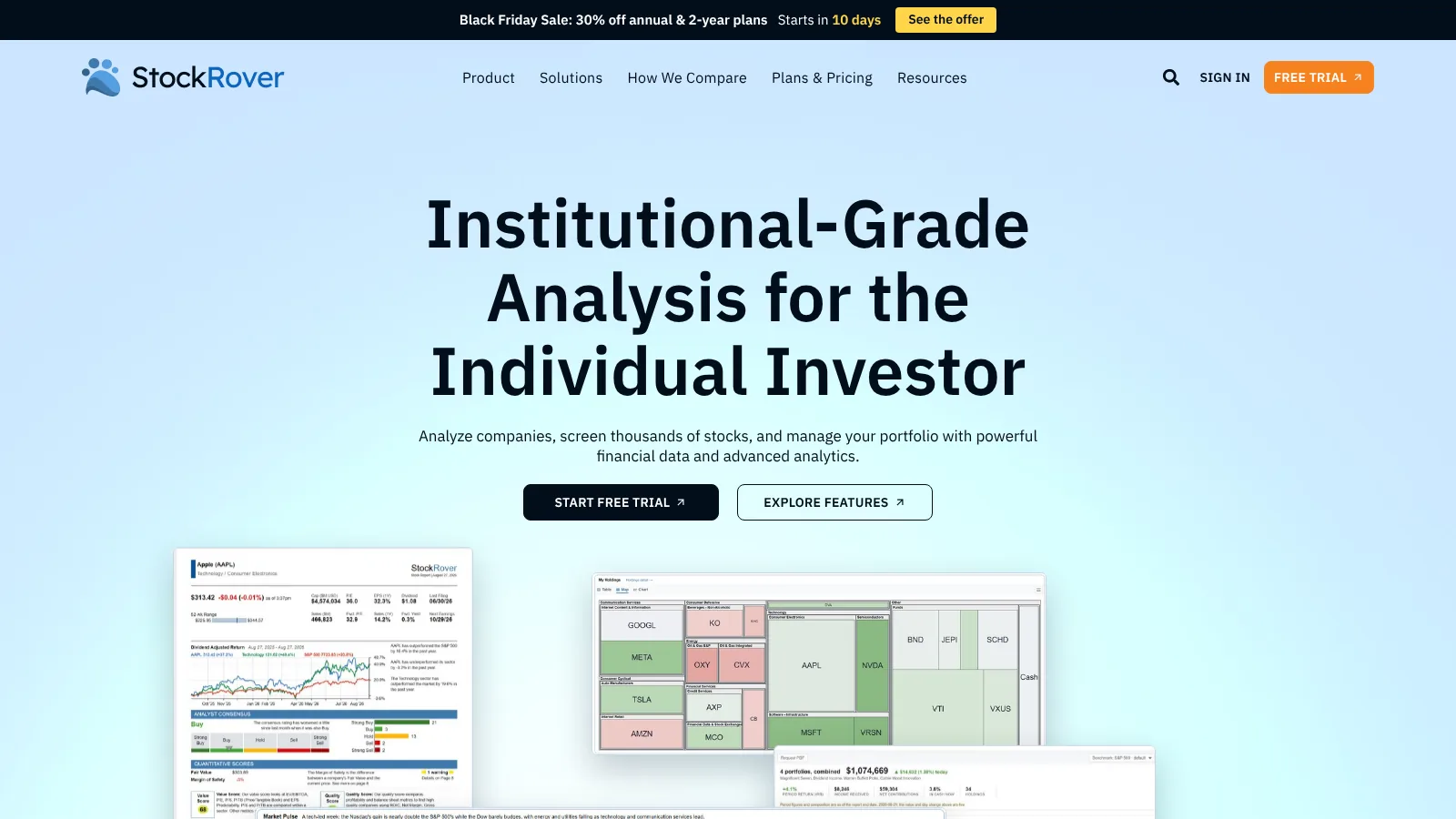
Top 5 features: sector-relative percentile rankings, pre-built Warren Buffett and growth-investor screens, custom formula builder, portfolio correlation and diversification tools, research reports that pull directly from screen results.
Who it fits: investors building a watchlist for weeks or months, not day traders hunting intraday breakouts.
One real drawback: the free tier is thin on historical data depth. You'll want a paid plan to get the full sector-percentile engine, and that's a real cost barrier for someone just starting out. Read the full Stock Rover review for the pricing breakdown, or see how it stacks up directly against the other editor favorite in this Koyfin vs Stock Rover comparison.
2. Danelfin
Danelfin is the newest ai stock screener for undervalued stocks worth a test. Danelfin shipped a dedicated AI Stock Screener on October 28, 2026, and it's the newest real contender on this list. You type a plain-language request, companies with more than 20% sales growth, market cap above $100 billion, AI Score of 8 or higher, and it builds the screen for you.
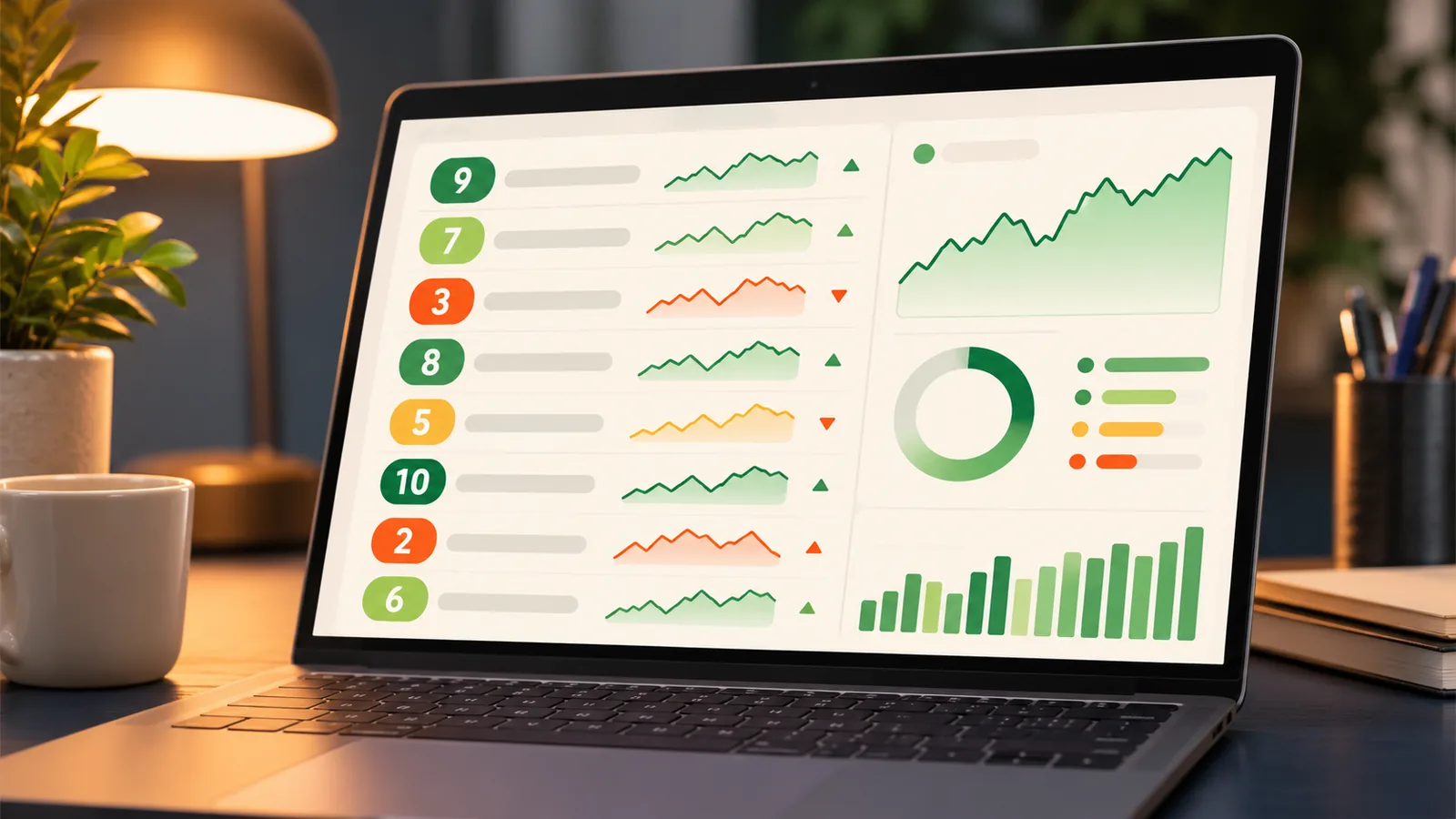
Top 5 features: 80+ combinable filters spanning valuation, profitability, technicals, and sentiment; AI Score (1-10) ranking predictive strength; performance forecasts across 1, 3, 6, and 12 months; natural-language screen builder in beta; portfolio creation directly from screen results, pending user confirmation.
Who it fits: traders who want valuation filters paired with a probabilistic signal on near-term direction, not just a static snapshot.
One real drawback: the natural-language assistant is still in beta, and Danelfin itself tells users to verify which filters got applied before trusting the output. Free users are capped at 10 monthly questions, so heavy screening sessions push you toward a paid tier fast.
3. Seeking Alpha Quant
Seeking Alpha Quant works as an ai stock screener for undervalued stocks through its valuation grade.
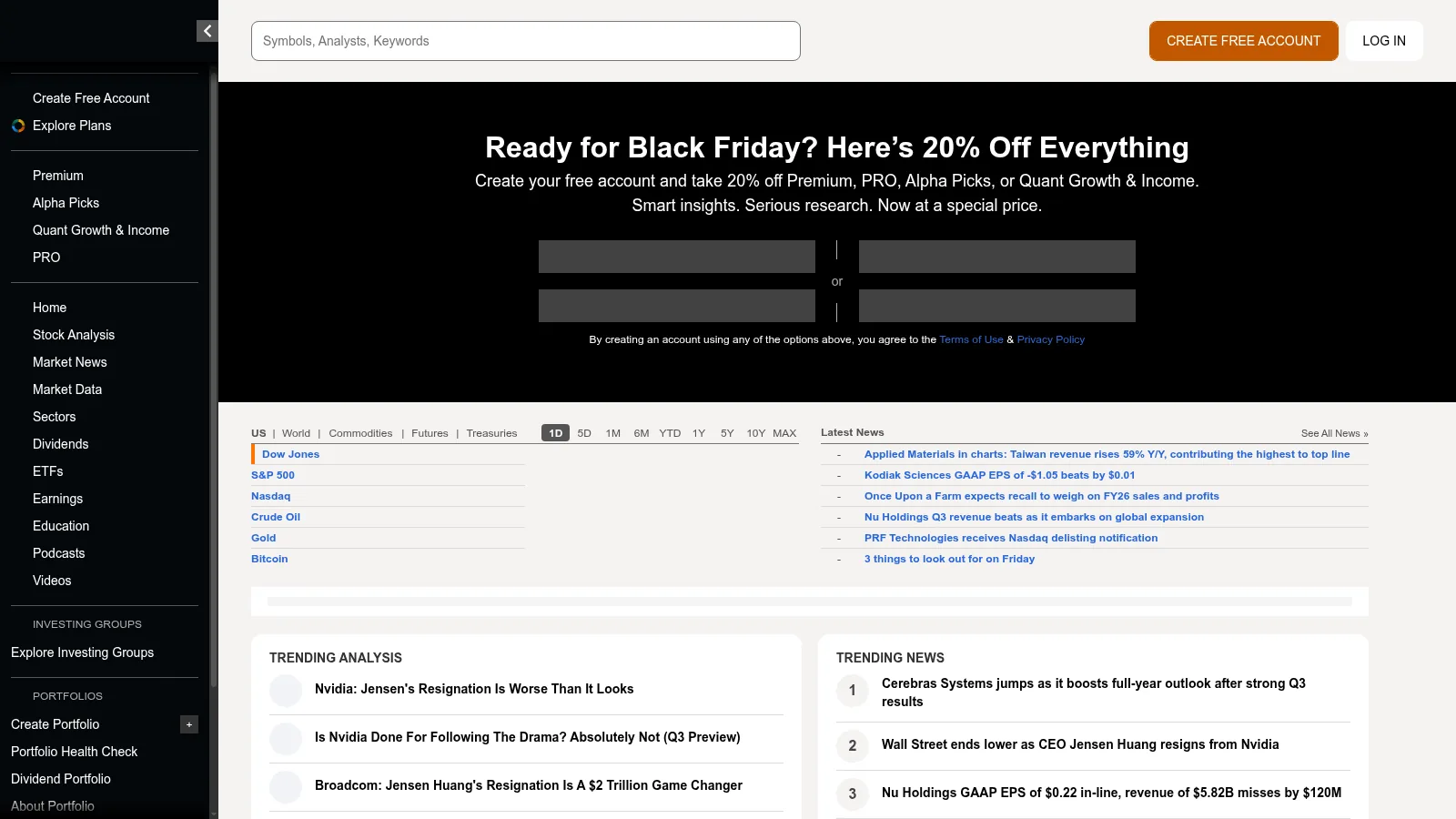
Top 5 features: letter-grade factor scoring, author sentiment overlay from Seeking Alpha's contributor network, earnings revision tracking, sector comparison tools, Alpha Picks model portfolio for reference.
Who it fits: readers who want a quick A/F snapshot before doing their own deeper dig, not a from-scratch filter builder.
One real drawback: the Quant grade is a black box in how factors get weighted. You see the letter, not the full math behind it, which cuts against the transparency a serious screener should offer.
4. Koyfin
Koyfin is the ai stock screener for undervalued stocks when you need comparisons, not lists. Koyfin is the other tool our editor has personally run, and it earns its spot here for comparative research, not pure screening depth. Build a dashboard, drop ten comparable companies on it, and watch valuation multiples update live.
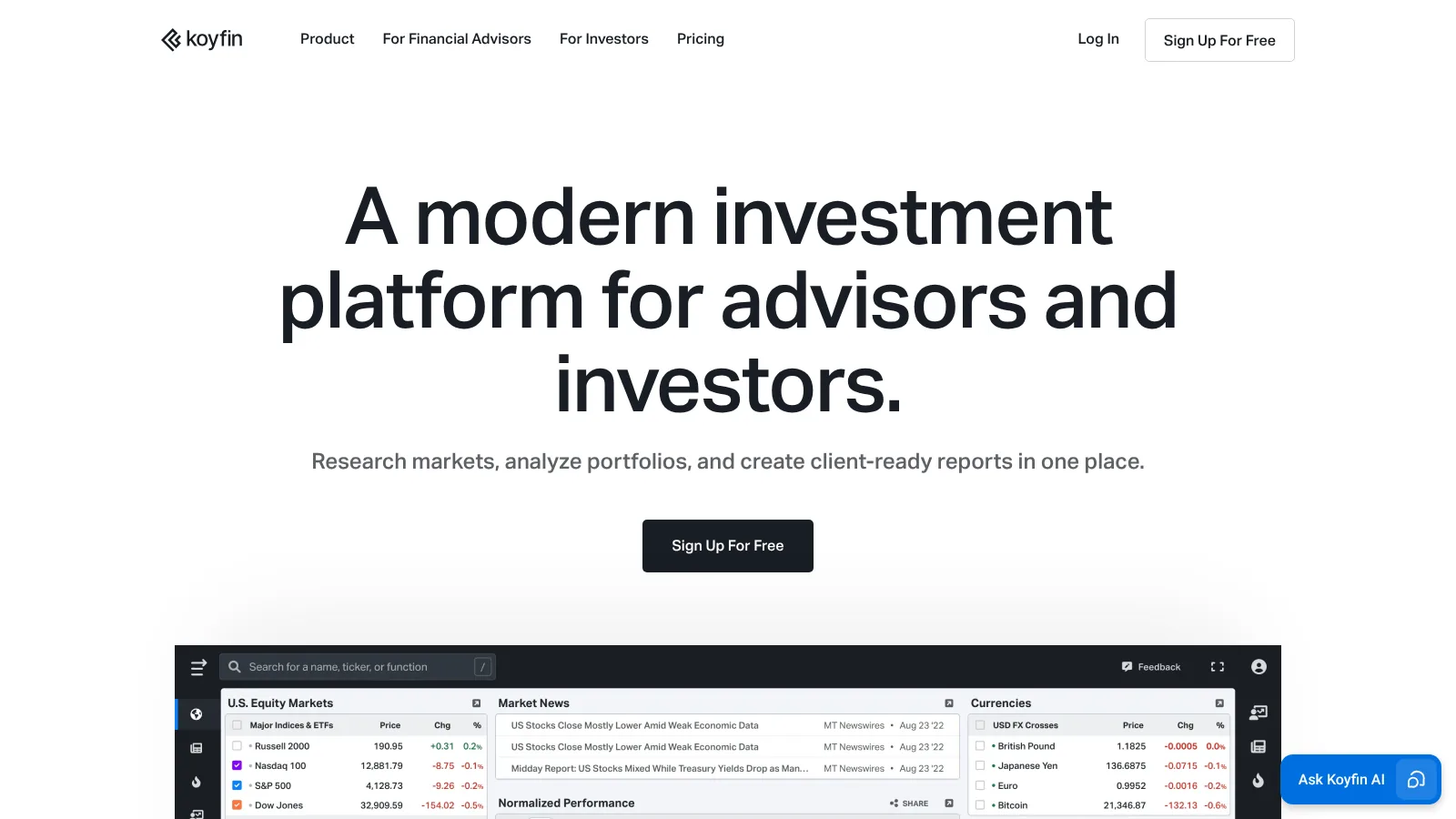
Top 5 features: side-by-side comp tables, custom dashboard builder, AI-assisted chart annotation, macro and sector overlay data, export-ready visuals for your own notes.
Who it fits: investors who think in comparisons, this stock versus its five closest peers, rather than a single universal filter.
One real drawback: Koyfin's native screener is shallower than Stock Rover's. You'll often build the comp list manually before Koyfin's charting tools do their job.
5. Simply Wall St
Simply Wall St is the most visual ai stock screener for undervalued stocks.
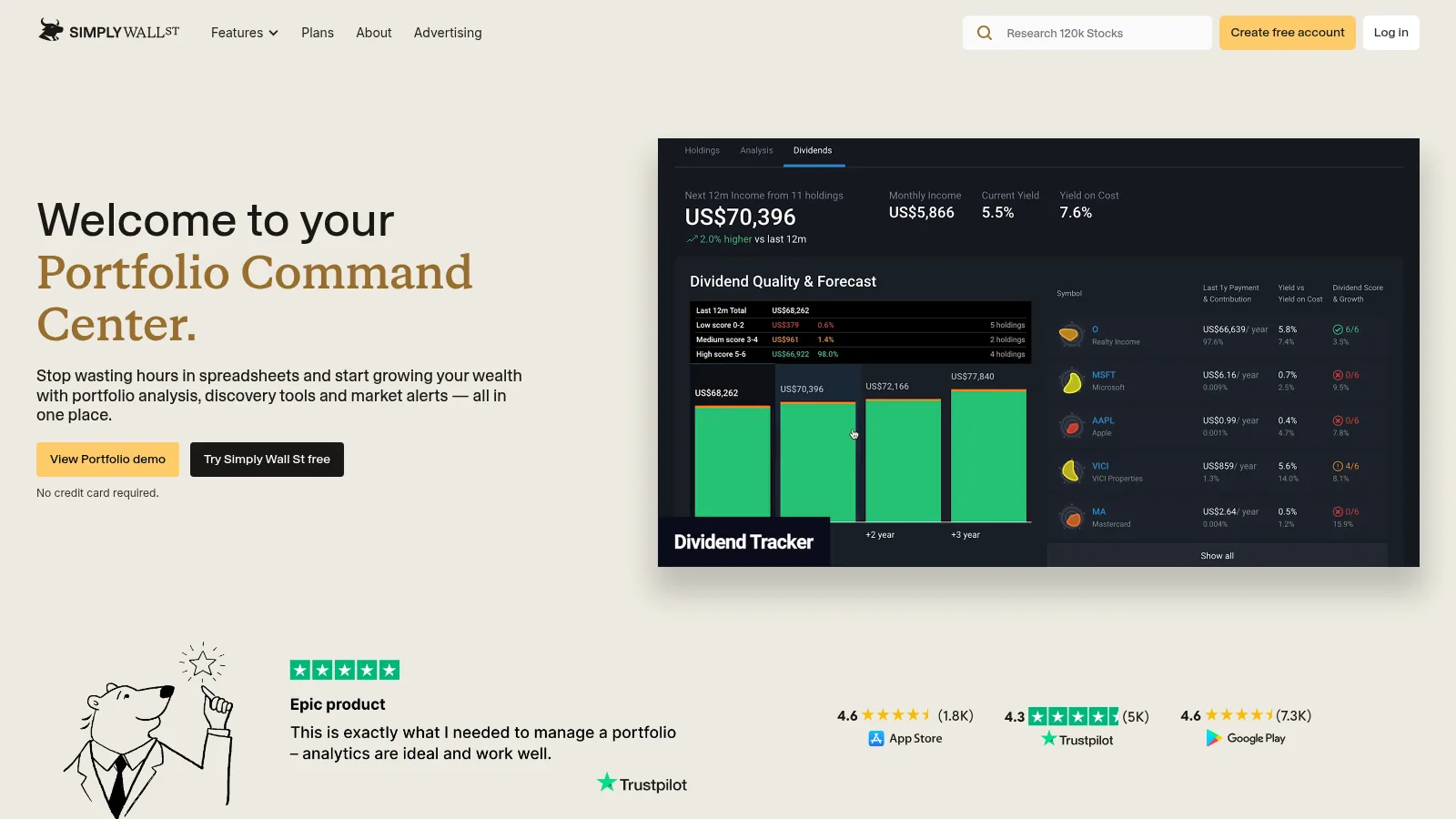
Top 5 features: DCF-based fair value estimate on every covered stock, visual snowflake scoring across value, future, past, health, and dividend, red-flag warning system for risk factors, community fair-value consensus, portfolio-wide snowflake comparison.
Who it fits: beginners who want a visual gut-check before digging into raw numbers, and swing investors scanning many names quickly.
One real drawback: the DCF model leans on assumptions you don't control. A single changed growth assumption shifts the whole fair-value number, so treat the snowflake as a starting point, not a verdict.
6. FAST Graphs
FAST Graphs is the purist pick among any ai stock screener for undervalued stocks.
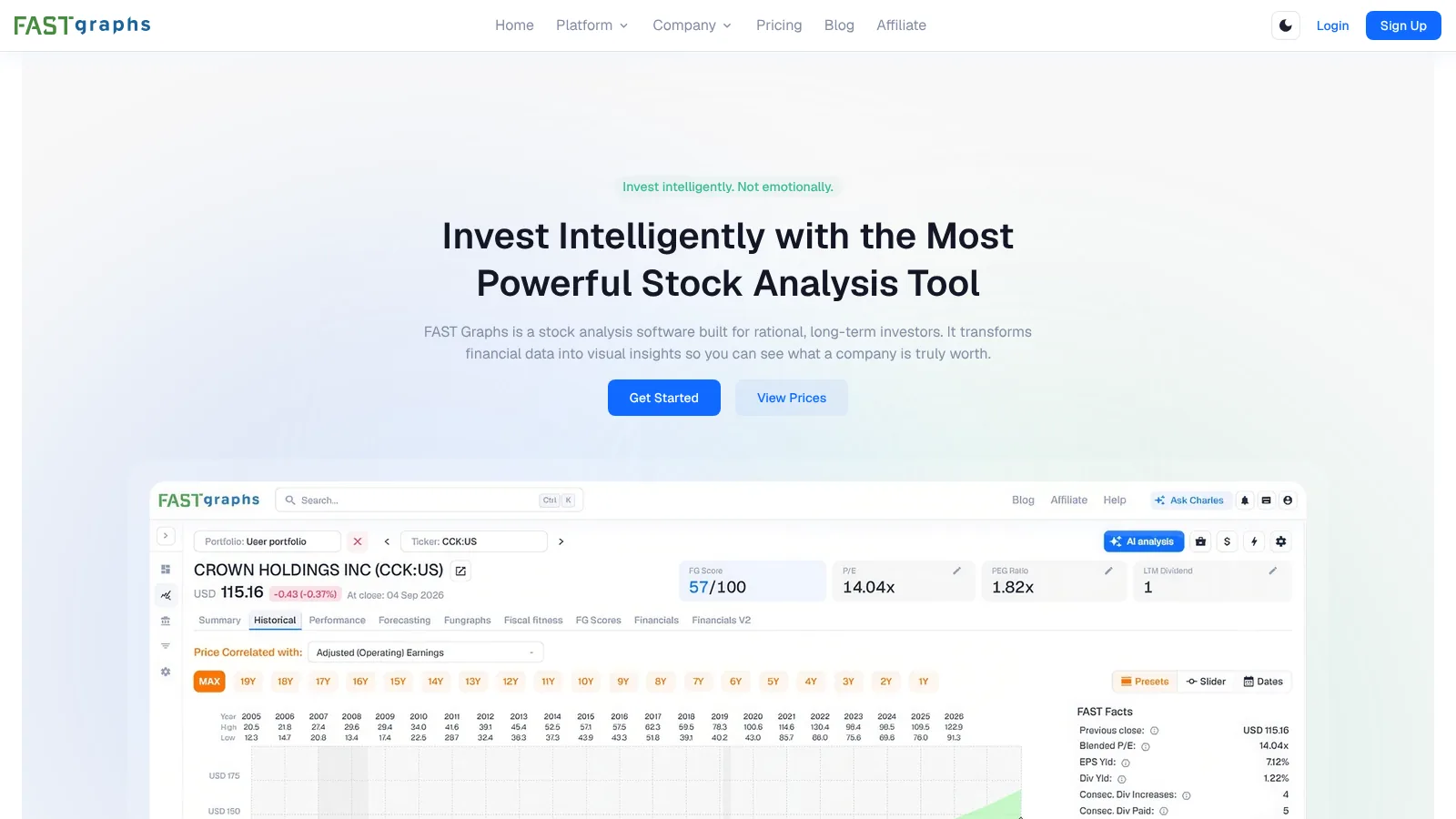
Top 5 features: normalized P/E versus earnings growth overlay, historical valuation range shading, dividend-adjusted total return estimates, analyst estimate overlay, sector and peer comparison charts.
Who it fits: value purists who trust an earnings line more than a composite AI score, and who already know which tickers they're researching.
One real drawback: there's effectively no discovery layer here. FAST Graphs analyzes a stock you already picked, it won't surface new undervalued growth candidates on its own the way a true screener does.
7. Finviz Elite
Finviz Elite is the fastest ai stock screener for undervalued stocks on a budget.
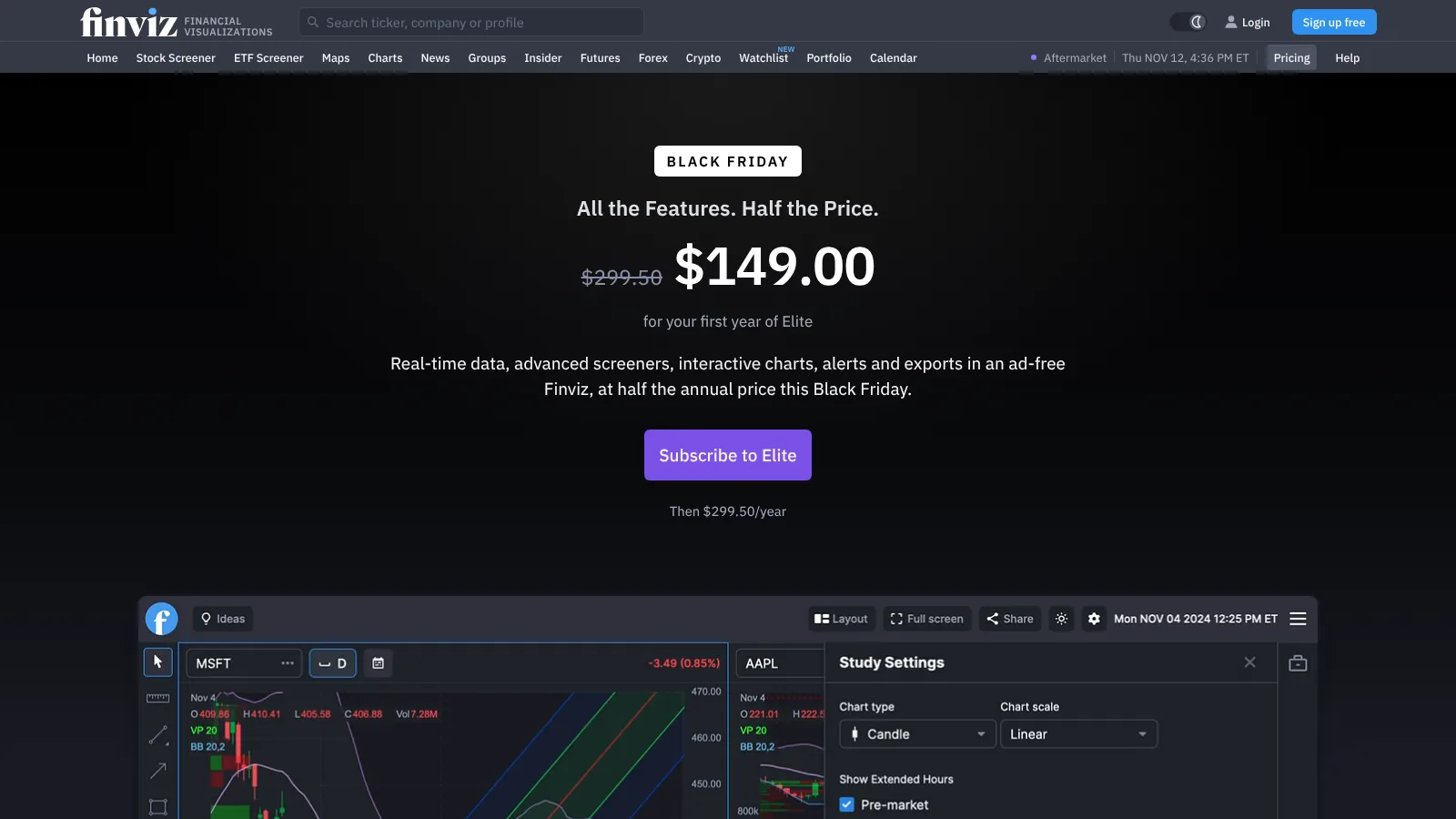
Top 5 features: combinable fundamental and technical filters, real-time screener updates, heat map visualization by sector, backtesting on custom screens, correlation matrix tool.
Who it fits: traders who already know exactly what numbers they want and just need the fastest possible filter, no AI narrative attached.
One real drawback: the "AI" label is generous. Finviz Elite's intelligence is pattern recognition bolted onto a classic filter engine, not a forecasting model like Danelfin's. If you want an AI stock screener that actually reasons about future performance, this isn't it.
If you want to see how newer entrants stack up against this list, the best AI stock screeners roundup tracks the field, and the free AI stock screeners page is worth a look before you pay for anything.
How Do You Screen for Undervalued Growth Stocks With AI?
An ai stock screener for undervalued stocks earns its keep by doing two jobs a spreadsheet can't do fast enough on its own: cross-referencing dozens of valuation and growth metrics simultaneously, and ranking the results against relevant peers instead of a flat universal cutoff.
Here's the process that actually works. Start broad, then narrow in layers.
Layer one: cheapness. Set a forward P/E ceiling relative to the sector, not the whole market. A forward P/E of 18 is expensive for a utility and cheap for a software company. Stock Rover's percentile ranking handles this automatically; on a tool without that feature, pull the sector median yourself first.
Layer two: growth that's real, not borrowed. Require positive EPS growth alongside sales growth. A company growing revenue 25% while losing more money every quarter isn't a value stock, it's a story stock wearing a value costume.
Layer three: balance sheet sanity. Add a debt-to-equity ceiling. Growth funded by debt looks fine until rates move or a refinancing window closes badly.
Layer four: the AI layer, if you've got one. This is where Danelfin's AI Score or a quant grade adds something a static filter can't: a probabilistic read on near-term performance based on dozens of signals working together, not just the five you typed in.
The question "how accurate are AI stock screeners really" deserves a straight answer: they're pattern-matching tools trained on historical data, not crystal balls. Treat any AI score as one more input, not a verdict. The AI stock screeners vs the old filters you're wasting time on piece breaks down where the AI layer genuinely beats manual filtering and where it doesn't.
You also don't need to code anything. Every tool on this list runs on dropdown filters and sliders, no coding is required to run a single screen, though Stock Rover and Finviz both let advanced users write custom formulas if they want more control.
What PEG, P/E and Revenue Growth Filters Should You Start With?
Every ai stock screener for undervalued stocks runs on the same three filters. Three numbers do 80% of the work in a GARP screen. Forget the other forty filters until you've nailed these.
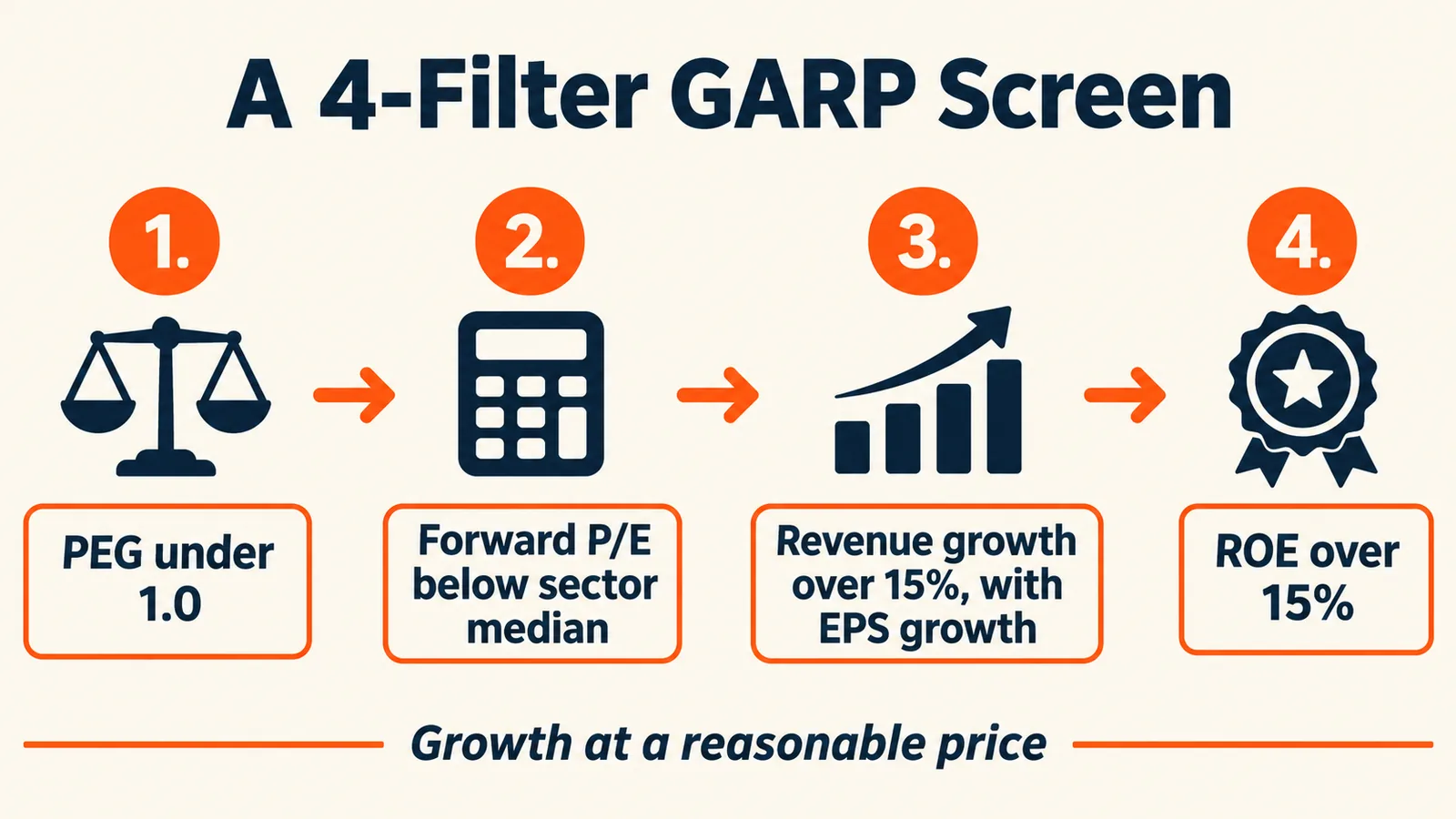
PEG ratio under 1.0. PEG is the price-to-earnings ratio divided by expected earnings growth rate. A PEG under 1.0 suggests the market hasn't fully priced in the company's growth, the classic undervalued-growth signal. A PEG above 2.0 usually means you're paying inflated prices for hoped-for growth.
Forward P/E below the sector median. Don't anchor to an arbitrary number like 15. Pull the sector's median forward P/E and screen for stocks sitting meaningfully below it. Stock Rover automates this with its percentile tool; on other platforms, check the sector page first.
Revenue growth above 15%, confirmed by EPS growth. Revenue growth alone is a vanity metric. Pair it with EPS growth to confirm the growth is actually reaching the bottom line, not getting eaten by rising costs.
Bonus filter: ROE above 15%. Return on equity tells you how efficiently a company turns shareholder capital into profit. High ROE alongside a low PEG is a strong combination signal, growth that's both cheap and efficiently generated.
Run these four together and you've built a genuine GARP screener, Growth At a Reasonable Price, without touching the other sixty filters most screeners dangle in front of you.
80+ filters in Danelfin's new AI Stock Screener, launched October 28, 2026
13 screeners tested against 25 criteria in Investopedia's November 2026 review
830+ metrics and 1,390 filters added in Amsflow Screener 2.0's November 2026 update
7 core metrics Stock Rover uses for its GARP framework: forward P/E, PEG, price-to-sales, EPS growth, sales growth, debt-to-equity, and ROE
10 monthly AI assistant questions allowed for Danelfin's free tier before hitting a paywall
What Should You Watch Out For, Like Value Traps?
No ai stock screener for undervalued stocks can tell you why a stock is cheap. Here's where cheap stops being a compliment. A value trap is a stock that looks statistically cheap and stays cheap, or gets cheaper, because the market has correctly priced in a problem your screener can't see.
The screen can't see why it's cheap. Low P/E paired with declining revenue isn't a bargain, it's a business in decline that the market has already marked down correctly. Always check the growth trend line, not just the current-quarter snapshot.
Debt dressed up as growth. A company buying back shares or acquiring competitors with borrowed money can show EPS growth that has nothing to do with operational strength. That's why the debt-to-equity filter matters as much as the growth filter.
Overextended technicals on an otherwise clean fundamental screen. A stock can pass every valuation filter and still be overextended on the chart, meaning price has run too far too fast and is due for a pullback. Fundamentals and price action, meaning the actual movement of a stock's price over time, answer different questions. Check both before you act.
Chasing a screen result the way you'd chase a breakout. Getting a hot list from an AI stock screener and buying the top name without further digging is the research equivalent of FOMO. Fear of missing out on a cheap-looking stock still ends the same way it does in a fast-moving chart: catching a falling knife.
Can AI find undervalued stocks reliably? It can surface candidates faster and more thoroughly than manual spreadsheet work, which answers the "ai stock screeners vs traditional stock screening methods" question clearly in AI's favor on speed and breadth. But confirmation still requires reading the actual filing, not just trusting the score. Our breakdown of the AI stock research tool that reads every 10-K so you don't have to covers that next step.
Process over prediction. A screen gives you a watchlist, not a buy signal. Confirm every name manually before it touches real money.
Can you build a GARP screen in 60 seconds?
Which is the best AI stock screener for undervalued stocks?
Stock Rover earns the top spot for anyone running a genuine ai stock screener for undervalued stocks search, because it ranks companies against their actual peers instead of forcing one arbitrary number onto every sector. Danelfin is the pick if you want an AI layer actively forecasting performance on top of the valuation work. Either way, the process matters more than the tool: set your PEG, P/E, and growth thresholds, confirm every candidate manually, and never buy a name just because a screener put it on top of a list.
Next step: build one GARP screen this week using the filter builder above, run it on a free tier, and paper trade the top three results before committing real money.
Your market edge starts with the right tool. Stay alpha. See the AI tools, scanners, and systems we actually rate at aistockpickerapp.com.
One tool, scored five ways. There are 200+ more in the FullStack Alpha directory, filterable by category, price and what they actually do.
Browse the directory → aistockpickerapps.com
This article may contain affiliate links. See our Affiliate Disclosure for details.
References
- Danelfin Stock Screener. danelfin.com.
- Best Stock Screeners 5120586. investopedia.com.
- Best Stock Screeners. amsflow.com.
Prices are subject to change as fast as AI technology.
We test the tools. You get the verdict.
One email a week. What we tested, what scored, and what we'd skip. Written for traders, not for clicks.
Frequently asked
More from FullStack Alpha