Which AI Stock Picker App Is Best for a Beginner Investor With a Limited Budget?
Reviewed by Jay Rocco, Chief Editor
Best AI Stock Picker App for Beginners: Start Free, Stay Honest
Read the transcript
Your first AI stock app doesn't need to be expensive. It needs to be honest.
So, what's the best AI stock picker app for beginners? Danelfin, because it pairs a free forever plan with a published AI score instead of a black-box number. If you want more hand-holding for very little money, Stock Rover and TipRanks round out a starting stack that runs from zero to about thirty dollars a month.
What does a beginner AI stock app do? It scores or ranks stocks so you start from a short list and a reason, not from a hot tip in a group chat.
This guide covers the best apps for a limited budget, what each one costs, what the research says about AI picks, and what beginners should watch out for.
My five favorite things for beginners.
One. Danelfin's free plan: $0 forever, a daily top 10, and 10 reports a month, no card required.
Two. Danelfin's scoring, built from roughly 10,000 features per stock per day across 600 technical, 150 fundamental and 150 sentiment indicators.
Three. Stock Rover, for beginners who want to learn real fundamentals.
Four. TipRanks, for a view of what analysts and insiders are doing.
Five. Ulys, a text-prompt portfolio builder that went public on November 10, 2026, live in more than 100 countries on the App Store.
How to pick: start free, add one paid tool only when you hit a limit you can name.
What to watch out for. A 2026 RMIT study found stocks picked daily by three generations of ChatGPT were less likely to beat earnings than analyst picks. The SEC, NASAA and FINRA issued a joint 2026 warning that scammers use the word "AI" to make fraud look credible. Lifetime deals, like one advertised at $47.99 to $69.99 last month, carry their own risk if the company folds. And FOMO is the most expensive habit you'll bring. A score that flips green on a stock already up 8 percent is an exit door for someone else.
Small, early losses are tuition. ... "It costs you 20 dollars to get rid of him." ... Sonny. Lose twenty dollars learning the rules, not two thousand.
Morningstar's 2026 analysis says AI is on firmer ground running your portfolio than predicting next quarter's winner. Use it that way.
One move for tonight. Sign up for Danelfin's free plan, pick three stocks from the daily top 10, and paper trade them for a month before a real dollar moves. The full beginner stack sits right below this player. Prices change, so check it for current numbers.
This is education, not financial advice. Your market edge starts with the right tool. Stay alpha.

Quick Answer: The best AI stock picker app for beginners is Danelfin, because it pairs a free forever plan with a transparent, published AI score instead of a black-box "trust us" number. If you want more hand-holding on fewer dollars, Stock Rover and TipRanks round out a realistic $0-to-$30-a-month starting stack.
Key Takeaways
- Danelfin offers a $0 forever free tier with a daily top-10 newsletter and 10 reports a month, no card required.
- A 2026 RMIT study found stocks picked daily by three generations of ChatGPT were less likely to beat earnings than analyst picks, and underperformed on day one after the call.
- Sterling Stock Picker's lifetime deal was advertised between $47.99 and $69.99 in November 2026, against a claimed regular price of several hundred dollars.
- Danelfin says it crunches roughly 10,000 features per security per day, pulled from 600-plus technical, 150 fundamental, and 150 sentiment indicators.
- The SEC, NASAA, and FINRA issued a joint 2026 warning that scammers use the word "AI" to make investment fraud look more credible.
- Ulys, a text-prompt portfolio builder, went public on November 10, 2026, and is live in more than 100 countries on Apple's App Store.
- Morningstar's 2026 analysis says AI is on firmer ground running your portfolio than predicting which single stock wins next quarter.
What Is the Best AI Stock Picker App for Beginners?
Here's the uncomfortable truth nobody selling you a $300 "AI trading bot" wants said out loud: the best ai stock picker app for beginners is usually the free one, not the expensive one. A limited budget isn't a handicap in this market. It's a filter. It forces you to ask what you're actually paying for, instead of getting seduced by a slick dashboard and a chatbot that talks like your smartest friend.
Think of it like a gym membership. The $9-a-month plan with a barbell and a mirror builds the same muscle as the $200-a-month boutique studio, if you actually show up. An AI stock picker is a tool, not a personality. The best ai stock picker app for beginners does three things on a tight budget: it shows its work (transparency), it doesn't charge you for filters a free tool already gives away (price-to-value), and it gets you a usable signal inside your first week, not your third month (usability).
That's the whole game. Not "which app sounds the smartest in its marketing copy," but which one survives contact with your actual $500 brokerage account. For a broader category breakdown before you commit to one name, our AI stock screeners roundup and AI stock predictors roundup are worth a scan first.
How do the best AI stock picker apps for beginners compare?
| App | Free Plan | Cheapest Paid | Best For |
|---|---|---|---|
 Danelfin | Yes, forever | $13/mo billed annually | Transparent AI scoring |
 TipRanks | Limited free | About $30/mo billed annually, discounts common | Analyst consensus tracking |
 Simply Wall St | Limited free | Shown at checkout | Visual fundamentals |
 Stock Rover | Yes, basic | $29/mo billed annually | Deep screening on a budget |
 Prospero.ai | Yes, basic | No paid plan listed | Simple buy/hold/sell alerts |
 Public | Yes, full app | Free (fractional shares) | Commission-free beginners |
 Magnifi | Limited free | $8.25/mo billed annually ($99/yr) | Conversational search |
Hunting for a lower price? Check our AI stock tool deals page.
The 7 Best AI Stock Picker Apps for Beginners on a Budget
1. Danelfin: the transparent scorer that costs nothing to start
If you want one name for the best ai stock picker app for beginners, start here. Danelfin runs every U.S. stock, U.S.-listed ETF, and major European name through a model that spits out a score from 1 to 10, the "AI Score", estimating the odds a stock beats its benchmark over the next three months. That window matters: it's a three-month bet, not a crystal ball for next year.
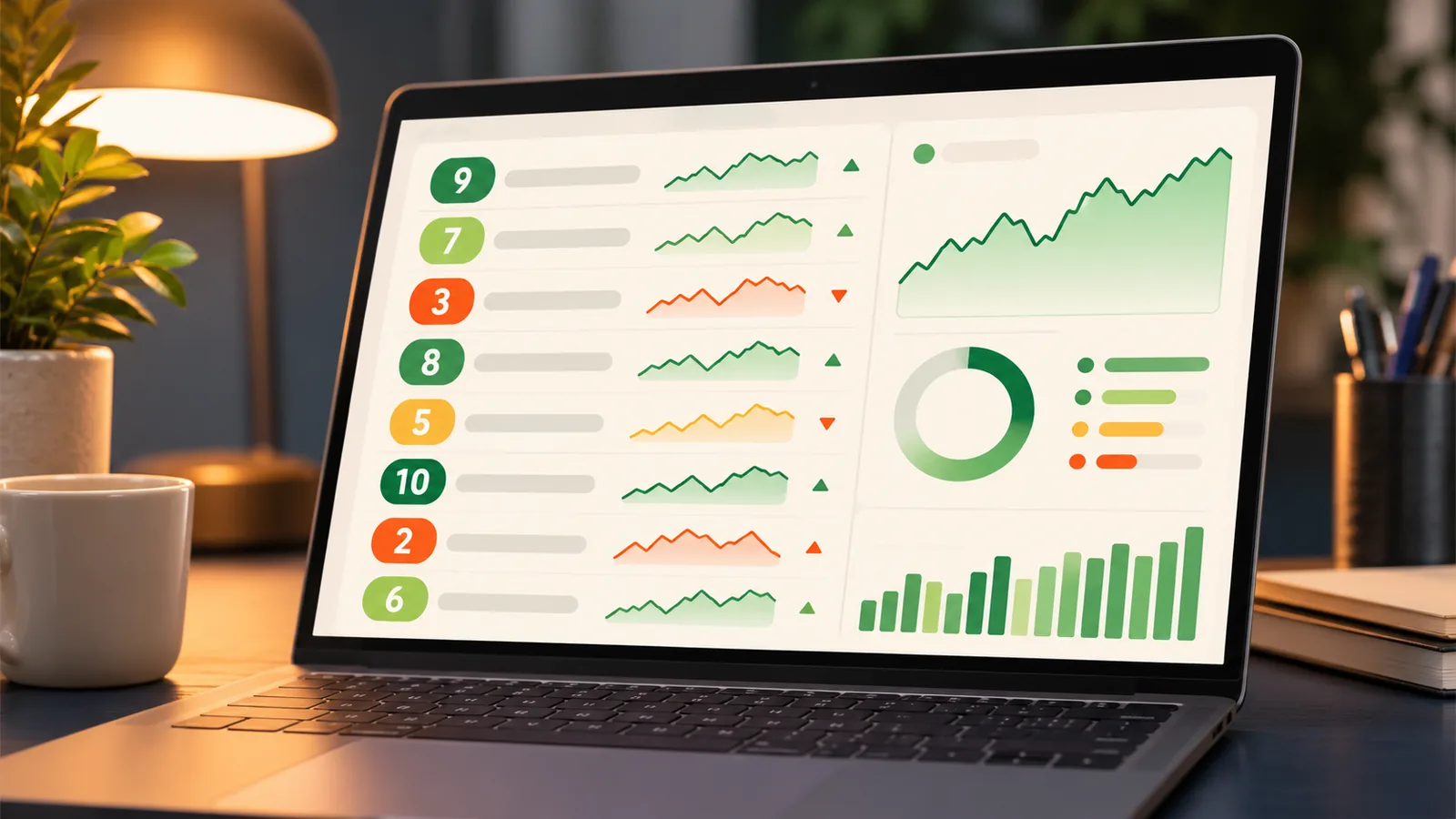
Top five features: the published 1-10 AI Score, a daily top-10 stock newsletter, roughly 10,000 analyzed features per security per day pulled from 600-plus technical and 150-plus fundamental and sentiment indicators, a free tier with 10 reports a month, and a Plus plan recently promoted around $13 a month.
Who it fits: the beginner who wants to see the "why" behind a pick, not just a green arrow. This is the one tool on this list that scores highest on transparency in our testing framework, because it shows its factor weighting instead of hiding behind "proprietary AI."
The drawback: the AI Score is a short-term probability, not a long-term thesis. If you're trying to build a buy-and-hold portfolio, a three-month signal is the wrong tool for that job, and using it that way is how beginners get burned.
2. TipRanks: the analyst-consensus cross-checker
TipRanks is the best ai stock picker app for beginners who want a second opinion before they trust one score. TipRanks doesn't pretend to be the only brain in the room. It aggregates real analyst ratings, hedge fund activity, and insider trades, then layers its own AI "Smart Score" on top. For a beginner with a small account, that's a built-in sanity check: if the AI loves a stock and every analyst hates it, that's a flag worth noticing.
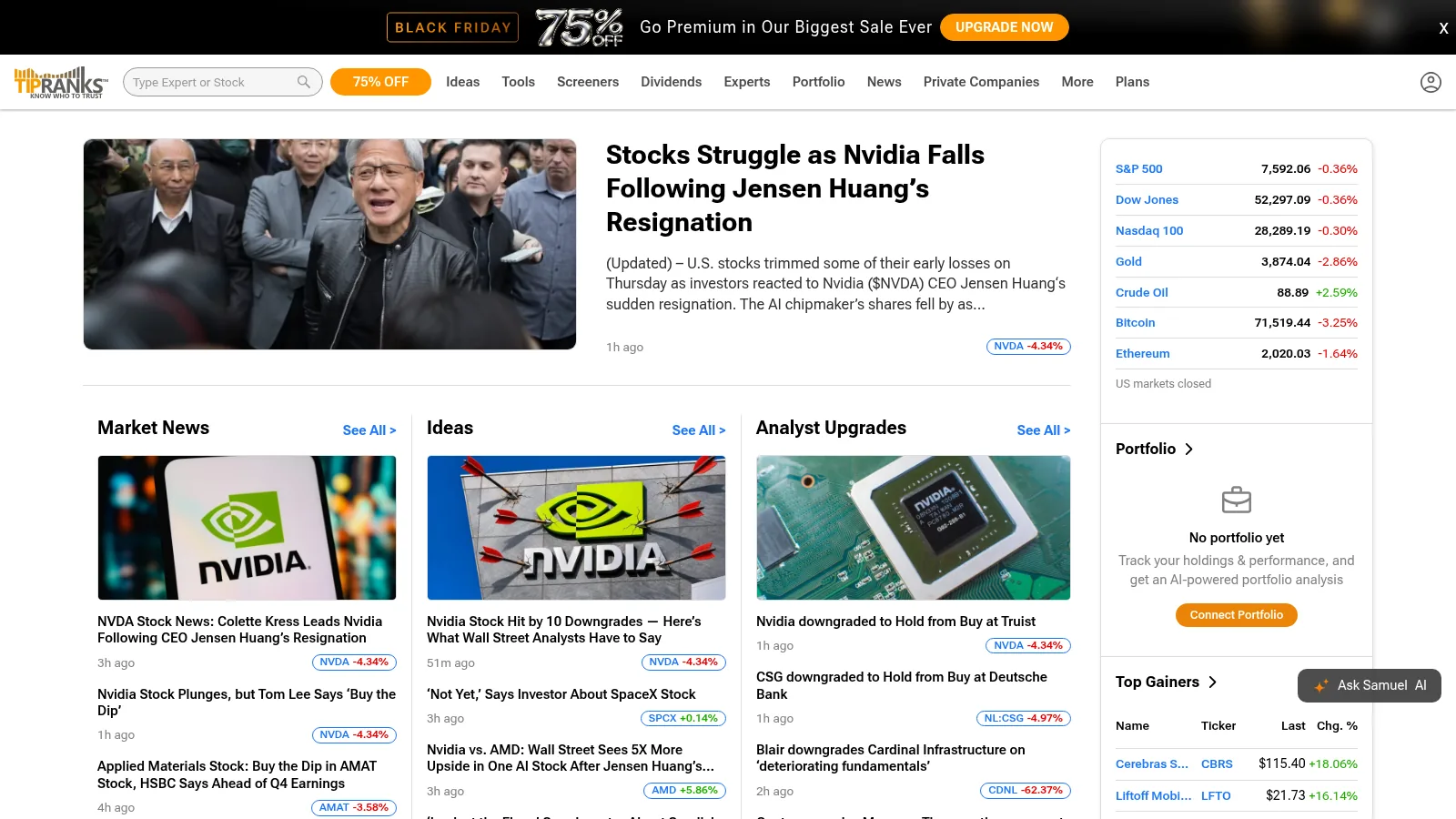
Top five features: Smart Score ranking, analyst consensus tracking, insider trading alerts, hedge fund activity feeds, and a blogger/influencer sentiment tracker.
Who it fits: the researcher who wants multiple opinions in one place before risking real money, especially someone building a watchlist rather than firing off trades.
The drawback: the genuinely useful features sit behind the paid tier. The free version gives you a taste, not a full meal, so budget-conscious beginners will hit a wall fast.
3. Simply Wall St: the visual learner's fundamentals tool
For visual learners,
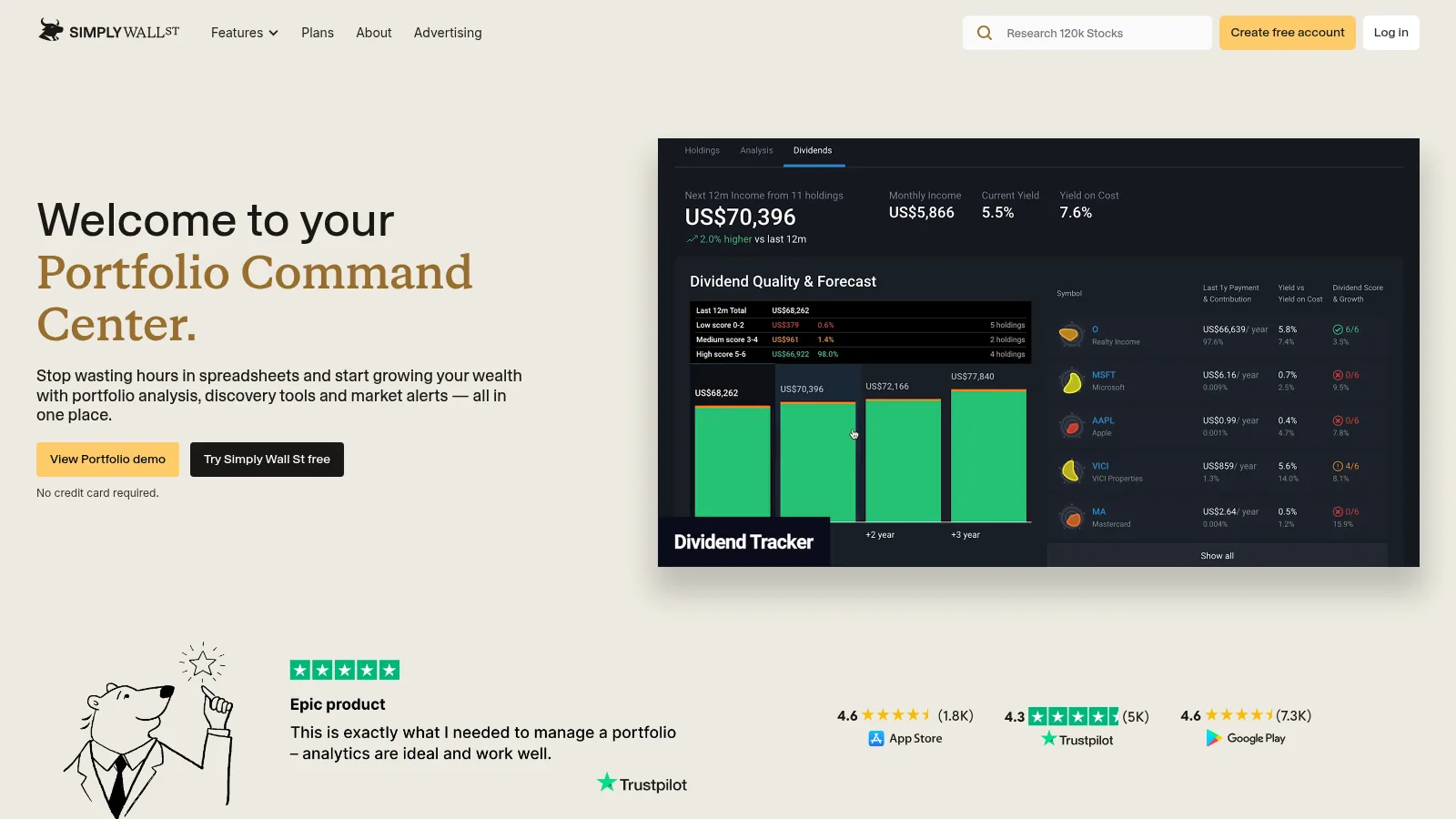
Top five features: the visual snowflake score, a plain-English company report, red-flag warnings on debt and valuation, portfolio tracking across brokers, and a thesis-building tool that lets you write down why you bought something.
Who it fits: the AI-curious beginner, described in our ICP as someone who wants plain-English education before spending a dime. This tool rewards patience over speed.
The drawback: it leans fundamental, not momentum. If you're hunting for the breakout or a clean setup on a chart, this isn't built for that job, pair it with a screener instead.
4. Stock Rover: the deep-value screener that actually respects your budget
Stock Rover is the best ai stock picker app for beginners who want to grow into deeper screening. Full disclosure from the desk: our editor has used both Stock Rover and 
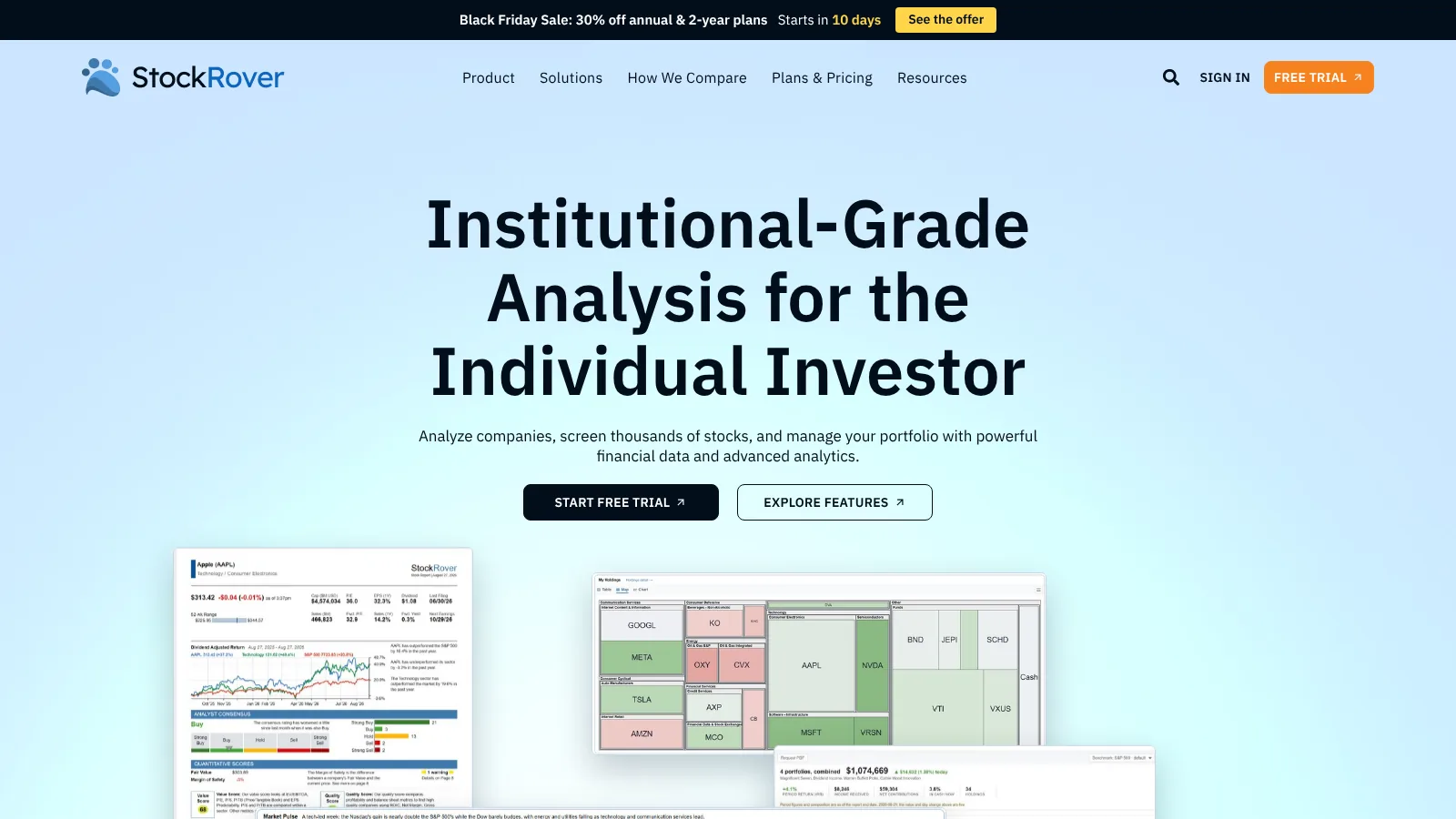
Top five features: over 650 fundamental metrics, customizable screens, portfolio correlation analysis, dividend-focused research tools, and a free tier that's actually usable, not a seven-day trial dressed up as "free."
Who it fits: the disciplined researcher, the beginner who's done a little homework and wants a real screener, not a toy. This is the pick for someone willing to build their own watchlist instead of letting an app hand them five tickers and a shrug.
The drawback: the interface is dense. It rewards time investment. If your idea of "fast" is opening an app and getting one stock name in ten seconds, this will frustrate you.
5. Prospero.ai: the simple, phone-first signal app
On a zero-dollar budget,
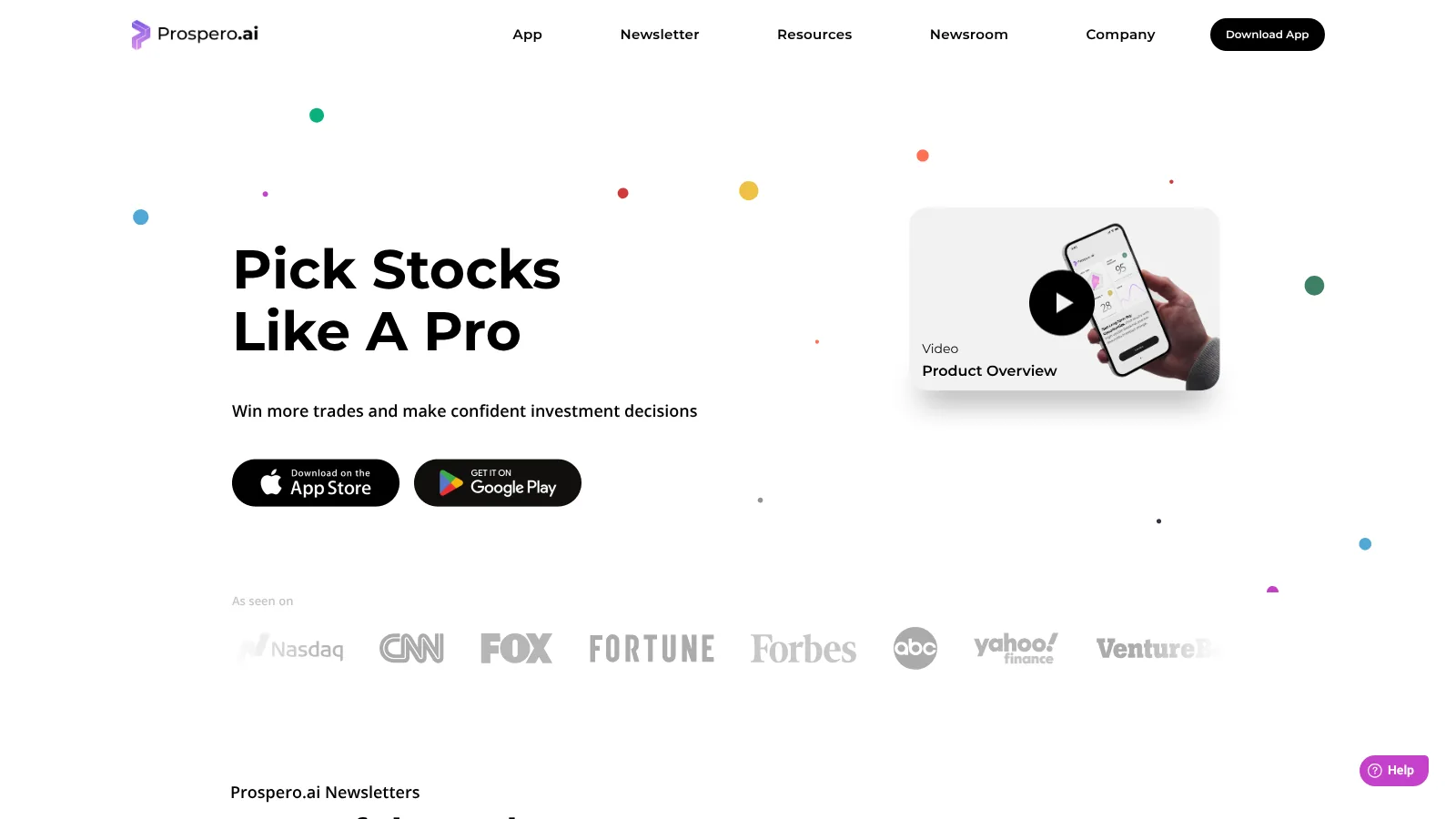
Top five features: a simple buy/hold/avoid signal, social sentiment scoring, a mobile-first interface, a free basic tier, and short explainer notes behind each signal.
Who it fits: the newly freed small-account trader, someone who just got full day-trading access and needs guardrails more than granularity today.
The drawback: the simplicity cuts both ways. There isn't much depth to dig into if a signal surprises you, and "the algorithm said yellow" isn't a reason you can defend to yourself later.
6. Public: the commission-free app with AI research baked in
Public is the best ai stock picker app for beginners who want the broker and the research in one place.
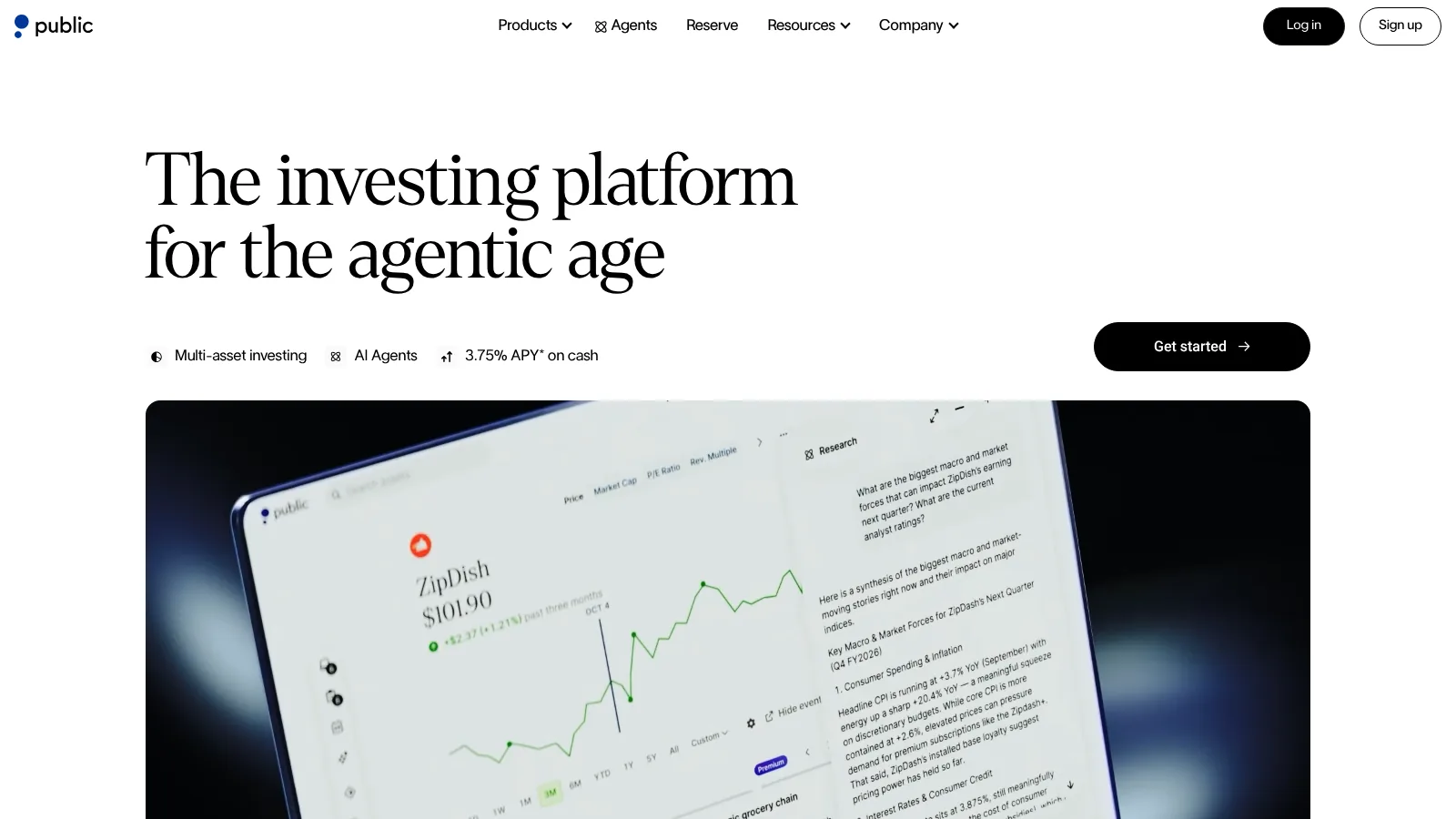
Top five features: fractional share investing, a conversational AI research assistant, no account minimums, transparent fee disclosure, and a social feed showing what other verified investors hold (not advice, just context).
Who it fits: the true beginner starting with $50 or less who needs the broker and the research tool to be the same app, because managing two logins at 2 a.m. isn't going to happen.
The drawback: the AI assistant is a research aide, not a stock picker in the Danelfin sense. Don't mistake "ask a question, get an answer" for "get a ranked recommendation."
7. Magnifi: the conversational search engine for portfolios
Magnifi rounds out our best ai stock picker app for beginners list for people who think in questions.
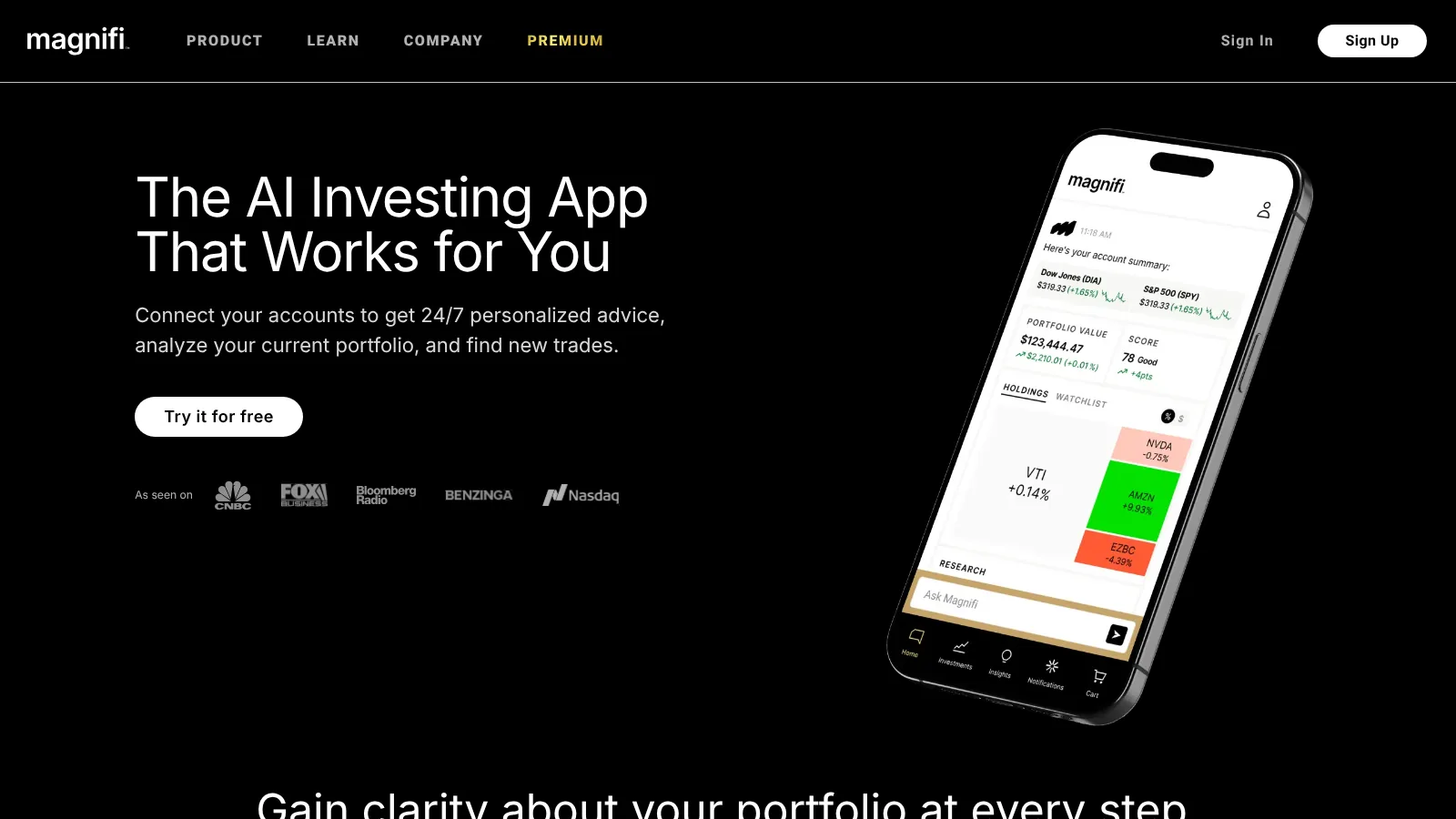
Top five features: natural-language search, ETF and stock comparison tools, portfolio analysis against your stated goals, a basic free search tier, and integration with some outside brokerage accounts.
Who it fits: the beginner who finds dropdown filters more confusing than helpful and would rather just ask a question in normal English.
The drawback: depth drops off fast once you go past the first answer. Great for discovery, thin for the follow-up research you should be doing before you buy anything.
Can You Start With a Free AI Stock Picker?
The best ai stock picker app for beginners is often a free one. Yes, and you should. A free ai stock picker isn't a consolation prize, it's the correct starting point for anyone who hasn't proven they'll actually use a tool consistently. Danelfin's free plan, Stock Rover's free screener, and Public's zero-minimum account cover the three jobs a beginner actually needs done: get a signal, check the fundamentals, and place the trade.
Here's the thing most beginners get backwards: they assume paying more buys better picks. It doesn't. It buys more data, faster alerts, and deeper screens, useful once you already have a process. Paying for a premium ai stock picker free trial that converts into a $50-a-month bill before you've even figured out your own risk tolerance is how you fund somebody else's product roadmap with your rent money.
Paper trade it first. Every single tool on this list lets you build a watchlist and track hypothetical picks without a dollar at risk. Do that for 30 days before any of your own money touches a position based on an AI score. If a signal would've made you money on paper, great. If it wouldn't have, you just saved yourself the tuition.
How Much Should a Beginner Spend on an AI Stock App?
Zero to thirty dollars a month, full stop. That's not a modest suggestion, that's a hard ceiling for anyone with an account under $5,000. Here's the math nobody puts in the marketing copy: if you're paying $50 a month for a stock-picking subscription on a $2,000 account, that tool needs to generate a 30% annual edge over doing nothing, just to break even on fees. Most tools, AI or not, can't promise that, and the honest ones won't try.
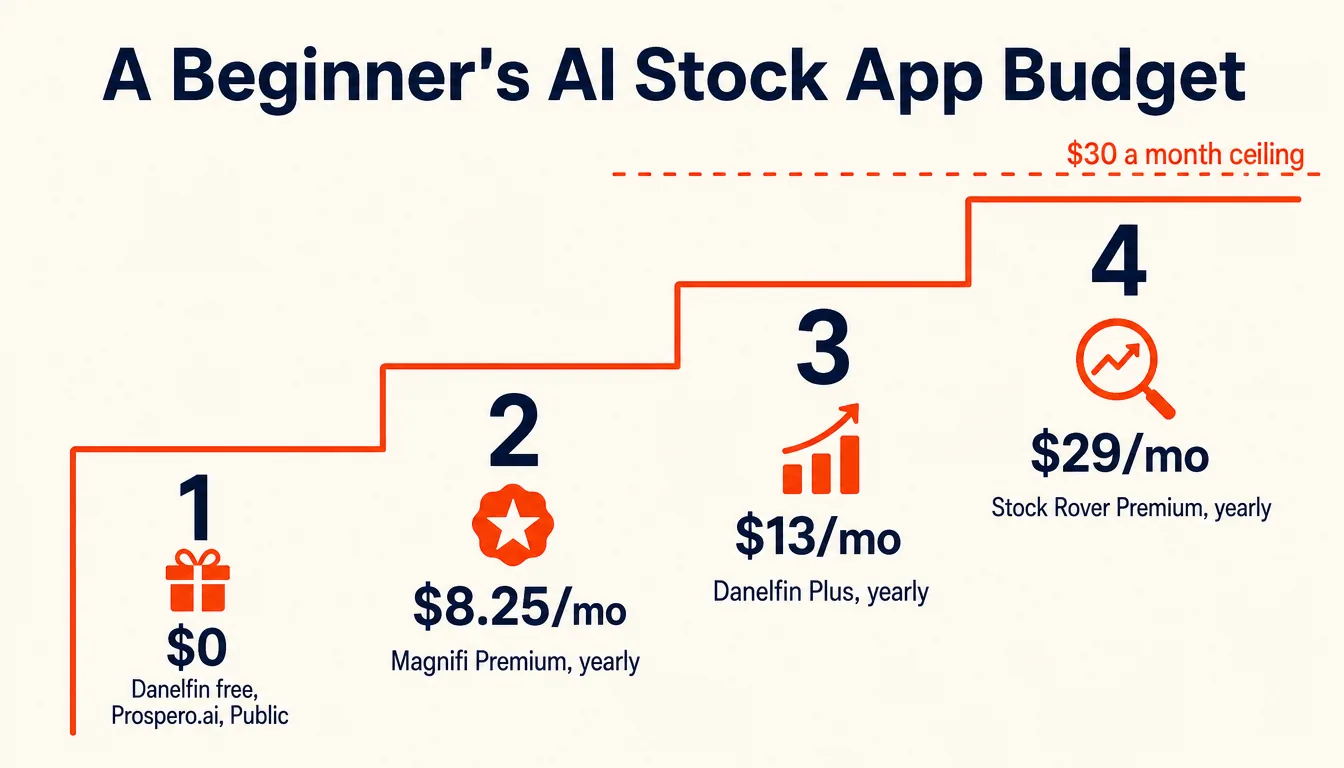
Start at $0. Add a single paid tier, Danelfin Plus, Stock Rover's mid-level plan, whatever solves your specific bottleneck, only after the free version has taught you what you actually need. Our small-account tool finder is built for exactly this math problem, matching account size to realistic tool cost. And if you want the fuller list of no-cost options before committing a cent, our guide to free AI stock tools and this roundup of AI trading tools for beginners are both worth bookmarking.
Promotional lifetime deals deserve a second look here, not instant trust. Sterling Stock Picker's lifetime offer, advertised between $47.99 and $69.99 against a claimed several-hundred-dollar regular price, might be a fine deal, or it might be a markup theater where the "regular price" never actually existed. Before buying any lifetime deal, read the fine print on what happens when the underlying data feed changes or the company pivots. Our Sterling Stock Picker review breaks down exactly what the $55 version delivers against the marketing claims.
What Should You Watch Out for as a Beginner?
Picking the best ai stock picker app for beginners is the easy part. FOMO is the single most expensive habit you'll bring into this. You see an AI score flip green, the stock's already up 8% today, and the urge to chase it feels like missing a flight. That's not a setup. That's the exit liquidity trap waiting to happen, late buyers funding the early ones' exits.
A few specific landmines worth naming:
Mistaking "AI" for "regulated" or "accurate." The SEC, NASAA, and FINRA jointly warned in 2026 that fraudsters specifically lean on the word "AI" to make scams sound credible. An app calling itself AI-powered tells you nothing about whether it's registered, audited, or even functional. Check for a real, documented methodology, not a marketing page that says "proprietary algorithm" and stops talking. That vagueness is itself a signal, and not a good one.
Trusting chatbot picks the way you'd trust a human analyst. A 2026 RMIT study tracked daily stock picks from three generations of ChatGPT between May 2024 and December 2025. The chatbot-recommended stocks were less likely to beat earnings expectations and underperformed analyst-selected stocks on both the first trading day and over the following ten days. A related working paper on AI agents found the same underperformance pattern versus human analysts. The takeaway isn't "AI is useless." It's that not all AI is built the same, and a chatbot improvising an answer is different from a model trained and audited specifically for market prediction.
Treating a backtest like a guarantee. Morningstar's 2026 research flagged a real structural problem: generative AI models can answer the same prompt differently each time, and historical backtests risk "look-ahead bias" if the model trained on data that wouldn't have existed at the time of the simulated decision. An impressive backtest chart means very little without a fully documented, point-in-time methodology behind it.
Confusing portfolio help with stock prediction. Morningstar's analysis draws a clean line: AI is on firmer ground helping manage a diversified portfolio than picking which single stock wins next quarter, because markets move on shifting information, emotion, and crowd behavior that's genuinely hard to model. If an app promises both, trust the portfolio side more than the prediction side.
Herd risk is a real, documented thing, not paranoia. The IMF's 2024 Global Financial Stability Report and the Financial Stability Board both flagged concern that similar AI models, used widely, could cause strategies to converge, amplifying herd buying and selling during stress. That's a market-wide risk, not an app-specific flaw, but it's one more reason a single AI score should never be your only input.
Revenge trading after a bad AI call is the other classic beginner mistake. The model missed, you're annoyed, you double down on the next signal to "make it back." That's not a strategy. That's tilt wearing a spreadsheet.
What do the numbers say about AI stock pickers for beginners?
Danelfin's free forever tier, no card required
Features Danelfin analyzes per security, per day
Sterling Stock Picker's advertised lifetime price range, Nov. 2026
Where Ulys launched publicly on Nov. 10, 2026
Which app fits your monthly budget?
So which is the best AI stock picker app for beginners?
The verdict: Danelfin wins the best ai stock picker app for beginners question because it's free, it shows its math, and it doesn't ask for your card to prove it. Stock Rover and Public round out a realistic starter stack for anyone building a process instead of chasing a hot tip. Your next step is simple: pick one free tool from this list, paper trade it for 30 days, and only reach for your wallet once you know exactly what problem you're paying to solve.
One tool, scored five ways, with 200-plus more waiting in the FullStack Alpha directory, filterable by category, price, and what they actually do.
Browse the directory → aistockpickerapps.com
This article may contain affiliate links. See our affiliate disclosure for details.
References
- This AI Stock Picker Brings a Chatgpt Like Experience to Investing Sponsored Deal. popsci.com.
- Ulys Unveils AI App That Builds Investment Portfolios From Simple Text Prompts. markets.businessinsider.com.
- Mitchell Readers Get Lifetime Stock Research Tools And An Ai Coach For 47.99. mitchellnow.com.
- This AI Investing App Gives Busy Founders a Clear Call on Every Stock. entrepreneur.com.
- Technology Labs Launches StockResearch AI Mobile App On Google Play. accessnewswire.com.
- Best AI Stock Picker for Beginners. aistockpickerapps.com.
- Best AI Stock Picker. aistockpickerapps.com.
Prices are subject to change as fast as AI technology.
We test the tools. You get the verdict.
One email a week. What we tested, what scored, and what we'd skip. Written for traders, not for clicks.
Frequently asked
More from FullStack Alpha