What Are the Best AI Stock Picker Apps Available to Buy or Subscribe To?
Reviewed by Jay Rocco, Chief Editor
Best AI Stock Picker Apps: 8 Tested, Only a Few Show Their Math
Read the transcript
Eight apps say they can pick your next winning stock. Only a couple of them will show you how they got there.
So, what are the best AI stock picker apps right now? Danelfin, Trade Ideas, TrendSpider, Seeking Alpha, Kavout, Intellectia AI, Magnifi and Prospero dot A I. Danelfin leads on transparency. Trade Ideas leads on scanner speed. And not one of them guarantees you a dime.
First, what does an AI stock picker app do? It reads filings, price action and sentiment faster than you can, then hands you a short list. It is a research assistant, not a crystal ball. Sizing the trade, setting the stop and sticking to the plan is still your job.
This guide ranks all eight with real prices, who each one fits, and the one drawback you should know before paying.
Now, my five favorite features across the list.
One. Danelfin scores every U.S. stock from 1 to 10 using more than 900 factors, then tells you which factors drove the score. Most tools say proprietary and stop talking.
Two. Trade Ideas runs its Holly AI through thousands of backtested strategies overnight, so the setups are waiting when the bell rings.
Three. TrendSpider draws trendlines and support and resistance for you. Your ruler can finally retire.
Four. Seeking Alpha's Quant Ratings grade more than 4,000 stocks on growth, profitability, momentum and valuation.
Five. Intellectia AI lets you ask a question in plain English, like why did this stock move today, and get a sourced answer back.
On integrations: Trade Ideas connects to brokers for semi-automated trades. Magnifi links your broker account for portfolio analysis. And Robinhood's Cortex, inside Robinhood Gold, builds screeners and preps orders, but won't give buy or sell calls.
Now, what to watch out for. A 2026 backtest found an AI-ranked basket of 20 large-cap stocks earned about 18.4 basis points of daily alpha. On paper. A backtest does not pay your commissions or sit through your worst week. And daily alert apps can train you into exactly the reactive, chase-everything trading that drains small accounts. A daily ping is not a system.
So which one should you pick? If you're new, start with a free tier: Danelfin, Seeking Alpha, Kavout, Magnifi or Prospero. If you day trade the open, Trade Ideas is built for you, but it is not cheap. If you swing trade off charts, TrendSpider does the grunt work.
Every app on this list is selling the same dream. ... "Deal with your problems by becoming rich!" ... Jordan Belfort. That pitch didn't end well for him either.
One tip before you go. Run any free plan for two full weeks before you pay. If it does not change a single decision you make in fourteen days, it will not change one in fourteen months. The full price table sits right below this player. Prices change, so check it for current numbers.
This is education, not financial advice. Your market edge starts with the right tool. Stay alpha.
Quick answer: The best AI stock picker apps in 2026 are Danelfin, Trade Ideas, TrendSpider, Seeking Alpha, Kavout, Intellectia AI, Magnifi and Prospero.ai, with Danelfin leading on transparency and Trade Ideas leading on scanner speed. No app on this list guarantees returns, and none should be trusted blind.
Here's a number worth knowing: a 2026 backtest on Russell 1000 stocks, the large-cap US names in most American portfolios, found an AI-ranked 20-stock basket earned about 18.4 basis points of daily alpha. On paper. A backtest isn't your brokerage account, and it doesn't pay your commissions or sit through a bad week. So the real question isn't which app is magic. It's which one is honest about its odds.
Key Takeaways
- Danelfin publishes a 1-to-10 AI Score backed by over 900 factors and recently cut its annual plans by 40%, bringing Plus to $156 a year.
- A 2026 arXiv backtest found a 20-stock AI-ranked basket generated roughly 18.4 basis points of daily alpha and a 2.43 Sharpe ratio, but that's a research result, not a product guarantee.
- Morningstar's own commentary argues AI tools help more with discipline and portfolio construction than with picking winning stocks.
- Sterling Stock Picker ran a lifetime-access promo at $47.99 against a stated $399 price, a steep discount worth comparing against subscription tools.
- Robinhood's Cortex AI feature ships inside
Robinhood Gold for $5 a month and explicitly does not give buy or sell recommendations.
- A November 2026 arXiv paper found fresher AI research reports barely beat old, mechanically-updated price targets: a 0.36 percentage point difference in forecast error that wasn't statistically significant.
- Only a small slice of roughly 3,200 rated investment strategies use real AI integration, concentrated at firms like BlackRock, AQR and Goldman Sachs, a reminder that most retail tools aren't running institutional-grade models.
What are the best AI stock picker apps?
The best AI stock picker apps are subscription tools that use machine learning to score, rank, or screen stocks, then hand you a ranked list, a scanner feed, or a plain-English research summary. They are not autopilot. None of the apps on this list place trades for you without approval, and the smart ones don't want to.
Here's the thing people get backwards: "AI stock picker" sounds like a crystal ball. It's really a research assistant with a faster read speed than you. It digs through filings, price action, and sentiment data, then surfaces a short list. What you do with that list, size the position, set a stop loss, actually follow your plan, is still on you.
That distinction matters because of how this market is built. Investopedia and other independent reviewers have spent years testing stock screeners the same way: does the output match the filter, and does it arrive fast enough to use? That's the bar the best ai stock picker apps have to clear, and most of the noise in this category fails it quietly.
Full disclosure on the bias built into most "best AI stock picker" roundups: many are written by sites that sell the tools they're ranking. This list leans on independent testing frameworks and cites real pricing and performance data where it exists, not vendor talking points.
How do the best AI stock picker apps compare on price?
| Tool | Price | Best For | Free Plan |
|---|---|---|---|
 Danelfin | Free, Plus $13/mo billed annually | Transparent AI scoring | Yes |
 Trade Ideas | $127-$254/mo ($89-$178 billed annually) | Real-time scanning | No |
 TrendSpider | $89-$349/mo ($54-$214 billed annually) | Automated charting | No |
 Seeking Alpha | $0-$299/yr | Research + Quant Ratings | Yes |
 Kavout | $16-$39/mo billed annually | K Score ranking | Yes |
 Intellectia AI | $14.95-$89.95/mo | Chat-based research | Yes |
 Magnifi | $14/mo or $99/yr | Natural-language investing | Yes |
 Prospero.ai | Free | Beginner alerts | Yes |
Hunting for a lower price? Check our AI stock tool deals page.
The 8 best AI stock picker apps
1. Danelfin: the one that shows its work
Among the best ai stock picker apps, Danelfin is the one we would test first. Danelfin scores every US-listed stock from 1 to 10 using more than 900 fundamental, technical, and sentiment factors, then tells you which factors drove the score. That's rare. Most tools in this category say "proprietary AI" and stop talking. Danelfin opens the hood.
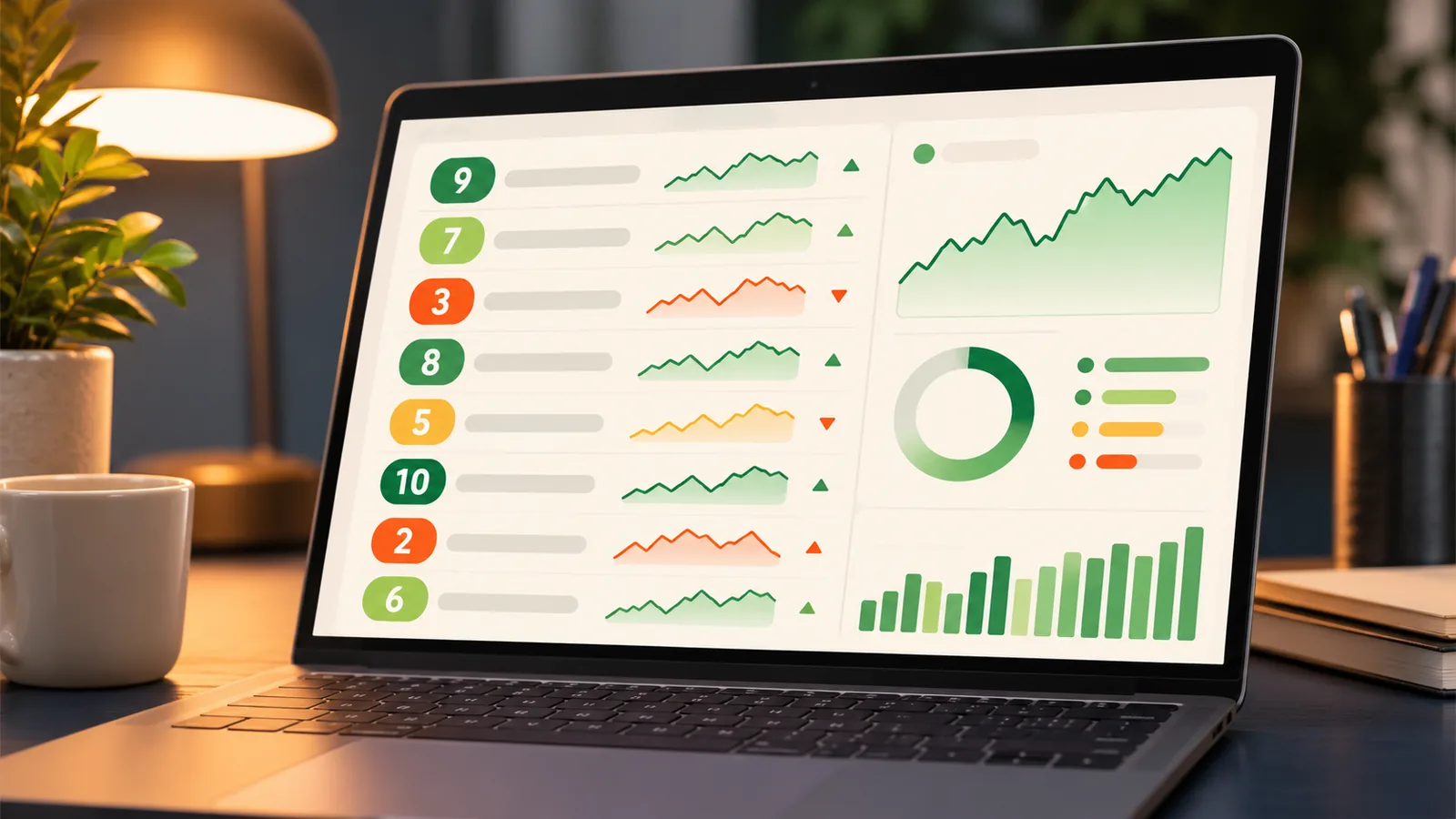
Top features: AI Score 1-10, risk and sentiment sub-scores, win-probability data over 3-month windows, a "Buy" filter screener, portfolio-building tools. Pricing recently dropped hard, Danelfin's current promotion cut annual plans by 40%, pushing Plus to $156 a year, Pro to $420, and Elite to $960, versus monthly list prices of $22, $59, and $134. That's one of the better price-to-value trades in this category today if you commit annually.
Who it fits: the researcher who wants a second opinion on a stock they already like, not a slot-machine lever. Drawback: Danelfin's community discussion online is thin. High transparency, low public chatter, a gap worth knowing about before you assume broad validation.
2. Trade Ideas: the scanner for people who trade the open bell
Speed is the reason Trade Ideas sits this high on any list of the best ai stock picker apps. Trade Ideas built its reputation on speed. Its Holly AI engine runs thousands of backtested strategies overnight and surfaces live setups the next morning, which matters because a scan that flags a mover four minutes late is a history lesson, not a trade.
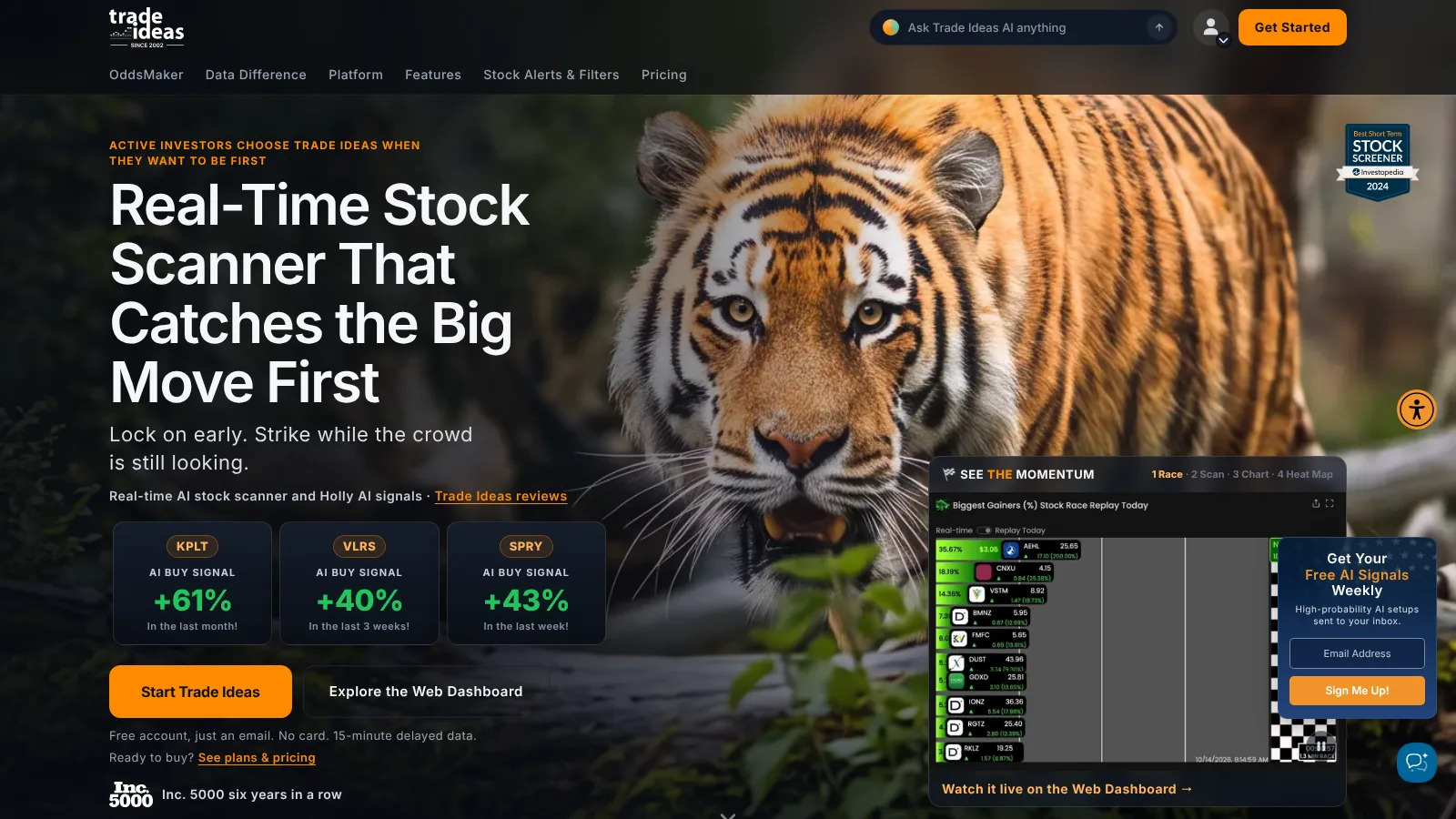
Top features: Holly AI automated strategies, real-time scanning, brokerage integration for semi-automated trades, customizable alerts, a visual backtester. For a deeper breakdown of where Holly actually earns its keep and where it doesn't, see this review of Trade Ideas' Holly AI.
Who it fits: active day traders who live inside power hour and need speed over hand-holding. Drawback: it's expensive, $127 to $254 a month, or $89 to $178 billed annually, and the learning curve punishes anyone who doesn't already understand price action and support and resistance.
3. TrendSpider: the chart robot for swing traders
TrendSpider automates technical analysis most traders do by hand: drawing trendlines, marking support and resistance, flagging a clean setup forming inside tight consolidation. It won't tell you what to buy. It'll tell you what a chart is actually doing, fast.
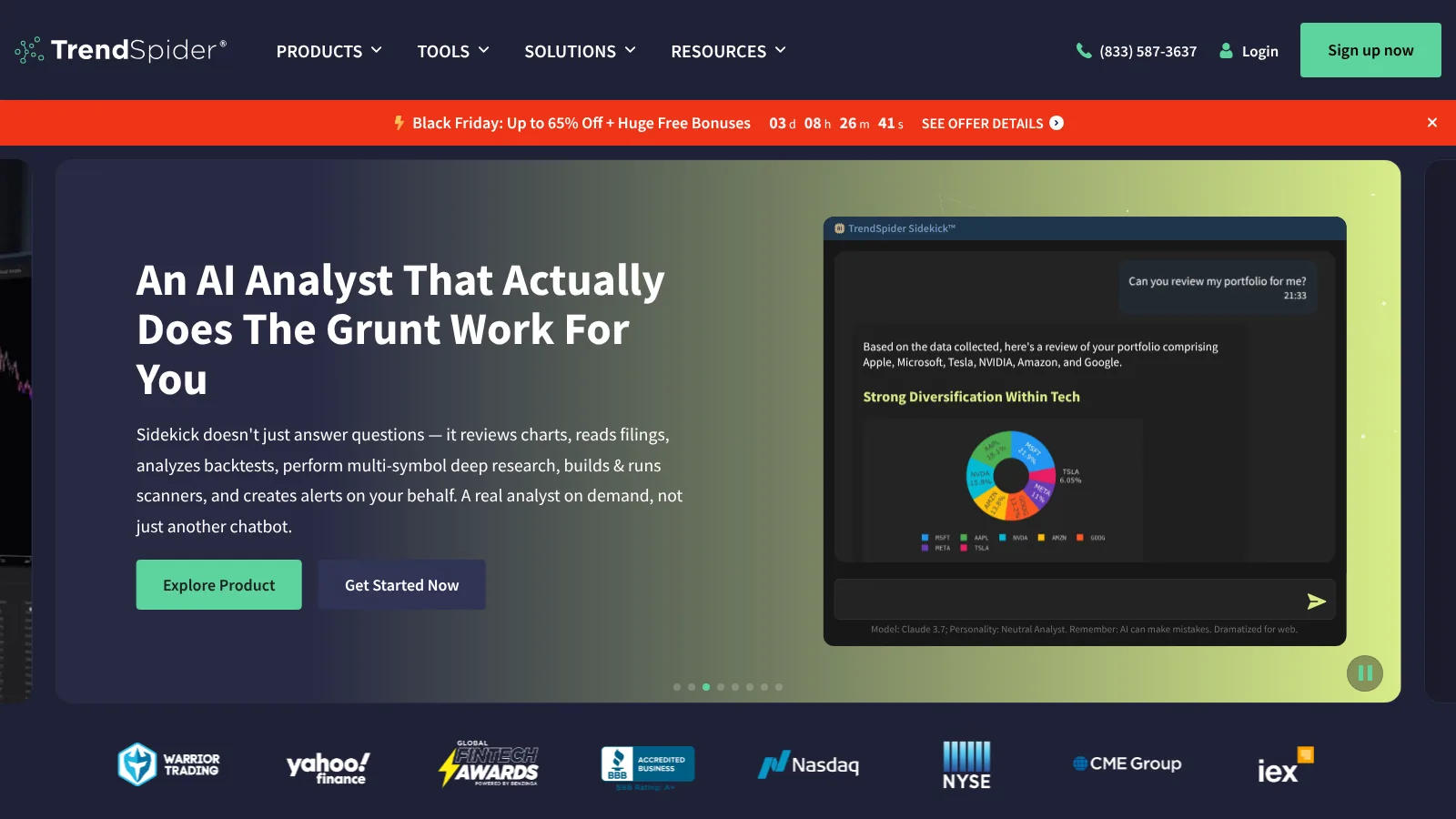
Top features: automated trendline detection, multi-timeframe analysis, custom alerts on pattern completion, backtesting engine, AI-assisted "point and figure" style scans. Compare it directly against a rules-based screener in this TrendSpider versus Stock Simplifier breakdown.
Who it fits: the swing trader who already has a system and wants the charting grunt work automated. Drawback: no fundamental or sentiment layer, this is a pure technical tool, so earnings season surprises won't show up here.
4. Seeking Alpha: the research engine with a track record you can actually check
Seeking Alpha earns its place among the best ai stock picker apps because its ratings carry a public track record. Seeking Alpha's Quant Ratings score roughly 4,000+ stocks on growth, profitability, momentum, and valuation, then layer in crowd-sourced analyst opinions. It's less a "picker" and more a research hub with a quant layer bolted on, which is honestly the more useful combination.
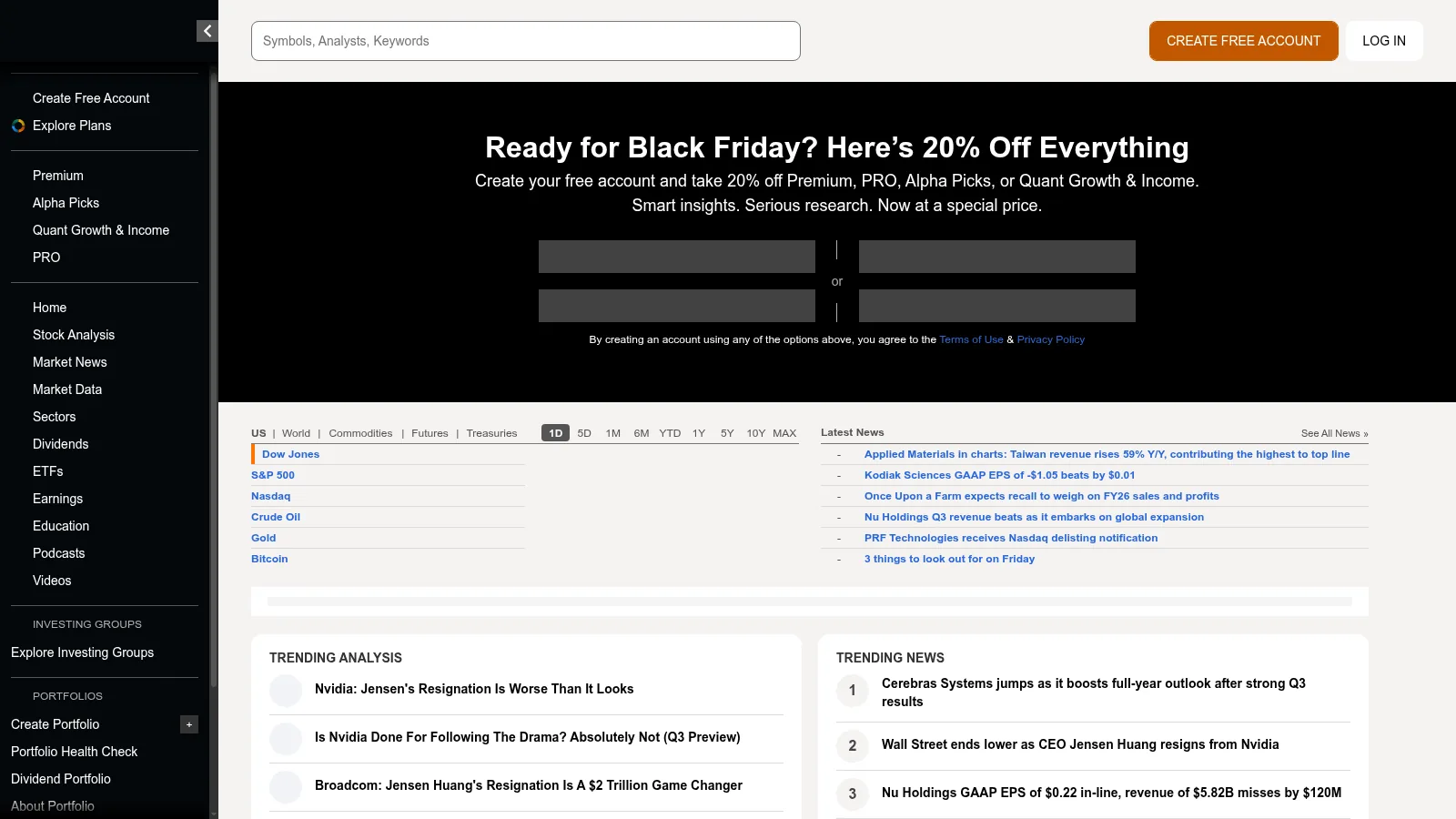
Top features: Quant Ratings, analyst rating aggregation, earnings call transcripts, dividend safety grades, portfolio tracking. For a plain-English stock-market vocabulary refresher while you read through Seeking Alpha's ratings, the stock market terms glossary covers the jargon.
Who it fits: long-term and swing investors who want a second layer of data before committing. Drawback: the free tier is genuinely limited, most of the Quant Rating depth sits behind the $299/year Premium plan.
5. Kavout: the quant shop's K Score, retail-priced
Kavout built its K Score system for institutional clients before opening it to retail. It ranks stocks 1 to 9 using machine-learning models trained on technical and fundamental data, closer in spirit to a hedge fund's internal tool than a flashy consumer app.
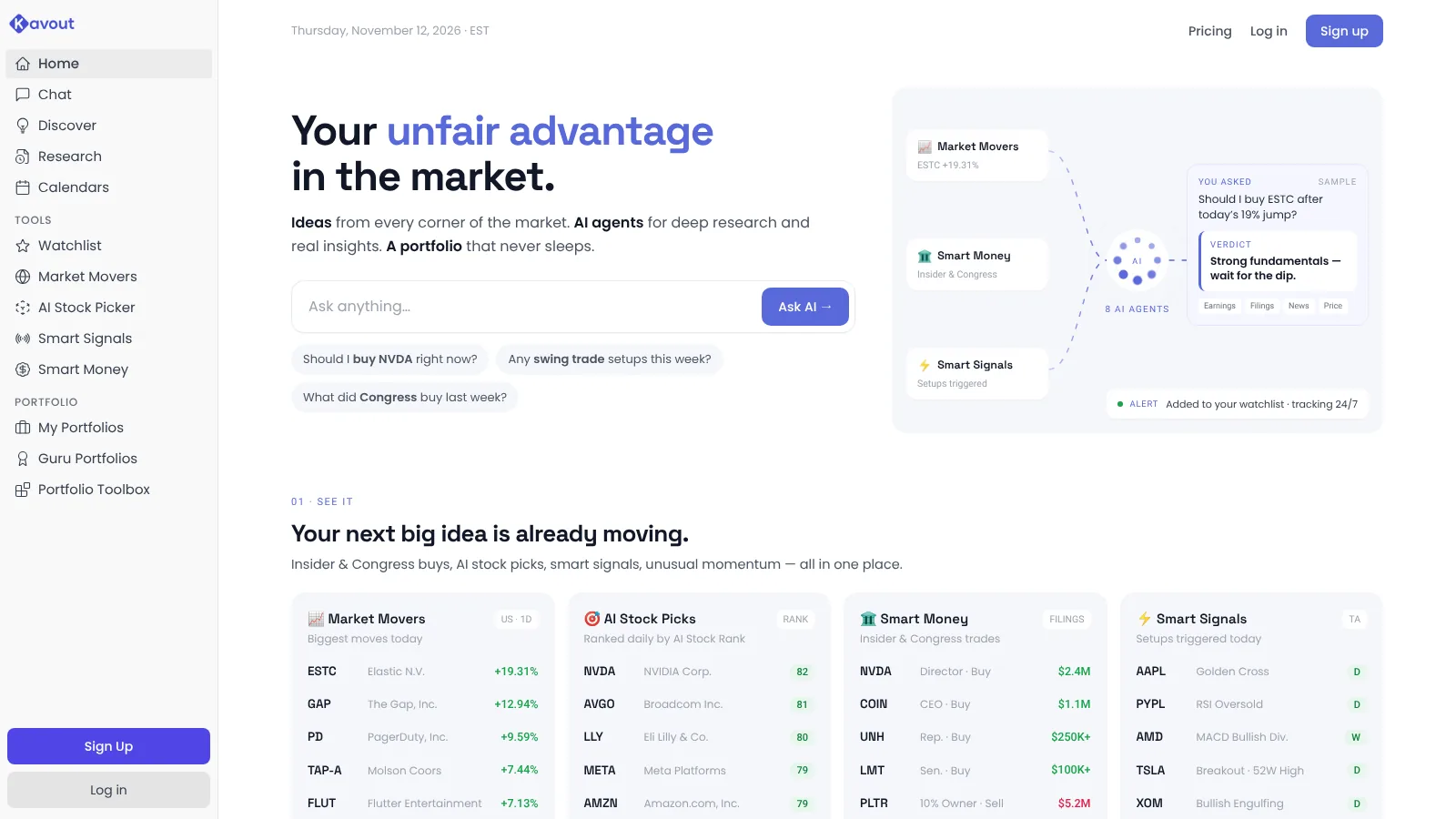
Top features: K Score ranking, sector-relative scoring, AI-driven ETF picks, customizable screens, portfolio analytics. Who it fits: data-minded investors who want quant rigor without building their own model. Drawback: the interface feels built for analysts, not beginners, expect a steeper ramp than apps designed around onboarding.
6. Intellectia AI: the chat-first research assistant
Not every one of the best ai stock picker apps needs a dashboard. Intellectia AI lets you ask questions in plain English, "what's driving this stock's move today", and get a sourced, readable answer instead of a wall of filing text. That's the same direction Morningstar's own AI screener moved in October 2026, letting subscribers type natural-language prompts that get translated into explicit screener filters. The category is converging on conversation as the interface.
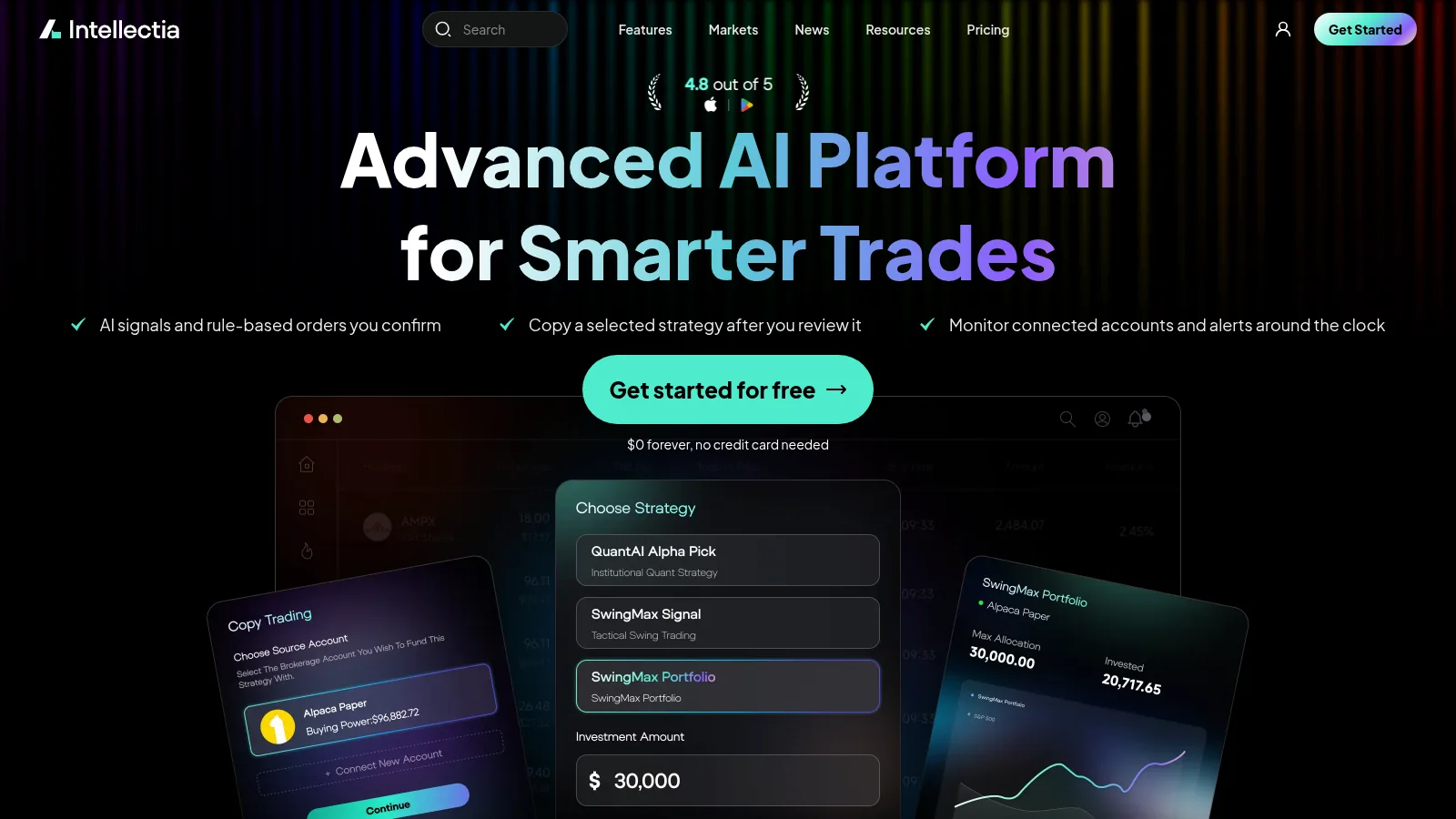
Top features: AI chat research assistant, stock scoring, technical pattern recognition, sentiment analysis, watchlist alerts. See how it stacks against a dedicated alert tool in this Intellectia AI versus Stock Alert AI comparison. Who it fits: beginners who learn better by asking questions than reading dashboards. Drawback: conversational answers can feel authoritative even when the underlying data is thin, always check the sourcing, not just the tone.
7. Magnifi: the natural-language investing search engine
Magnifi works like a search bar for your portfolio. Type "low-fee tech ETF with dividend growth" and it returns matches with explanations. It's closer to a smart filter than a stock picker, but it earns its spot because most beginners don't know what to search for in the first place.
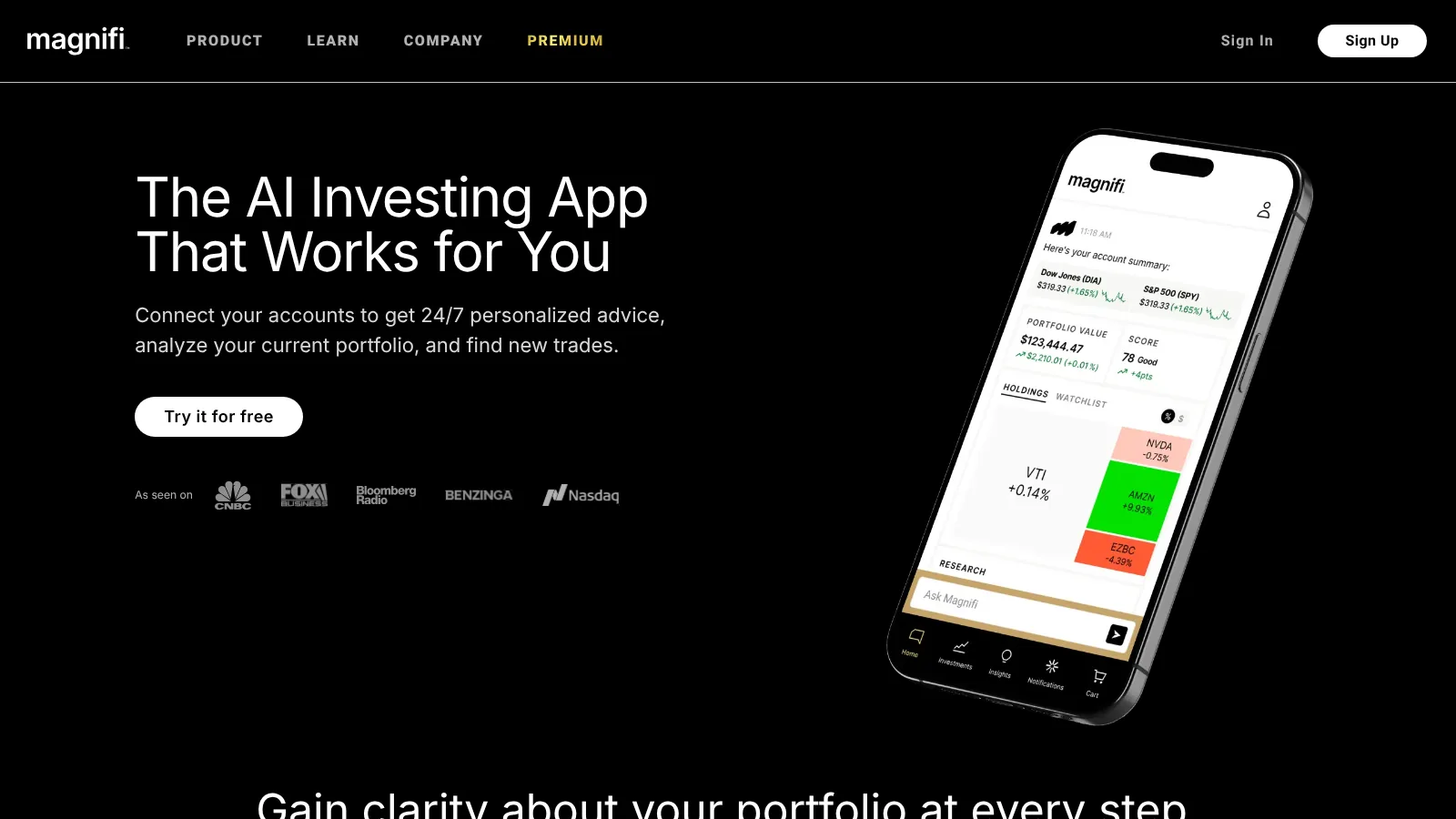
Top features: natural-language search, AI portfolio analysis, robo-advisor-style allocation suggestions, tax-aware rebalancing hints, broker account linking. Who it fits: newer investors who want guided answers without learning screener syntax first. Drawback: depth drops off fast for advanced users, this isn't built for anyone running a technical system.
8. Prospero.ai: the beginner-friendly alert app
Prospero.ai leans into mobile-first simplicity: daily stock alerts, a social-sentiment layer, and plain-language "why this moved" explanations. It's the most beginner-forward app on this list, and it knows it.
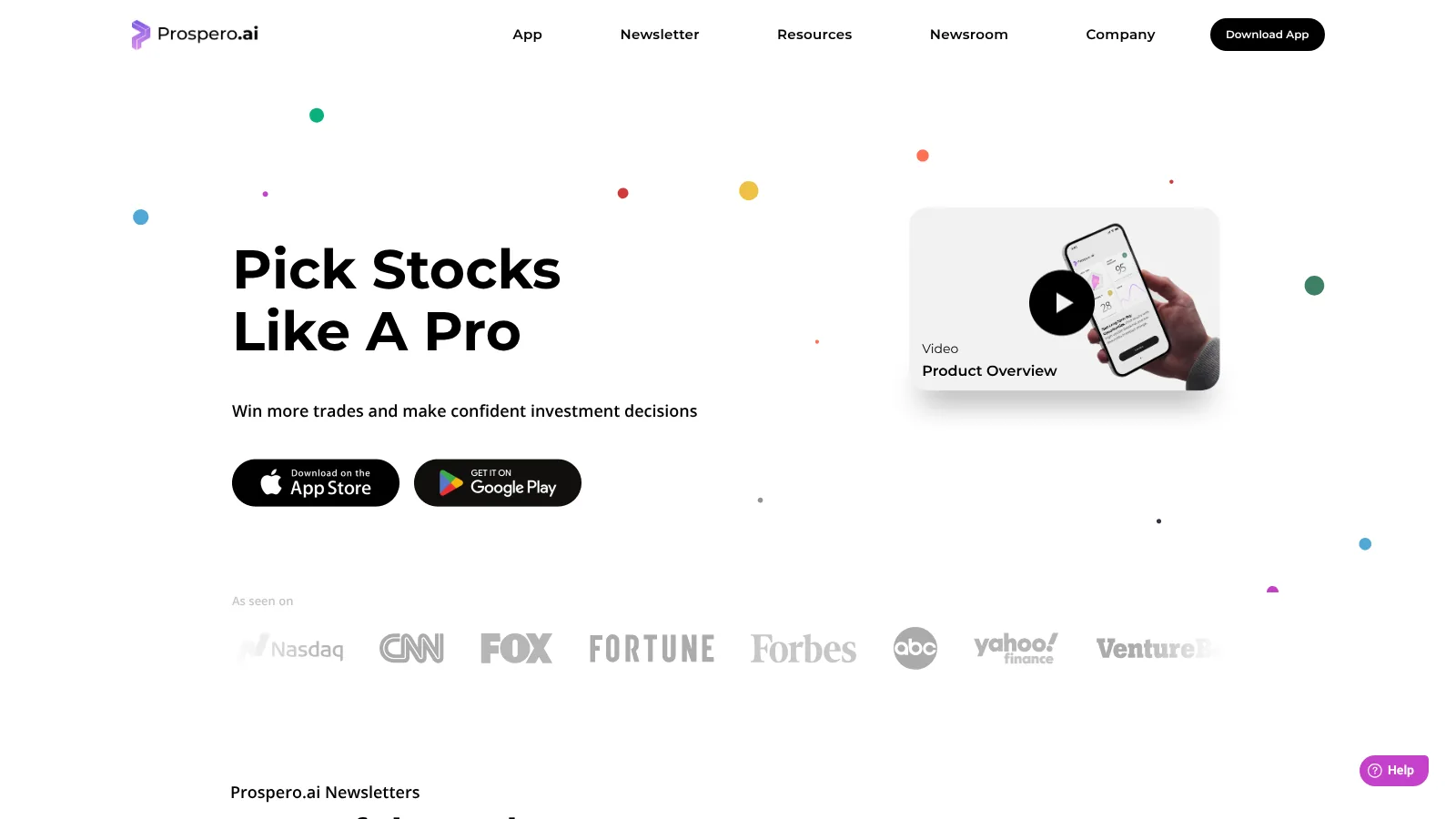
Top features: daily AI alerts, sentiment tracking, "Pro毫sper Score" ranking, options flow signals, mobile-first design. Who it fits: someone new to investing who wants bite-sized daily signals instead of a dashboard. Drawback: alerts can create exactly the kind of reactive, FOMO-driven trading the brand built its whole philosophy against, a daily ping is not a system.
For a side-by-side gut check on two of the AI rating leaders in this category, this Danelfin versus Tickeron comparison is worth a read before you commit to either.
How much does an AI stock picker app cost per month?
Most of the best ai stock picker apps land somewhere between $15 and $100 a month, with scanner-heavy tools like Trade Ideas starting at $127 a month. Budget picks are cheaper than most people expect: Magnifi Premium is $99 a year and Prospero.ai is free. Research-and-ratings platforms like Seeking Alpha and Danelfin typically reward annual commitment with real discounts, Danelfin's current promo structure, for example, turns a $59/month Pro plan into $420 a year if you pay upfront.
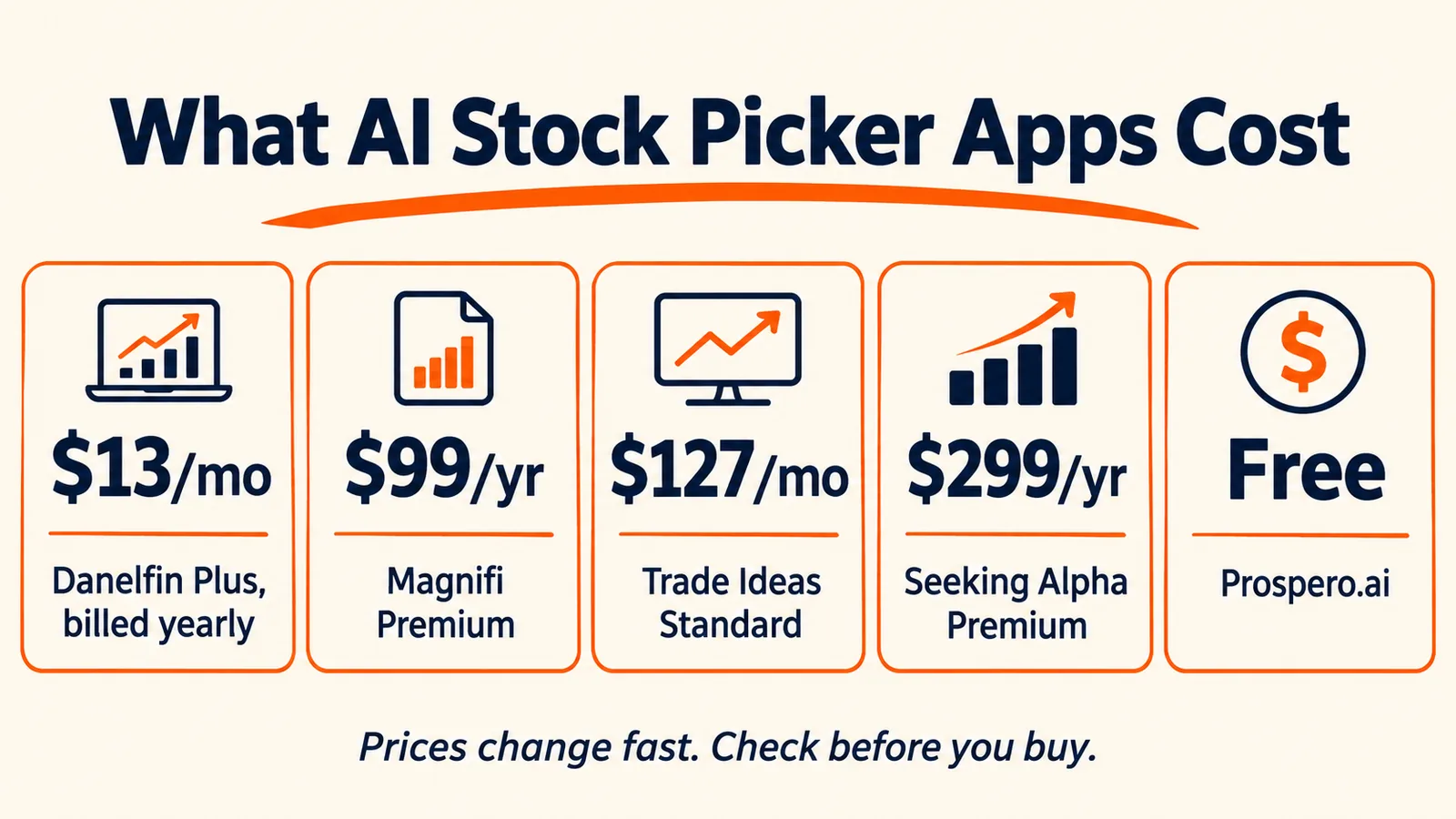
Then there's the outlier end. Sterling Stock Picker ran a November 2026 lifetime-access promotion at $47.99 against a claimed $399 regular price, bundling stock ratings, portfolio planning, and an OpenAI-powered coaching feature. A lifetime deal at that price is attractive on paper, but "lifetime" from a smaller vendor carries its own risk: what happens when the company pivots or shuts the lights off? Read the full Sterling Stock Picker review before assuming the math works in your favor.
And at the low end, broker-bundled AI is getting cheap fast. Robinhood's Cortex ships inside Robinhood Gold for $5 a month or $50 a year, and it's explicit that it won't hand you buy or sell calls, it builds screeners and preps orders for your review. That's the honest version of what AI stock picker subscription pricing should buy you: a faster research process, not a promise.
What should you know before you subscribe?
Before you pay for any of the best ai stock picker apps, run the free tier for two full weeks. Here's the excuse most people make before buying their third AI stock tool: "This one's different." It rarely is. Before you subscribe to any best ai stock picker app, ask what you're actually buying, a signal, a screener, or a narrative dressed up as a signal.
Academic evidence on this is split, not settled. A 2026 backtest on a 20-stock, AI-ranked Russell 1000 basket produced about 18.4 basis points of daily factor-adjusted alpha and a 2.43 Sharpe ratio over a roughly nine-month window, beating its benchmark by a wide margin. That sounds like proof AI works. But a backtest is not a live account. Once researchers adjust AI stock studies for factor exposure, much of the headline alpha tends to shrink, and a great raw return can carry close to zero risk-adjusted alpha.
Market truth: a backtest is not a guarantee, and a published study is not the same as your account performing the same way after fees, slippage, and your own behavior get involved.
Practical takeaway: treat every AI stock picker like a new strategy. Paper trade it first for 30 days before funding anything real. If the tool can't survive a month of dry-run scrutiny, it doesn't deserve your capital.
Also worth knowing: a November 2026 study on AI research-report freshness found that updating forecasts constantly barely beat a dumb mechanical reset of old price targets, a 0.36 percentage point difference that wasn't statistically significant, despite 60-90% turnover in "Top 10" picks between reports. Translation: a lot of AI "freshness" is noise dressed as insight. Data over noise. Not more updates over fewer.
What should you watch out for?
Even the best ai stock picker apps can be used badly. Watch for three things: black-box scoring, thin community discussion, and vendor-claimed win rates presented as fact.
Black-box scoring is the biggest tell of a low-effort tool. If a platform says "proprietary AI" and refuses to explain even broadly what drives its score, that's not sophistication, that's a public language model with a subscription button bolted on. This market is full of them.
Thin community discussion matters more than people think. A tool can have a great backtest and almost no real user footprint on Reddit, G2, or Trustpilot. That's not necessarily fraud, but it means you're an early adopter without the corroboration a mature tool would have. Separately, watch for the gap between solicited reviews (App Store, G2) and unsolicited ones (Reddit). A tool sitting at 4.6 stars on a vendor-friendly review site and getting torn apart on a trading subreddit is two different products wearing one name.
And never confuse a vendor's self-reported win rate with an audited track record. Morningstar's own commentary on this is blunt: most retail AI tools lack demonstrated evidence of persistent stock-picking superiority over time, even when individual backtests look clean. Professional adoption backs this up, meaningful AI integration shows up in fewer than 20 of roughly 3,200 rated institutional strategies, concentrated at firms like BlackRock, AQR, and Goldman Sachs, and even their managers describe AI as useful for idea generation, not open-ended "find me a winner" prompts.
For a broader gut-check on which AI trading tools survive real scrutiny versus marketing copy, the AI stock pickers guide and the AI stock picker finder tool are built for exactly this filtering job.
What do the numbers say?
- 40%, Danelfin's current annual-plan discount, bringing Plus to $156/year
- $47.99, Sterling Stock Picker's lifetime-access promo price versus a stated $399 regular price
- 18.4 bps, daily factor-adjusted alpha in a 2026 Russell 1000 AI-ranking backtest
- 0.36 pts, the statistically insignificant gap between fresh and mechanically-updated AI price forecasts
- <20 of ~3,200, rated institutional strategies with meaningful AI integration, per Morningstar-cited research
- $5/mo, Robinhood Cortex's price inside Robinhood Gold, with no buy/sell recommendations provided
Which of the best AI stock picker apps should you start with?
No app on this list replaces a process. The best ai stock picker apps compress research time, they don't remove risk, and they definitely don't remove you from the decision. Danelfin wins on transparency, Trade Ideas wins on speed, and the rest fill in around specific trading styles. Pick one, paper trade it for 30 days, and judge it on whether it makes your process cleaner, not whether it sounds smart.
FullStack Alpha tests the AI tools behind every pick on this list instead of taking vendor word for it. Browse the breakdowns at aistockpickerapp.com.
One tool, scored five ways, isn't the whole market. 200+ more AI stock tools are catalogued in the FullStack Alpha directory, filterable by category, price, and what they actually do. Browse the directory at aistockpickerapps.com.
This article contains affiliate links. FullStack Alpha may earn a commission if you subscribe through them, at no extra cost to you.
References
- The 10 Best AI Stock Picking Apps in 2026. prospero.ai.
- Annual. danelfin.com.
- 236632 Mitchell Readers Get Lifetime Stock Research Tools and an AI Coach for 47 99. mitchellnow.com.
- This AI Stock Picker Brings a Chatgpt Like Experience to Investing Sponsored Deal. popsci.com.
- Sterling Stock Picker Deal 22512009. chron.com.
ai stock picker apps, Danelfin review, Trade Ideas Holly AI, TrendSpider,
Prices are subject to change as fast as AI technology.
We test the tools. You get the verdict.
One email a week. What we tested, what scored, and what we'd skip. Written for traders, not for clicks.
Frequently asked
More from FullStack Alpha