Webull Paper Trading: How It Works and Where It Differs From Live

Last updated: September 22, 2026
Quick Answer: Webull paper trading is a free simulator that runs on real-time market data, letting you trade stocks, options, futures, and other assets with virtual cash before risking your own. It mirrors Webull's live desktop and mobile platform and now spans six asset classes after Webull's 2026 platform expansion, per Webull's own paper trading FAQ. The catch: fills lag, slippage is fake, and fear doesn't show up until real money does.
Key Takeaways
- Webull paper trading is free and starts new accounts with roughly $1,000,000 in virtual buying power, according to Webull's Paper Trading help page.
- Webull expanded paper trading to six asset classes, including crypto, futures, and bonds, in 2026, per Investing.com's report on the rollout.
- Webull opened OpenAPI access for programmatic simulation on July 21, 2026, so you can test coded strategies, per Stocktitan's coverage of the announcement.
- Webull's mobile app carries a 4.7 average rating from roughly 341,000 App Store reviews (Apple App Store, 2026), a decent proxy for how usable the whole platform, paper trading included, actually feels.
- Reddit traders flag 3 to 4 second fill delays on paper trades, a real gap that can wreck a fast setup before you ever touch live money.
- You cannot move virtual profits into a funded account. Ever. The ledgers are permanently separate.
- Most systems need 20 logged trades before the data means anything. Fewer than that is a guess wearing a spreadsheet.
What Is Webull Paper Trading?
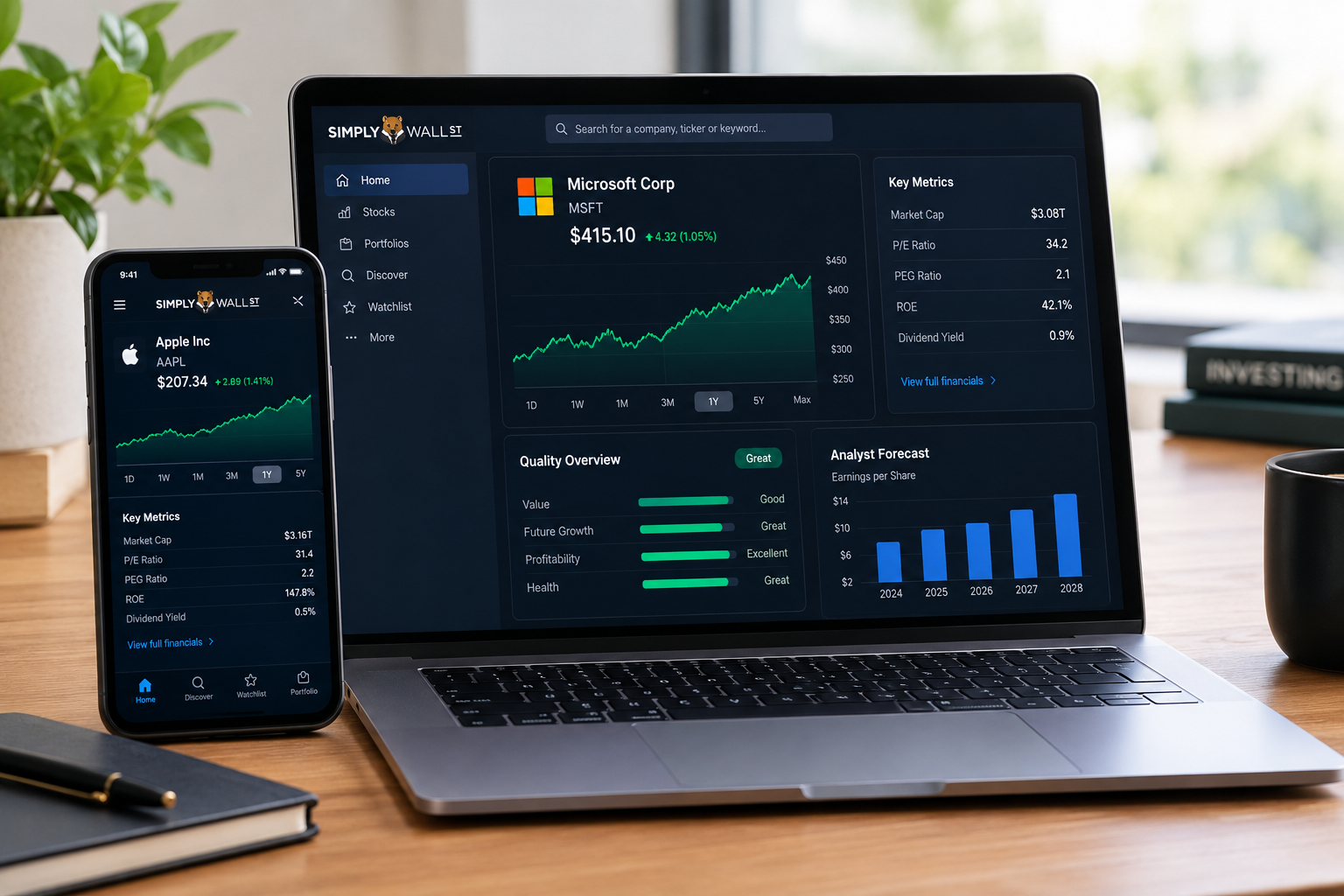
Webull paper trading is Webull's free simulated account that runs on live market data instead of your money, letting you place real orders against real prices without any financial risk. It's not a stripped-down demo bolted onto the side of the app. It lives inside the same webull paper trading app you'd use to trade for real, with the same charts, the same order ticket, and the same watchlist tools.

That matters because most brokers sell you execution: a fast, clean way to buy and sell. Webull's actual differentiator, especially post-2026, is rehearsal. You get to build a process before a single dollar is on the line, which is the entire point of "systems over hacks" as a philosophy instead of a slogan.
Here's what that gets you, feature by feature:
- Real-time quotes, not delayed snapshots. Benefit: the breakout you practice today behaves like the breakout you'll trade tomorrow, so your reps actually transfer.
- Full order types: limit, market, stop, trailing stop. Benefit: you learn to set a stop loss correctly, under zero pressure, before a real drawdown tests whether you'll actually honor it.
- An interface identical to the live account. Benefit: no second learning curve when you flip the switch. Muscle memory carries over.
Webull paper trading is built for three kinds of people: total beginners who've never placed an order, options traders who want to see how theta and spreads actually move before committing capital, and Webull account holders comparing the free practice tools across brokers before picking where to fund a live account. If you're still deciding on the broker itself, our Webull Review: Fees, Tools and the Catch breaks down where the platform earns its keep and where it doesn't.
Is Webull Paper Trading Free?
Yes. Webull paper trading costs nothing, requires no funded account, and no subscription, confirmed directly on Webull's own paper trading support page. You open the app, tap into paper trading, and you're trading a simulated portfolio in under a minute.
Compare that to brokers that gate their demo mode behind a funded deposit or a "request access" form. That's not practice. That's a sales funnel wearing a lab coat.
Why Use Webull Paper Trading Instead of Real Money?
Because a mistake inside webull paper trading costs you a lesson. The same mistake live costs you cash, sleep, and the next three decisions you make out of fear instead of process. Paper trade it first, and you find out you were sizing positions wrong before that habit finds out the hard way.
How Does Webull Paper Trading Work?
Webull paper trading works by handing you an instant virtual balance the moment you activate it, then letting you place trades against live quotes on desktop or mobile exactly like a funded account, minus the funding. No waiting period. No approval process. You're in.
Here's the actual setup:
- Open the Webull app or desktop platform.
- Find "Paper Trading" in the account or trading menu.
- Land on your simulated balance immediately. No deposit, no verification.
- Search a ticker and place your first trade the same way you would with real money.
That starting balance is generous by design, roughly $1,000,000 in virtual capital according to Webull's help documentation, which gives you room to test position sizing across a real range of trade sizes instead of white-knuckling every $500 order.
How Do You Start Webull Paper Trading?
You start by picking the asset you actually plan to trade live, not the one that's trending on FinTok. If your real plan is small-cap stock breakouts, practice small-cap stock breakouts. If it's options spreads, practice those. Matching the paper trading webull environment to your real strategy is the difference between useful reps and a waste of a Tuesday.
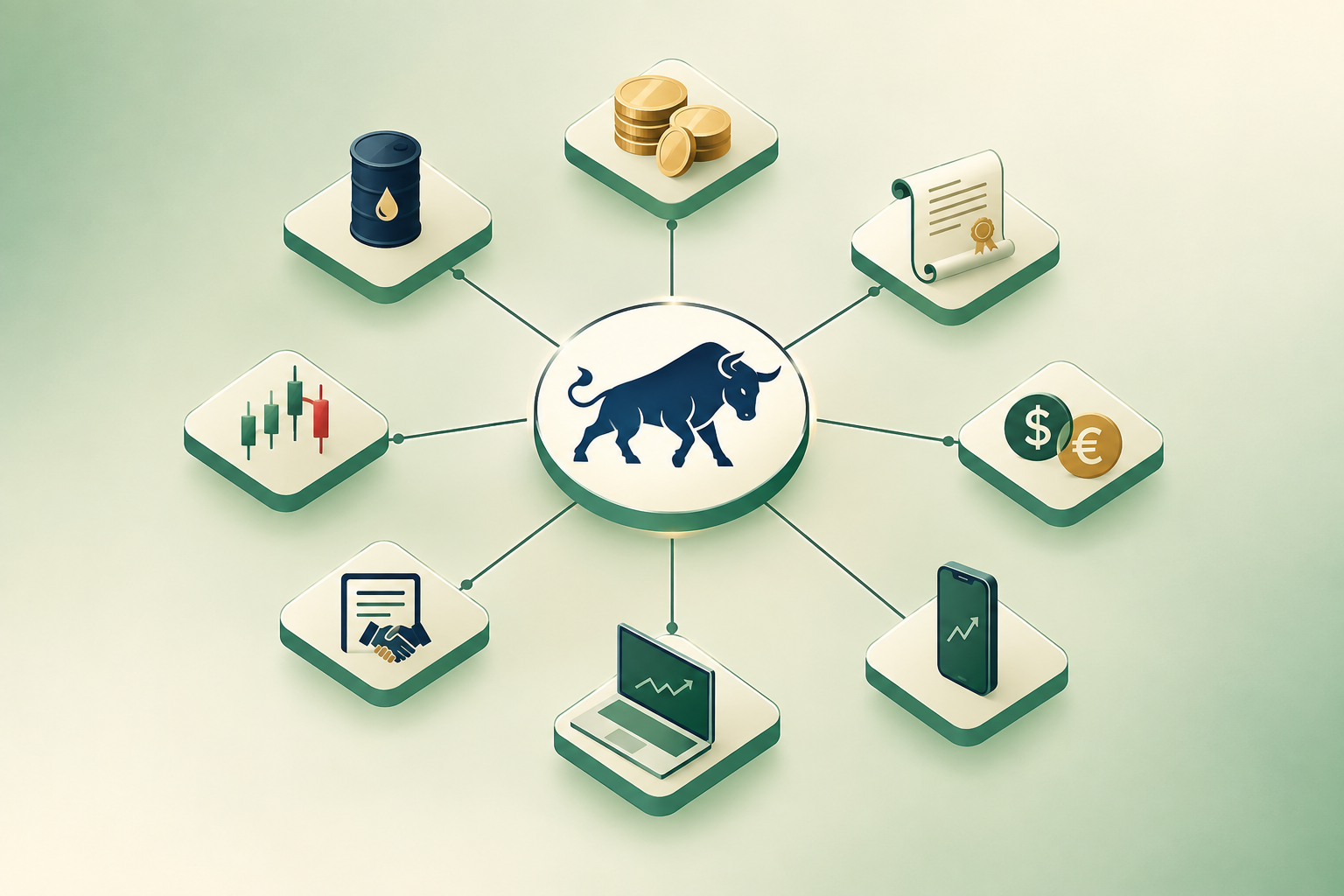
Does Webull Paper Trading Include Options, Futures, and Crypto, or Just Stocks?
No, it's not stocks-only. Webull expanded paper trading to six asset classes in 2026, adding crypto, futures, and bonds on top of stocks, options, and ETFs, per Investing.com's coverage of the expansion and Webull's own announcement of the enhanced, professional-grade multi-asset simulator. Webull paper trading options specifically use realistic quotes and Greeks, though some advanced order functions stay simplified compared to the live options chain, per Webull's refreshed options paper trading education article.
Practical takeaway: if your real account will trade futures or options, don't practice on stocks and assume the skill transfers. Position sizing, margin behavior, and time decay are asset-specific. Practice the actual game you're going to play.
Is Webull Paper Trading Real-Time?
Yes. Webull paper trading real time data feeds the simulator, so quotes, charts, and price action reflect the actual market tick for tick, not a delayed or simulated feed. That's the single biggest reason it beats a spreadsheet backtest for building instinct.
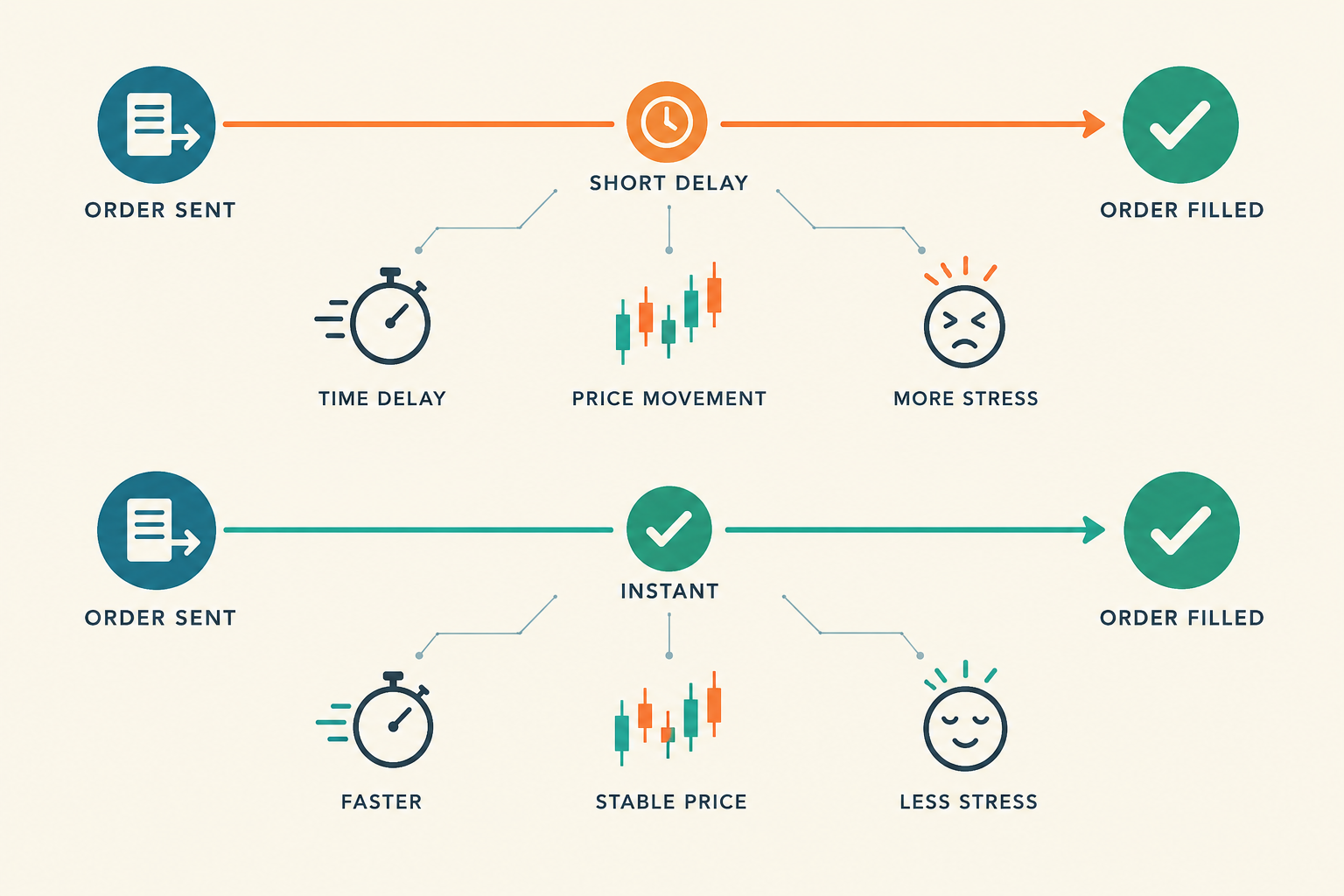
But real-time quotes are not the same as real-time execution. One Reddit user on r/Webull put it bluntly: "the only gripe I have about it is when you paper trade. it takes 3 to 4 seconds to execute a trade (slippage) when you are practicing and it kinda screws up your strategy. If you trade on margin or a cash account, real money is being traded and executes in 1-2 seconds or less."
That's not a nitpick. A 3-4 second lag on a fast-moving breakout is the difference between catching the setup and buying the top of a dead cat bounce. If your edge depends on speed, paper trading webull real time data will teach you the chart correctly and lie to you about the fill.
Decision rule: use webull paper trading real time practice for setups, entries, and reading the tape. Do not use your simulated fill price as proof of what you'd have actually gotten live.
Where Does Webull Paper Trading Differ From Live Trading?
Three things separate webull paper trading from a funded account: fills, slippage, and emotion. Get the first two wrong and you overestimate your edge. Get the third wrong and you find out the hard way that discipline on a video game and discipline with rent money are not the same muscle.
Fills. Paper orders can take several seconds longer to execute than live ones. One Reddit trader described it plainly: "It is really bad at filling orders. Many times my limit price was crossed but not filled." A live account fills that same limit order the instant price touches it. A simulator sometimes just... doesn't.
Slippage. Paper vs live slippage is where a lot of "profitable" paper trading webull strategies fall apart on contact with real money. Simulators tend to give you the price you wanted. Live markets, especially in low float names during choppy tape, often give you a worse one. Build in a slippage buffer before you go live, or your backtested-looking win rate is fiction.
Emotion. This is the one no simulator can fix. Watching a virtual $2,000 position go red feels like nothing. Watching your actual rent money go red is a different nervous system entirely. That's why paper trading builds process, not composure.
For a deeper look at how simulated environments across brokers handle this gap, our Do AI Trading Bots Actually Work? piece covers a related trap: automation that looks flawless in a backtest and falls apart the moment real fills enter the picture.
Can You Make Real Money With Webull Paper Trading?
No. You cannot make real money with Webull paper trading, and you cannot move virtual profits into your funded account. The two ledgers never touch, by design and by regulation. Anyone selling a "turn your paper gains into real cash" angle is selling a scam, full stop.
What you can do is build a track record of decisions you'd have made with real money, which is worth more than the fake profit number anyway. A green paper account tells you your process might work. It never tells you it will.
Robinhood not having a real paper trading mode is the entire reason the "webull vs robinhood" comparison keeps coming up in beginner forums: one platform lets you rehearse before funding, the other hands you a live account on day one.
Can You Backtest a Strategy With Webull Paper Trading?
Not exactly. Webull paper trading is a forward test, meaning you're trading a strategy in real time against tomorrow's unknown price action, not replaying yesterday's chart in fast-forward. Backtesting and forward-testing answer different questions, and confusing them is how traders end up overconfident in a strategy that never actually worked.
Backtesting runs your rules against historical data instantly. You can test a year of price action in an afternoon. What it can prove: whether an idea had statistical merit historically. What it can't prove: whether you'll actually follow the rules when a real chart is moving in front of you.
Forward-testing, which is what webull paper trading actually is, runs your rules against live, unfolding data in real time. What it can prove: whether you can spot the setup, size it, and execute it under the actual friction of the tape. What it can't prove: how you'll behave when it's your money, not a number on a screen.
Practical takeaway: use a backtesting tool first to filter out strategies with no historical edge, then forward-test the survivors on webull paper trading before you fund the account. Skipping the backtest and going straight to paper trading wastes weeks discovering something a spreadsheet could have told you in ten minutes.
How Should You Use Webull Paper Trading to Build a System?
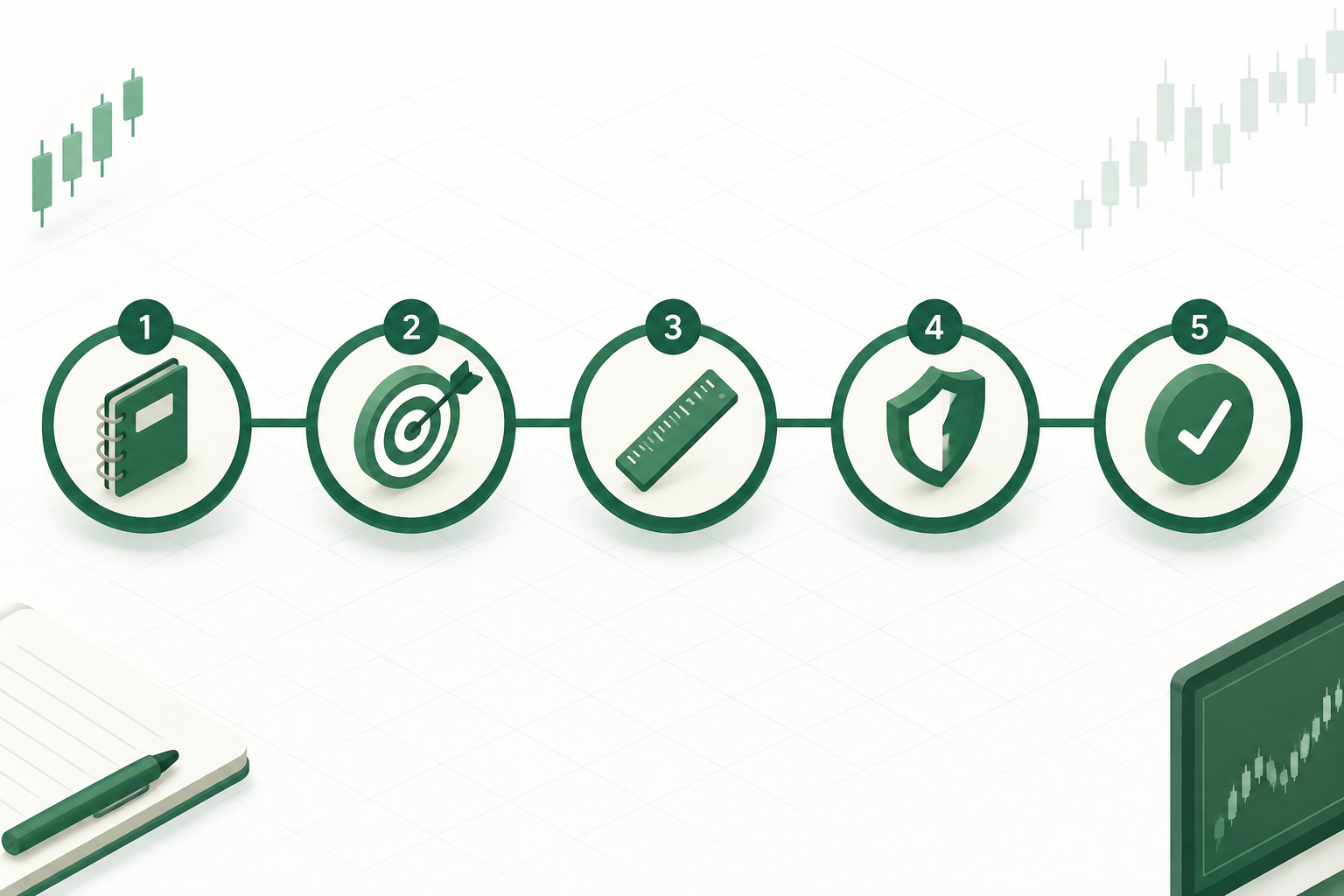
Treat webull paper trading like a lab notebook, not a video game. Write your entry rule, your exit rule, your position size, and your stop loss before every single trade, then grade the results after a fixed number of reps, not after a lucky week.
Here's the trade log format that actually works:
- Setup: what pattern, what catalyst, why this ticker, right now.
- Entry price and time.
- Position size: percentage of account risked, decided before entry, not adjusted mid-trade.
- Stop loss: the exact price you're wrong at.
- Exit price and reason: target hit, stop hit, or you broke your own rule (be honest about which one).
- Grade: did you follow your plan, regardless of whether the trade won?
Run this for 20 trades minimum before you touch live money. Twenty trades is roughly the smallest sample where a real pattern starts separating from noise. Ten trades is a coin flip with extra steps.
What Mistakes Do Beginners Make With Paper Trading?
The most common one: sizing positions like the money is real fake money, meaning oversized and reckless, because "it's not real anyway." That habit follows you straight into a live account and gets expensive fast. Play stupid games with your position sizing on paper, and you'll play the same stupid game live, just with worse consequences.
Other repeat offenders:
- Skipping the stop loss because getting stopped out doesn't sting in a simulator.
- Revenge trading after a paper loss, doubling size to "get it back," which trains the exact habit that blows up real accounts.
- Declaring victory after one hot streak instead of grading a full 20-trade sample.
- Practicing a different strategy than the one you'll actually trade live.
Is Webull Paper Trading Good for Learning Before Going Live?
Yes, for building process. No, for building emotional discipline. That split is the honest answer, and anyone telling you paper trading alone prepares you for the psychology of real losses is selling something. Use it to prove the setup works and that you can execute it consistently. Then fund a small account and rebuild your discipline from scratch, because that part only gets learned with real money on the table.
What Does Webull Paper Trading Integrate With?
Webull paper trading runs across desktop, mobile, and now OpenAPI, Webull's programmatic access point for developers, announced July 21, 2026, per Stocktitan's coverage of the release. That means you can rehearse a coded strategy the same way you rehearse a manual one, against real-time data, before it ever touches live capital.
The 2026 rebuild also brought a professional-grade interface that mirrors the live platform, screener tools, watchlists, and Webull's own AI-driven insights layer into the simulator itself. If you're testing a webull ai trading bot style automation, do it here first. Our Best AI Trading Bots (Honest Rankings) breakdown is a useful reality check before you trust any bot with real money, and our Best AI Stock Scanners for Real-Time Trading guide covers which scanning tools are actually worth pairing with a practice account versus a live one.
Benefit, stated plainly: you don't need six separate tools to test six separate things. Webull paper trading now covers the watchlist, the screener, and the execution layer in one sandbox, which cuts the noise before you ever risk the alpha.
How Long Can You Use Webull Paper Trading, and What Happens if You Don't?
There's no advertised expiration on a webull paper trading account. It stays available as long as your Webull account exists. You can trigger a webull paper trading reset manually to wipe the simulated balance and start clean, confirmed in Webull's regional help documentation, and letting the account sit unused doesn't lock it, it just leaves your data stale until you come back and reset it.
Webull Paper Trading by the Numbers
- $1,000,000: roughly the starting virtual balance new Webull paper trading accounts receive, per Webull's Paper Trading help page.
- 6 asset classes: stocks, options, futures, crypto, bonds, and ETFs now covered after Webull's 2026 expansion, per Investing.com.
- July 21, 2026: the date Webull opened OpenAPI access for programmatic simulation, per Stocktitan.
- 4.7 average rating across roughly 341,000 App Store reviews, a rough proxy for overall platform usability, paper trading tools included (Apple App Store, 2026).
- 3 to 4 seconds: the fill delay Reddit users report on paper trades compared to live executions.
- 20 trades: the minimum logged sample most traders need before trusting the results of any system, paper or live.
Frequently Asked Questions
Does Webull have paper trading?
Yes. Webull offers a free paper trading account built into the same app as its live platform, running on real-time data across stocks, options, futures, crypto, and bonds after its 2026 expansion, per Webull's official paper trading page.
Is Webull paper trading real time?
Yes, quotes and charts inside webull paper trading reflect live market data. Execution speed is the exception: fills can lag live trades by a few seconds, which changes how fast setups actually play out in practice.
How do I reset Webull paper trading?
You can manually reset your simulated balance from inside the paper trading settings menu on the app or desktop platform, confirmed in Webull's help documentation. The reset wipes your virtual positions and history, so log your results before you do it.
Can you paper trade options on Webull?
Yes. Webull paper trading options use realistic live quotes and pricing behavior, though some advanced order mechanics are simplified compared to the funded options chain, per Webull's options paper trading education article.
Can you paper trade futures on Webull?
Yes, futures joined Webull's paper trading simulator as part of the 2026 expansion to six asset classes, alongside crypto and bonds, per Investing.com's report.
Is Webull paper trading free?
Yes, completely free, no funded account or subscription required to access it, per Webull's own FAQ page.
Webull paper trading vs thinkorswim: which is better?
Both offer real-time data and options simulation for free. thinkorswim's paperMoney has a longer track record with advanced traders; Webull paper trading has the edge on mobile usability and now matches it on asset class breadth after the 2026 six-asset expansion. Pick based on which live platform you'd actually fund.
How long should I paper trade before going live?
Long enough to log 20 complete trades against your actual strategy, not 20 random guesses. For most beginners that's two to six weeks of consistent practice, depending on how often your setups actually appear.
Conclusion: Rehearse the Process, Then Fund the Account
Webull paper trading won't make you a trader. It'll show you, honestly, whether you already have a process worth funding. That's the whole value: real-time data, six asset classes, an interface that matches live, and zero financial risk while you find out if your setup actually holds up against a real tape.
The gaps are real too. Fills lag. Slippage in the simulator is friendlier than the market will ever be. And no amount of virtual money will teach you what it feels like to watch your own rent get cut in half by a bad trade. Paper trading builds the system. Live trading builds the nerve. You need both, in that order.
Do this next: open webull paper trading today, pick one setup you actually understand, and log 20 trades before you fund anything. If the platform itself is still a question mark for you, our full Webull Review: Fees, Tools and the Catch covers what you're actually signing up for once the practice money runs out.
One tool, tested in depth here. There are 200+ more AI stock tools catalogued in the FullStack Alpha directory, filterable by category, price, and what they actually do.
Browse the directory → aistockpickerapps.com
This article may contain affiliate links. FullStack Alpha may earn a commission if you sign up through them, at no extra cost to you.
We test the tools. You get the verdict.
One email a week. What we tested, what scored, and what we'd skip. Written for traders, not for clicks.
More from FullStack Alpha