Seeking Alpha API: What Exists, What It Costs, What Works

Quick answer: The seeking alpha api exists through negotiated business licensing, but Seeking Alpha does not advertise a self-service public developer API bundled with Premium. Its official partnership page offers structured API delivery; unofficial providers sell separate access with separate risks. Buying a reading subscription doesn’t buy permission to feed an application.
Key takeaways
The right route depends on whether you need proprietary research or ordinary prices for stocks. Start with permission and required fields before choosing a subscription.
- Seeking Alpha offers sales-led API licensing, with terms negotiated for each partner.
- Premium buys consumer research features, not advertised developer credentials.
- APIDojo publishes third-party documentation; its offering is unofficial.
- APIs.io reports no published public APIs in its provider assessment.
- Swing traders can use research alongside a separate price feed.
- Python and JavaScript builders should keep provider keys on their own server.
- A seeking alpha api project needs written answers about storage, historical access, and redistribution.
Is there an official seeking alpha api?
Yes, an official seeking alpha api is available through commercial partnerships, but no open, self-service first-party developer product is publicly documented. Seeking Alpha explicitly offers API delivery while asking prospective partners to negotiate content and licensing terms.

That distinction corrects two common mistakes: “there is no API” is too broad, and “Premium includes an API” is unsupported.
The official licensing form targets brokerages, fintech companies, wealth platforms, financial institutions, publishers, and information businesses. It lists research, ratings, ticker-level content, and structured delivery for real-time or batch integration.
You can see a public offer to discuss integration. You cannot see a public developer dashboard, published rate schedule, or guaranteed retail entitlement on that page.
How do you get access, authenticate, and set up a seeking alpha api?
Official access begins with the partnership form, followed by a commercial discussion. Authentication details belong to the resulting agreement and technical onboarding; don’t invent an endpoint or assume a Premium password will work.
Describe the application, intended audience, requested fields, update needs, and whether outputs remain private. Ask whether derived signals, stored summaries, embeddings, and model training are permitted.
Then request:
- A sample payload and field dictionary.
- Authentication instructions and a test environment.
- Historical coverage and revision rules.
- Storage, display, attribution, and redistribution rights.
- Support terms and cancellation conditions.
A seeking alpha api key from an unofficial vendor authenticates with that vendor. It is not evidence of a direct publisher agreement.
What can you get, and what stays locked?
The official offering names content categories rather than a universal entitlement list. Ratings, analyst insights, and ticker-linked material may be licensed, but exact fields depend on the contract.
A locked article in a browser does not establish whether a partner can receive it. Equally, a visible teaser does not grant permission to reproduce the full article.
Ask for separate treatment of Quant ratings, contributor ratings, and Wall Street ratings. They represent different inputs. Your portfolio view should preserve the source rather than flattening them into one number.
For the consumer product, see the Seeking Alpha Premium review. Premium may be useful without being your integration layer.
Public documentation check: The September 2026 APIs.io assessment lists zero published public APIs. That is catalog evidence about public discovery, not proof that private licensing does not exist.
What do unofficial seeking alpha api options cost and return?
Unofficial seeking alpha api services sell access through an outside provider, with their own endpoints, quotas, and billing. Their current listings must establish the price and returned fields; a familiar publisher name does not establish authorization.
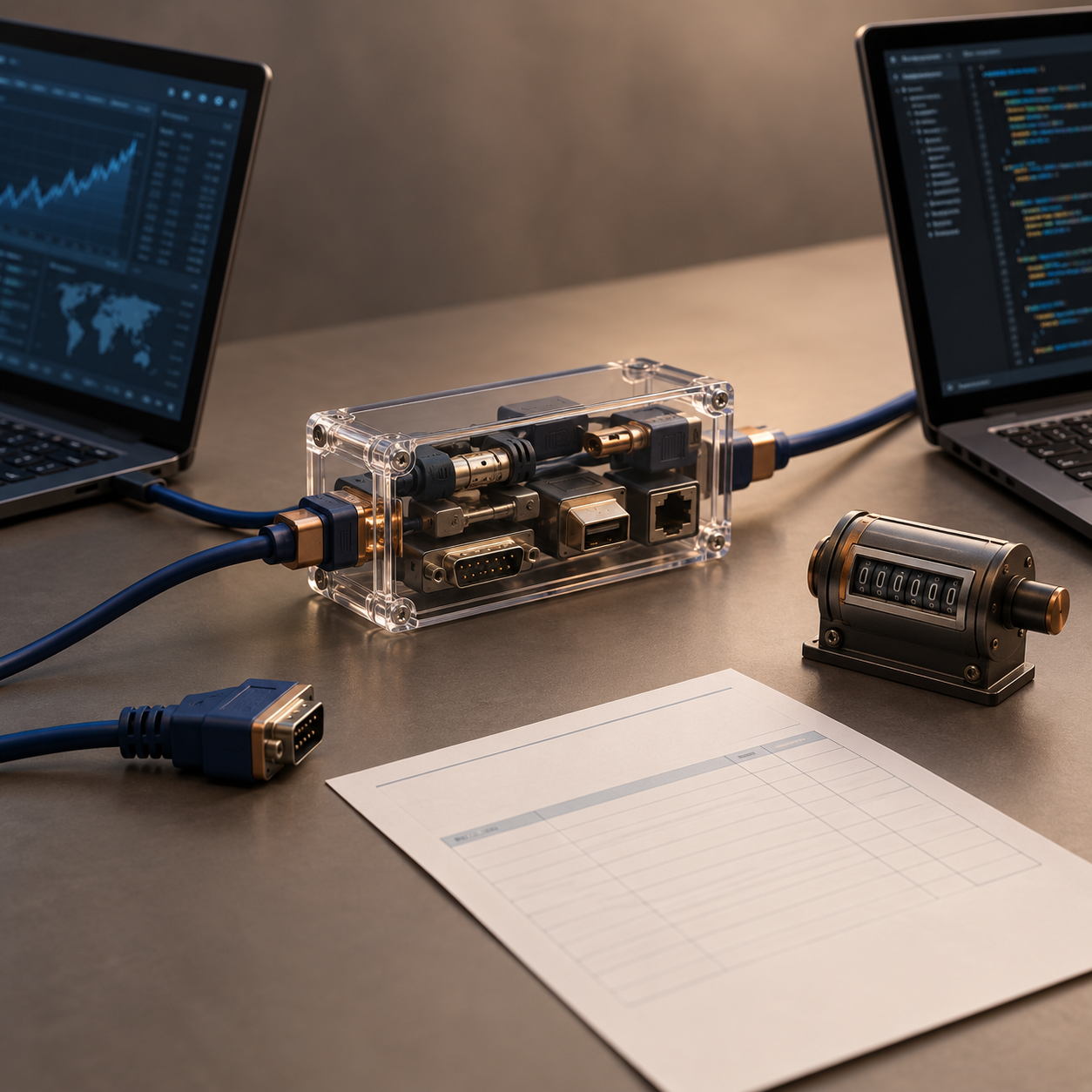
APIDojo’s documentation is a vendor reference, not first-party Seeking Alpha documentation. Treat the associated RapidAPI listing as unofficial.
A successful response proves that a request worked at that moment. It does not prove redistribution rights, historical completeness, or continued access.
Before paying, ask the vendor whether it has permission to supply the content for your intended use. If the answer dodges the question, your production plan already has a hole.
What does seeking alpha api pricing include?
Official licensing is quote-based; the partnership page lists no public API price. Unofficial pricing belongs to the vendor and should be checked at checkout, including request allowances, overages, and endpoint restrictions.
There is no verified universal API price to quote here. Publishing a convenient monthly number would create false certainty.
Consumer costs are separate:
Premium subscription: The September 2026 subscription page shows $4.95 for the introductory month, then $299 annually. These are consumer subscription prices, not API fees.
PRO subscription: The same snapshot shows $99 for an introductory month, then $2,400 annually. PRO pricing also does not establish API access.
Premium lets eligible users see more research and ratings in the product. Premium does not, by itself, turn locked content into an export license.
For renewal details, see the Seeking Alpha subscription pricing breakdown.
Where are seeking alpha api rate limits and documentation?
Unofficial limits come from the provider’s current plan and documentation; official partner limits must be confirmed during onboarding. No shared limit applies across both routes.
Check pagination, retry instructions, burst limits, and billing units. A request that returns an empty result might still be billable.
The comparison below separates access models. Alternative-provider prices and contractual rights require current vendor confirmation.
| Option | Content returned | Terms risk | Reliability | Price |
|---|---|---|---|---|
| Official licensing | Contracted research and ratings | Rights defined by agreement | Request service commitments | Custom quote |
| Unofficial APIDojo | Vendor-listed endpoints | Confirm upstream permission | Extra provider dependency | Check current listing |
| Financial Modeling Prep | Fundamentals and prices | Plan-specific usage rights | Validate required endpoints | Check developer plans |
| Polygon | Prices and trade feeds | Exchange permissions matter | Verify feed and delay | Check asset-specific plans |
| Alpha Vantage | Time series and indicators | Check endpoint entitlements | Quota-dependent | Free and paid access |
Who needs a seeking alpha api: day traders, swing traders, scalpers, or long-term investors?
A seeking alpha api is most relevant to licensed application builders, research-led swing traders, and long-term position investors. Day traders and scalpers generally need a purpose-built price feed before they need article delivery.

For swing traders, research can help frame the setup: why particular stocks deserve attention before price action confirms an entry. A research view can sit beside support and resistance, meaning price areas where buying or selling previously appeared.
For long-term investing, financial statements, dividend coverage, and competing theses can support a slower decision process.
For a scalper, delayed content is a poor substitute for quotes and execution information. A ratings change cannot tell you whether the next order will fill.
Publisher scale: Seeking Alpha reports 35 million-plus monthly visitors, 7,000-plus contributing analysts, and 10,000-plus covered tickers on its licensing page. These are company-provided figures, not audited API performance measures.
Scale helps explain why investors want the content. It says nothing about latency guarantees.
Investing Groups, portfolios, and being picky with stocks
Investing Groups and Premium are separate product considerations. Confirm each entitlement before assuming a paid group’s commentary belongs in your application.
Keep portfolios and research permissions separate. You can see stocks in the watchlist without having rights to archive every linked article.
If your only need is a daily review of a few stocks, a manual workflow may be the clean setup. See the swing-trading tool guide before building infrastructure that creates more chores than insight.
Top 5 Seeking Alpha features worth pulling into your workflow
The most useful research categories are ratings, financial statements, portfolio context, commentary, and event coverage. A seeking alpha api agreement must specify which of these you may receive, retain, and display; the consumer feature list alone cannot answer that.

Ratings: Keep methodology, source, and observation time. See whether historical ratings are available before designing a backtest.
Financial statements: Preserve reporting periods, currencies, and restatements. Premium download options do not establish unrestricted redistribution.
Portfolio context: Link research to stocks you follow, but keep private holdings outside vendor logs wherever possible.
Commentary: Store links and permitted metadata. A locked essay should remain locked unless your license covers its contents.
Event coverage: Distinguish an announcement from opinion about that announcement. During earnings season, a timestamp can matter as much as the text.
How does it compare to competitors?
A seeking alpha api supplies publisher-specific research when licensed; other providers may better fit prices, fundamentals, or charting. Choose the missing function rather than buying another subscription because its landing page looks expensive.
Financial Modeling Prep suits builders who prioritize statements, ratios, and company fundamentals. It does not replace proprietary Quant ratings.
Polygon suits applications centered on price feeds and trade information. Check asset coverage, exchange entitlements, and delays before choosing a plan.
Alpha Vantage suits learning projects and lightweight indicator workflows. A free allowance may support experimentation, but validate quotas against your polling schedule.
Koyfin is better considered as a research workspace for people who want to view information without maintaining code. Do not assume its interface implies unrestricted developer access.
Premium can still be the right purchase when the goal is to see research, compare stocks, and review ETFs manually. The drawback is that Premium and a licensed integration solve different jobs.
For automated strategy work, see the QuantConnect review. A research subscription cannot replace a backtest engine, and an engine cannot supply rights to locked research.
Which data APIs are safer alternatives to a seeking alpha api?
The safer alternative is a provider whose written contract permits your exact use and whose technical service meets your needs. A direct developer product can reduce ambiguity, but no vendor name removes the need to check licensing.
Is seeking alpha api reliable for production use?
Official licensing may suit production if the agreement covers service levels, support, and continued access. An unofficial seeking alpha api introduces another dependency between your application and the original publisher.
Request a sample covering the fields you actually need. Compare missing values, revisions, duplicate articles, and stale timestamps.
Build a failure policy before launch. If research delivery fails, show “unavailable” rather than yesterday’s ratings dressed as current information. Keep execution decisions independent from article availability.
Can you scrape instead of using an API?
Do not assume a Premium subscription permits automated collection. The consumer page describes reading and research features, while the partnership page provides a separate route for licensed delivery.
Ask for written permission before bulk collection. Do not bypass locked content, reuse session cookies as a substitute for authorization, or rotate accounts to evade restrictions.
A robots file does not settle copyright, contract, or redistribution questions. If permitted exports cover your private workflow, use those within their stated limits. See the technical access guide for discussion of consumer exports versus API access.
How should Python and JavaScript authentication work?
For seeking alpha api Python projects, load provider credentials from environment variables and send requests through a server-side client. Use only the authentication scheme documented by your contracted provider.
For seeking alpha api JavaScript projects, keep secrets out of browser bundles. A browser-facing application should call your backend, which checks user permissions before requesting licensed material.
A seeking alpha api tutorial should name the provider before showing code. Without that, an apparently helpful snippet can target a private endpoint or assume rights you don’t have.
What are common seeking alpha api integration problems?
Common failures include expired credentials, unsupported fields, changed response shapes, stale caches, and confused entitlement states. Diagnose the cause before retrying.
Use distinct states for:
- Locked content requiring another entitlement.
- Missing coverage for an instrument.
- A provider outage.
- Invalid authentication.
- A request rejected by the quota.
Never convert locked ratings into zero. Never let a failed portfolio view silently remove holdings.
For seeking alpha api GitHub searches, check maintenance history and licensing. Repository availability does not grant rights to the material a wrapper retrieves.
Seeking Alpha API Reddit discussions can reveal billing frustration or broken integrations, but they cannot establish legal permission. This article is built on FullStack Alpha desk research and treats public user sentiment as anecdotal.
What operating practices reduce risk?
Set a field-level retention policy, hide credentials, and log request outcomes without storing secrets. Keep publication time separate from retrieval time.
For backtests, use information available at the decision time. Current ratings applied to old prices create look-ahead bias, which means the model accidentally sees the future.
See the backtest reality check before trusting an attractive chart. Paper trade it first, including simulated missing responses and stale records.
FAQ
A seeking alpha api decision usually turns on access rights, cost, and the difference between research and execution inputs. These answers address those questions without treating unofficial availability as publisher approval.
What is the Seeking Alpha controversy?
There is no single controversy identified by that phrase. Readers may mean contributor opinions, rating disagreements, paywalls, or subscription billing. Separate a documented complaint from a broad accusation. For API builders, the relevant issue is whether purchased access permits automated reuse; the licensing page treats partnerships as negotiated arrangements.
Is there a free API for stock market data?
Yes. Providers such as Alpha Vantage offer free developer access with restrictions, but free prices do not reproduce proprietary publisher ratings or essays. For a seeking alpha api project, distinguish a free consumer account from a developer entitlement. Seeking Alpha’s Basic plan describes website and app features rather than public API credentials.
Is there a free version of Seeking Alpha?
Yes. Basic provides consumer features such as watchlists, alerts, prices, and limited content access, according to the subscription page. Premium adds research features and broader access. Neither a free login nor a paid reading plan is advertised as a public developer license, so confirm integration rights separately.
Does Premium include a seeking alpha api key?
No public API key entitlement is advertised with Premium on the consumer subscription page. Premium may let you see ratings, research tools, and downloadable statements in the interface. Official API delivery is described separately through business licensing, where credentials and permitted use must be agreed during onboarding.
Can an unofficial seeking alpha api supply a commercial app?
Only proceed when the provider can establish the rights needed for your commercial use. Endpoint documentation explains request mechanics, not necessarily upstream permission or redistribution rights. Review the vendor’s agreement and seek written confirmation. The official partnership route is the direct place to discuss licensed application delivery.
References
These sources support the access model, subscription snapshot, and documentation distinctions above. Undated pages are not assigned invented publication years.
Form - https://seekingalpha.com/partnership/form
Seekingalpha - https://apis.io/providers/seekingalpha/
Seeking Alpha Api - https://isetupedia.com/seeking-alpha-api/
Subscriptions - https://seekingalpha.com/subscriptions
seekingalpha - https://apidojo.net/documentations/seekingalpha
Alpha Score: research value versus integration fit
Seeking Alpha carries an editorial score of 75/100, with a provisional pillar split. The score concerns the research product, not an independently tested API service; the FullStack Alpha review is the score reference.
| Pillar | Provisional score | Interpretation |
|---|---|---|
| Signal Quality | 15/20 | Useful research inputs, without an execution guarantee |
| Transparency | 16/20 | Visible distinctions between research types; API terms need negotiation |
| Price-to-Value | 15/20 | Reasonable fit for frequent research use, separate integration costs |
| Usability | 15/20 | Consumer workflow is easier than building licensed delivery |
| Community Verdict | 14/20 | Solid but qualified; individual billing and access experiences vary |
The score comes from FullStack Alpha desk research plus public user sentiment, and the pillar split is provisional. Public sentiment cannot replace a measured reliability study.
The main drawbacks are clear: retail subscriptions lack an advertised developer entitlement, and unofficial access carries unresolved permission and continuity questions. Useful ratings do not erase those limitations.
Conclusion
Use official licensing if your application needs proprietary research, and choose a documented price provider if prices are the actual requirement. A seeking alpha api should enter your build only after access rights, fields, and operating costs are clear.
Write down the required fields today. Mark which ones are proprietary, request a sample, and reject any provider that cannot explain storage and redistribution rights.
For a private research view, Premium plus permitted exports may be enough. For production, keep locked content out of the pipeline until permission is explicit. Systems over hacks applies to the plumbing, too.
Compare research and developer tools in the FullStack Alpha directory.
Affiliate disclosure: FullStack Alpha may earn a commission from qualifying purchases through affiliate links.
We test the tools. You get the verdict.
One email a week. What we tested, what scored, and what we'd skip. Written for traders, not for clicks.
More from FullStack Alpha