TipRanks Reddit Threads: What Paying Users Actually Complain About
TipRanks Reddit threads reach a clear verdict: the analyst accuracy data earns real respect, while most complaints target billing presentation, upsells and email volume rather than the research itself.
Quick answer
TipRanks Reddit complaints cluster around three things, and none of them are "the data is fake." Paying users gripe about the billing experience (the headline $29.95/mo is the annual-billing rate, roughly $359 upfront), the thinness of the Smart Score as a standalone reason to buy a stock, and the constant upsell toward the $49.95/mo Ultimate tier at about $599 a year. The praise is narrower and more consistent: the analyst accuracy rankings are the one dataset almost nobody else packages this cleanly. If you want a fast consensus check before you buy, it earns its keep. If you want written analysis explaining the pick, you'll feel shortchanged.
TipRanks Reddit sentiment: key takeaways
These seven points condense the TipRanks Reddit picture into what actually affects your wallet and your process.
- Premium is $29.95/mo billed annually, about $359 charged upfront. The monthly-look pricing is the single most repeated complaint theme in Reddit threads about the checkout flow.
- Ultimate runs $49.95/mo annually, about $599 a year, or roughly $240 more than Premium. Most long-term investors never touch the extra risk-factor and expanded insider features that gap buys.
- Smart Score compresses 8 factors into one 1 to 10 number. It's a quant signal with no written thesis attached, which is exactly the complaint from investors who want reasoning.
- Premium includes email alerts on up to 30 stocks plus full access to the Top Stocks lists. That alert cap is the practical ceiling for a Premium-tier watchlist.
- There's a 30-day money-back guarantee on both paid tiers. Test it inside that window or you're arguing with a support ticket.
- The free Basic tier exists, and it's a teaser. Enough to judge the interface, not enough to judge the data.
- Reddit skews negative by design. People post when they're annoyed, not when a tool quietly works, so weight complaints about billing and marketing higher than complaints about accuracy.
What is TipRanks, and what does the subscription actually include?
Context first, because most TipRanks Reddit arguments make more sense once you know exactly what each tier includes.
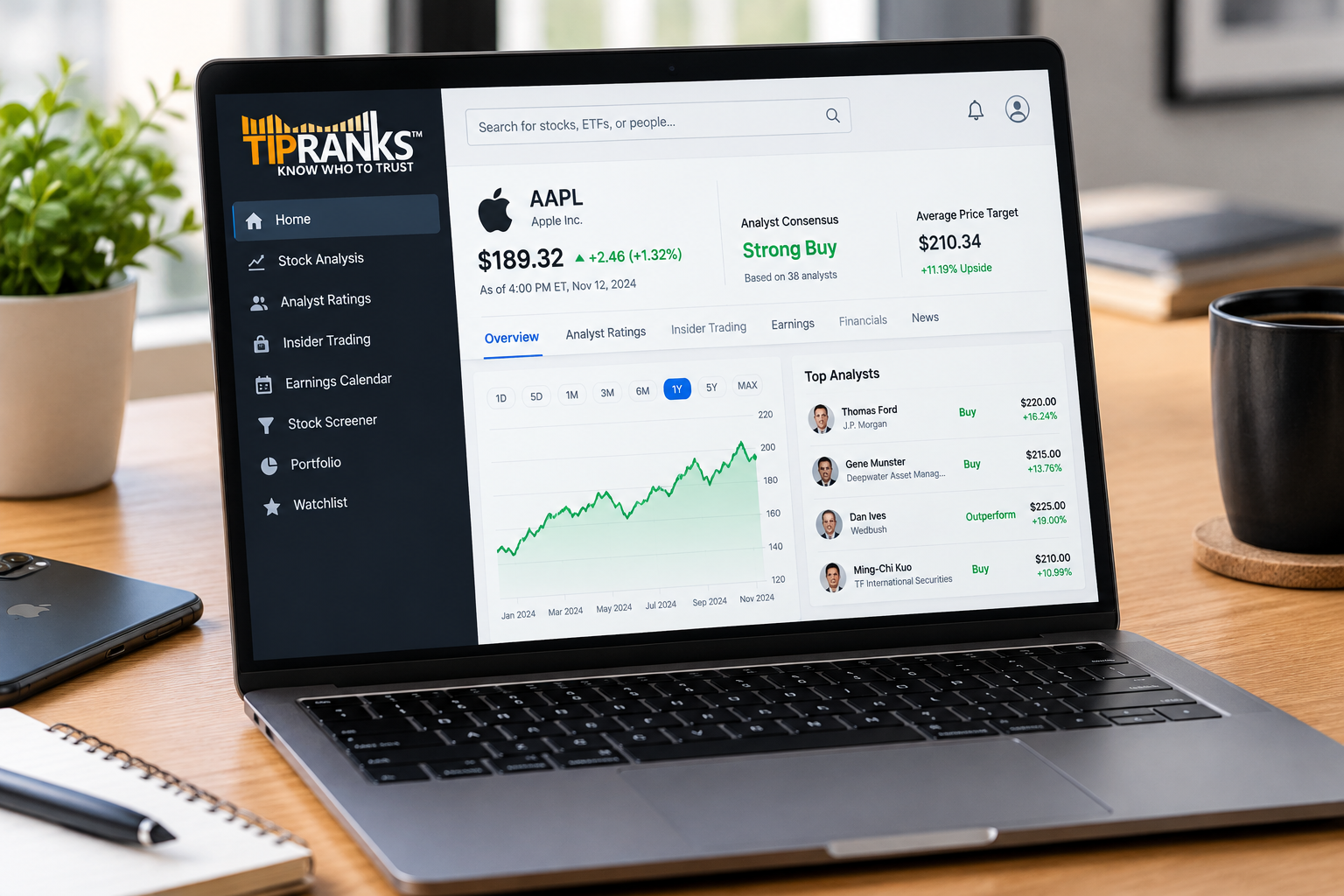
TipRanks is a stock research platform built around one question: which experts are actually right? It tracks Wall Street analysts, corporate insiders, hedge funds, and financial bloggers, then scores each one on a measurable track record rather than a reputation.
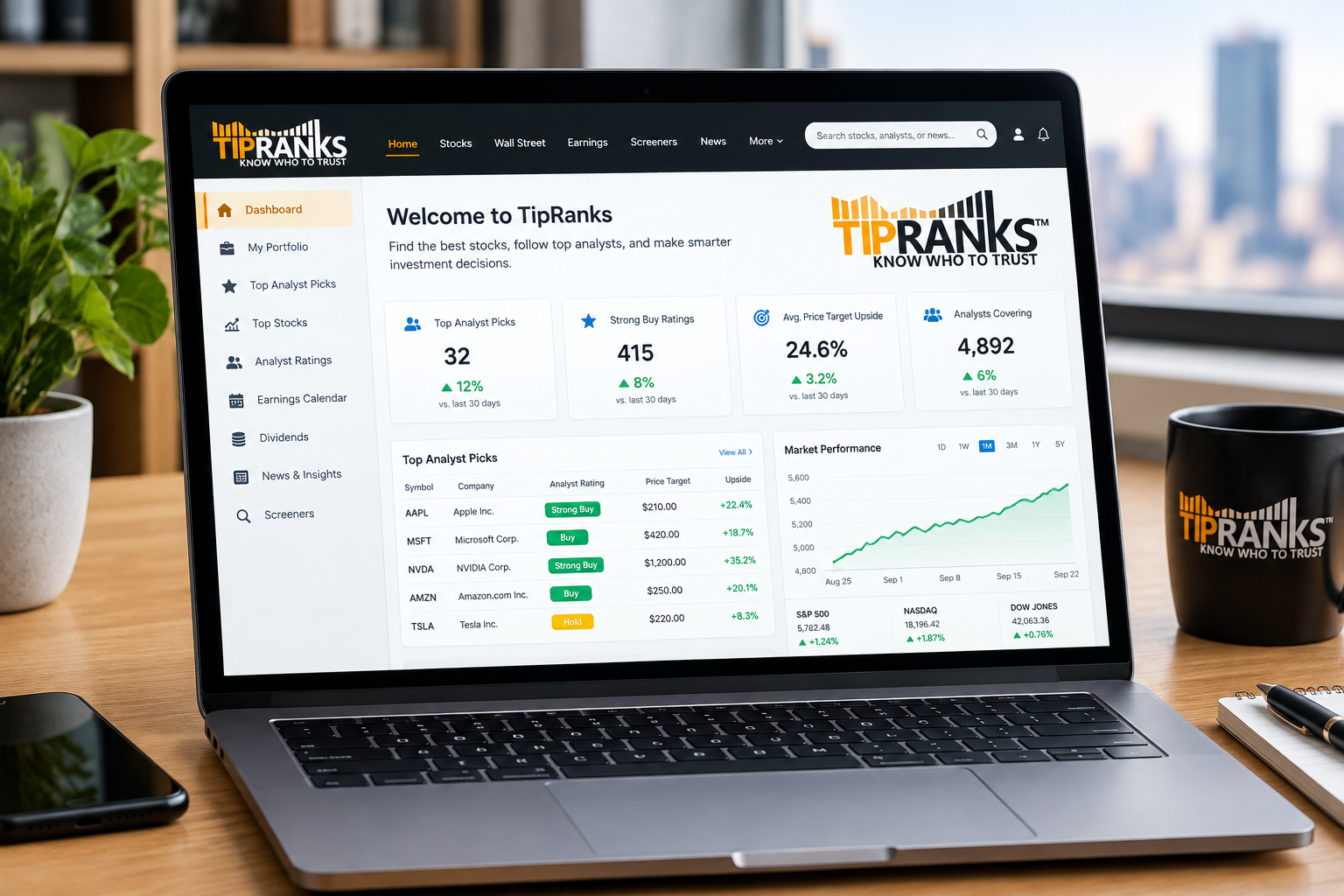
That's the whole pitch, and it's a good one. Most investors have no idea whether the analyst who just slapped a $250 price target on a name has been right 68% of the time or 34% of the time. TipRanks puts that number next to the target.
The tiers:
- Basic, $0/mo. Limited access to core research tools and stock data. Useful for kicking the tires on the interface.
- Premium, $29.95/mo billed annually (about $359/yr). Smart Portfolio, advanced stock analysis, expert tracking, daily analyst ratings, email alerts on up to 30 stocks, full Top Stocks lists. This is the tier the site pushes hardest, usually with a promotional discount and a 30-day money-back guarantee.
- Ultimate, $49.95/mo billed annually (about $599/yr). Everything in Premium plus expanded insider activity, risk factor analysis, more portfolios and alerts, and VIP support.
The engine underneath is Smart Score, a 1 to 10 rating that rolls 8 inputs into a single number: analyst ratings, insider trades, hedge fund activity, blogger sentiment, technicals, and a few fundamental and momentum factors. A 10 means the eight signals mostly agree in a bullish direction. A 2 means they mostly don't.
That's the product. The rest of this piece is about the gap between that product and what people say after 12 months of paying for it.
What does TipRanks Reddit sentiment say in short?
The TipRanks Reddit verdict boils down to useful data, annoying company. The analyst-tracking layer gets genuine respect from self-directed investors. The pricing structure, the promotional cadence, and the renewal experience generate most of the heat.
Read enough TipRanks Reddit threads and a pattern shows up. The complaints split into two very different buckets, and confusing them is how people buy the wrong tier.
Bucket one: commercial complaints. Pricing presentation, discount-for-new-customers-only frustration, email volume, the Ultimate upsell, cancellation friction. These are real, they're consistent, and they're fixable by the vendor. They also tell you nothing about whether the research is any good.
Bucket two: analytical complaints. Smart Score has no written reasoning behind it. Analyst price targets are lagging by nature. Coverage thins out fast once you leave large-cap US equities. These are structural, and no discount fixes them.
One more thing worth saying out loud, because it changes how you read every thread: Reddit has a negative skew. People post about a subscription when they're canceling it or when a billing charge surprised them. Nobody writes a 400-word post titled "logged in, checked the consensus, bought my position, went to bed." That silence is data too, and it's why we weight Reddit against solicited review sources instead of treating it as the final word. Our full methodology lives at how we test.
Decision rule: if a complaint would disappear with a coupon code, it's a commercial complaint. Discount it. If it would still exist at $0, it's structural. Take it seriously.
What are the most common complaints in TipRanks Reddit threads?
Most of these gripes are about how TipRanks sells rather than what it delivers, and that distinction should shape how you read them.
The most common TipRanks complaints on Reddit are the annual-billing presentation of the monthly price, the lack of written analysis behind Smart Score, aggressive upsell and email marketing, and the paywalling of most useful data behind Premium. Here they are in the order they actually show up.
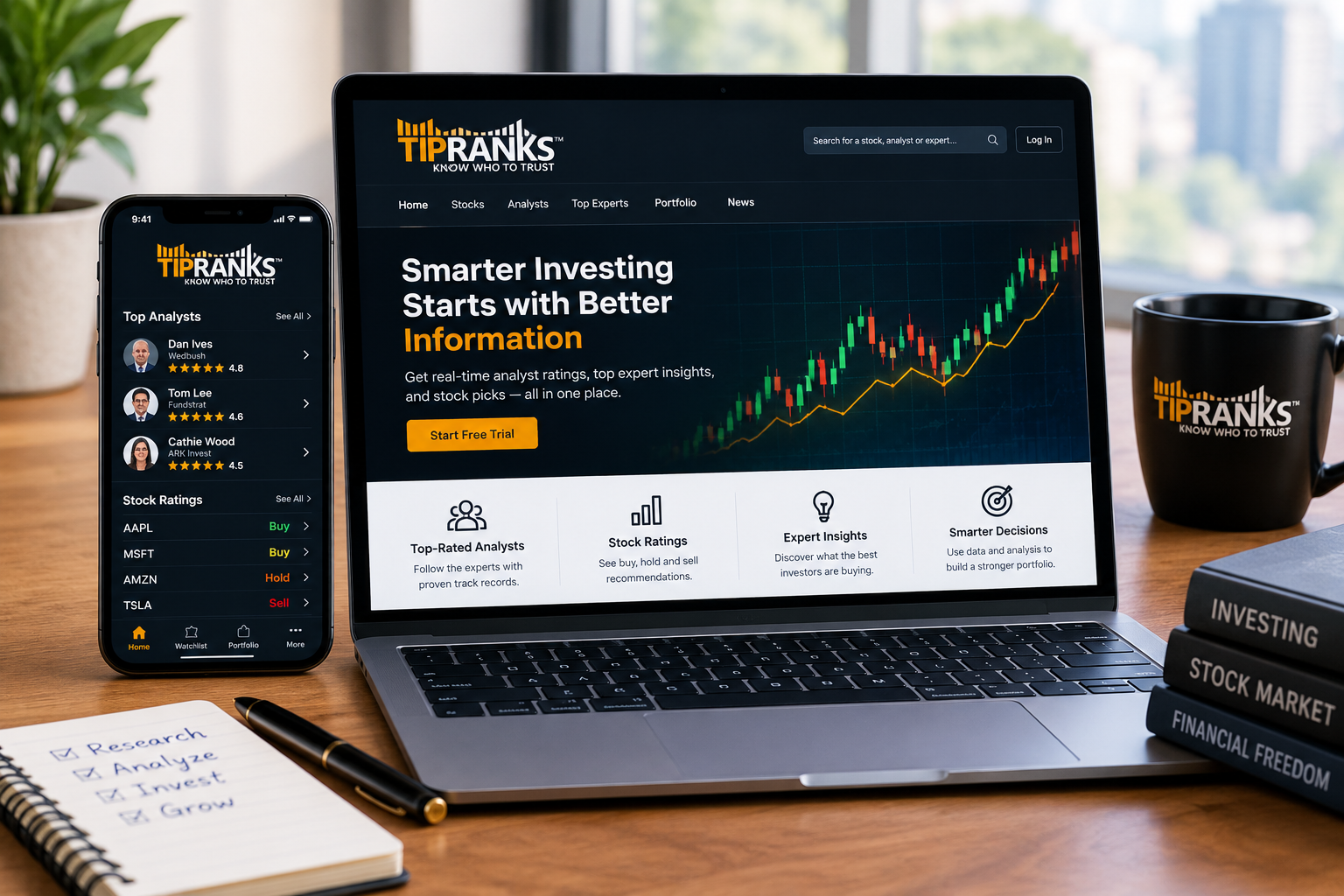
1. The $29.95 a month is really an annual charge
The headline price is the annual rate. You're paying roughly $359 at checkout. The pure month-to-month option costs meaningfully more, which is standard SaaS practice and still catches people who thought they were signing up for a cheap trial month.
The fix: read the checkout total, not the badge. If you want to test it, buy the annual plan and treat the 30-day money-back guarantee as your trial. That's the cleanest exit ramp the product offers.
2. Smart Score tells you what, never why
This is the most legitimate analytical complaint and the one the marketing doesn't answer. Smart Score is a quant output. It does not write you a paragraph explaining that the 9 is driven mostly by insider buying and technicals while the fundamentals are soft.
You can click through to the underlying factors, and you should. But a score of 8 on a company with deteriorating margins and a score of 8 on a compounder with a 20-year record look identical in a list.
The edge case that bites people: stocks with high momentum and heavy analyst coverage tend to score well, which means a Smart Score of 9 can be a slightly fancier way of saying "this has already been going up and the street likes it." That's not useless. It's also not independent confirmation.
3. Analyst ratings are, by construction, late
Analysts revise price targets after earnings, after guidance changes, after the move. Tracking who's accurate doesn't fix the timing problem, it just tells you whose lateness has historically been least harmful.
Reddit users who came for a leading indicator leave disappointed. Users who came for a consensus sanity check stay.
4. The free tier is a billboard
Basic shows you the shape of the product and then stops. You can see a Smart Score exists, feel the interface, and hit a wall. Several complaint threads boil down to signing up free and hitting that wall fast, which is accurate and also the point of a free tier.
The fix: don't evaluate TipRanks on Basic. Evaluate the interface on Basic, then use the paid trial window to evaluate the data.
5. Ultimate costs $240 more for things most people don't use
Expanded insider activity, risk factor analysis, more portfolios, more alerts, VIP support. If you're a long-term investor holding 15 positions, Premium's 30-stock alert cap is plenty and the extras are decoration. The gap between the tiers is one of the most commonly questioned line items in threads about value.
Decision rule: upgrade to Ultimate only if you're actively trading insider and 13F signals as a strategy, not because you want to feel fully equipped.
6. Marketing volume and the promo treadmill
Frequent discount campaigns mean the person who paid list price last month sees a 50%-off banner this month. That stings, and it's the fastest way to make a paying customer feel like a mark. Email frequency comes up regularly in the same threads.
7. Coverage and accuracy gripes outside US large caps
Ask TipRanks about a $40 billion S&P name and the page is dense with analysts, insiders, and fund activity. Ask about a micro cap, a foreign listing, or a niche ETF and the page gets thin quickly. That's a coverage limit of the underlying data, not a bug, but it's the difference between "this replaced three tools" and "this told me nothing."
Insider data sits on top of public filings. If you want the raw source, Form 4 filings are free on the SEC's EDGAR system, and institutional holdings come from quarterly 13F filings that are already 45 days stale by the time anyone sees them. TipRanks packages that faster and prettier. It does not make it fresher than the filing calendar allows.
8. Interface clutter and in-product promotion
Dense pages, a lot of widgets, and house promotions inside the product. Power users adapt. New users describe analysis paralysis, which is the exact opposite of what a "fast consensus check" tool should produce.
What do TipRanks Reddit threads praise?
The praise in TipRanks Reddit threads is quieter but remarkably consistent, and it centers on the data itself.
The praise is narrower than the criticism, and it's specific: analyst accuracy scoring, and having analyst, insider, and hedge fund data on one page instead of three tabs. When people defend TipRanks in threads, it's almost always one of those two things.
Analyst performance ranking. Every analyst gets a success rate and an average return attached to their name. That single feature reframes how you read a price target. A Street-high target from someone with a 41% hit rate is entertainment. The same target from a top-decile analyst on that sector is information. Nothing else at this price point does it as plainly.
Everything on one stock page. Analyst consensus, recent insider transactions, hedge fund position changes, and sentiment sit together. For a swing trader building a watchlist on Sunday night, that's real minutes saved per name, and minutes compound across 40 names.
Smart Score as a filter, not a verdict. The users who report the most satisfaction use the score the same way: as a first-pass screen to rank a list they already built, not as a buy signal. Screen with it, then do the work.
Smart Portfolio. Connect or enter your holdings and get a scored view of what you actually own, plus alerts. The complaint that shows up alongside the praise is the 30-stock alert ceiling on Premium.
The free tier as a low-risk look. Yes, it's thin. It's still better than paying $359 to discover you hate the layout.
Which complaints matter for day traders, swing traders, and long-term investors?
Your holding period decides which TipRanks Reddit complaints apply to you and which ones you can safely ignore.
Not every complaint applies to every reader. The same flaw that's disqualifying for a day trader is irrelevant for someone holding five years.

Day traders: most of these complaints are fatal
TipRanks is not an intraday tool. Analyst ratings are daily, Smart Score is not a tape-reading instrument, insider filings arrive on a regulatory delay, and none of it refreshes fast enough to matter between 9:30 and 4:00. The complaint that matters here is latency, and it's structural.
If your holding period is measured in minutes, you need scanners and real-time flow, not consensus. Start with our AI day trading tools guide instead. Paying $359 for TipRanks as a day trader is buying a telescope to read a menu.
Swing traders: two complaints matter, the rest don't
Matters: the lack of written reasoning, and the 30-stock alert cap. If you're rotating through a 60-name watchlist, Premium's alert ceiling forces you to prioritize, and the score alone won't tell you whether a setup is basing or overextended. You still need price action and a stop loss.
Doesn't matter: the Ultimate upsell (skip it), the marketing emails (filter them), the micro-cap coverage gaps (if you're trading liquid names, coverage is fine).
Used correctly for swing trading, TipRanks is a confirmation layer. You find the clean setup on a chart, then check whether the expert data argues with you. If the technical setup is good and the analyst and insider data both lean negative, that's information about your risk-reward, not a reason to cancel the trade.
Long-term investors: one complaint matters, and it's the big one
Smart Score without a written thesis is a thin foundation for a five-year hold. A number can't tell you about management quality, competitive position, or capital allocation. If your process is reading, TipRanks is a data companion and not a research service. Fold it into a broader workflow the way the AI stock pickers guide lays out.
Everything else is noise for this group. Billing annoyance is a one-time irritation. The insider and 13F data is genuinely useful for long horizons, because that's the timeframe insiders and funds actually operate on.
TipRanks Reddit complaint and praise frequency table
The frequency labels below are directional reads from FullStack Alpha desk research on public TipRanks Reddit threads, not a formal count.
| Complaint or praise | How often it shows up | Who it affects most | Fixable? |
|---|---|---|---|
| Annual billing presented as a monthly price (~$359 upfront) | Very common | Every new buyer | Yes, by the vendor. Avoidable by reading the checkout total |
| Smart Score has no written reasoning | Very common | Long-term investors, fundamental buyers | No. Structural to a quant score |
| Ultimate costs ~$240/yr more than Premium for niche extras | Common | Value-conscious Premium users | Yes. Just don't upgrade |
| Heavy email marketing and in-product promos | Common | Everyone | Yes, by the vendor. Partly by your spam filter |
| Free tier too limited to evaluate the data | Common | Prospective buyers | Yes, via the 30-day money-back window |
| Analyst ratings lag the move | Common | Day traders, momentum traders | No. Analysts revise after events |
| Thin coverage on micro caps, foreign listings, niche ETFs | Moderate | Small-cap and international investors | Partly. Data availability limits it |
| Interface density and widget clutter | Moderate | Beginners | Yes, with UI work |
| Praise: analyst success rate and average return per analyst | Very common | Anyone reading price targets | Not applicable, this is the moat |
| Praise: analyst, insider, and hedge fund data on one page | Very common | Swing traders, position investors | Not applicable |
| Praise: Smart Score as a fast first-pass filter | Common | Watchlist builders | Not applicable |
| Praise: Smart Portfolio scoring and alerts (30 stocks on Premium) | Moderate | Portfolio holders | Alert cap fixable by upgrading |
Top 5 TipRanks features Reddit users actually use
Ask which features keep people paying and the TipRanks Reddit answer is short: the analyst data first, everything else second.
Most subscribers use a fraction of what they pay for. These five are the ones that come up when people explain why they renewed.

1. Analyst rankings with success rate and average return. The reason the product exists. Before you act on a price target, check the person behind it. This is the feature that changes behavior rather than just adding a number to your screen.
2. Smart Score, used as a ranking tool. Build a list of 30 candidates from your own screen, sort by Smart Score, and work the top of the list first. Used that way it saves time. Used as a standalone buy trigger, it's how people end up catching a falling knife with a 9 next to it.
3. Insider transactions on the stock page. A cluster of open-market insider buying at a company nobody's talking about is one of the few signals that isn't derivative of price. TipRanks surfaces it without making you parse filings. Note the distinction between open-market purchases and option exercises. Only one of those is somebody spending their own money.
4. Hedge fund activity. Quarterly and stale by regulation, but useful for spotting accumulation patterns over several quarters. Treat it as a slow-moving context layer, never a trade trigger.
5. Top Stocks lists (Premium). The curated screens built off the platform's own data. Reddit's fair criticism is that these lists skew toward heavily covered large caps and repeat month to month. Fair criticism accepted. They're still a decent starting universe if your own screens have gone stale.
What almost nobody mentions using: blogger sentiment. It's one of the 8 Smart Score factors and it's the weakest link in the chain. Financial bloggers are not a leading indicator of anything except the current mood.
What does a week inside TipRanks actually feel like?
A week of real use shows why the product wins fans among disciplined investors and frustrates people hunting for a buy button.
Fast on day one, thinner by day five. Time to first useful output is short, which is a genuine strength. You type a ticker, you get a score, a consensus, insider activity, and fund flows in a single screen. That's a good first impression.
Day five is when the honest question shows up: what do I do with a 9?
The answer, if you're disciplined, is "add it to the watchlist and go look at the chart and the filings." The answer, if you're not, is "buy it because the number is high." The product doesn't stop you from doing the second thing, and that's the real risk of any single-number research tool. A score is a starting point, not a plan. You still need an entry, a stop loss, and position sizing, because none of those live inside TipRanks.
Where it genuinely saves time: pre-earnings prep. Checking which analysts moved targets into the print, whether insiders were buying or selling in the prior quarter, and where consensus sits takes about 90 seconds per name instead of ten minutes across three sites. Across a 20-name watchlist during earnings season, that's real.
Where it wastes time: browsing. The site is built to be browsed, and browsing a research platform without a specific question is how you end up with 14 open tabs and no decision.
Pros and cons
Both lists track closely with the TipRanks Reddit consensus of strong data wrapped in an uneven commercial experience.
✅ What we love
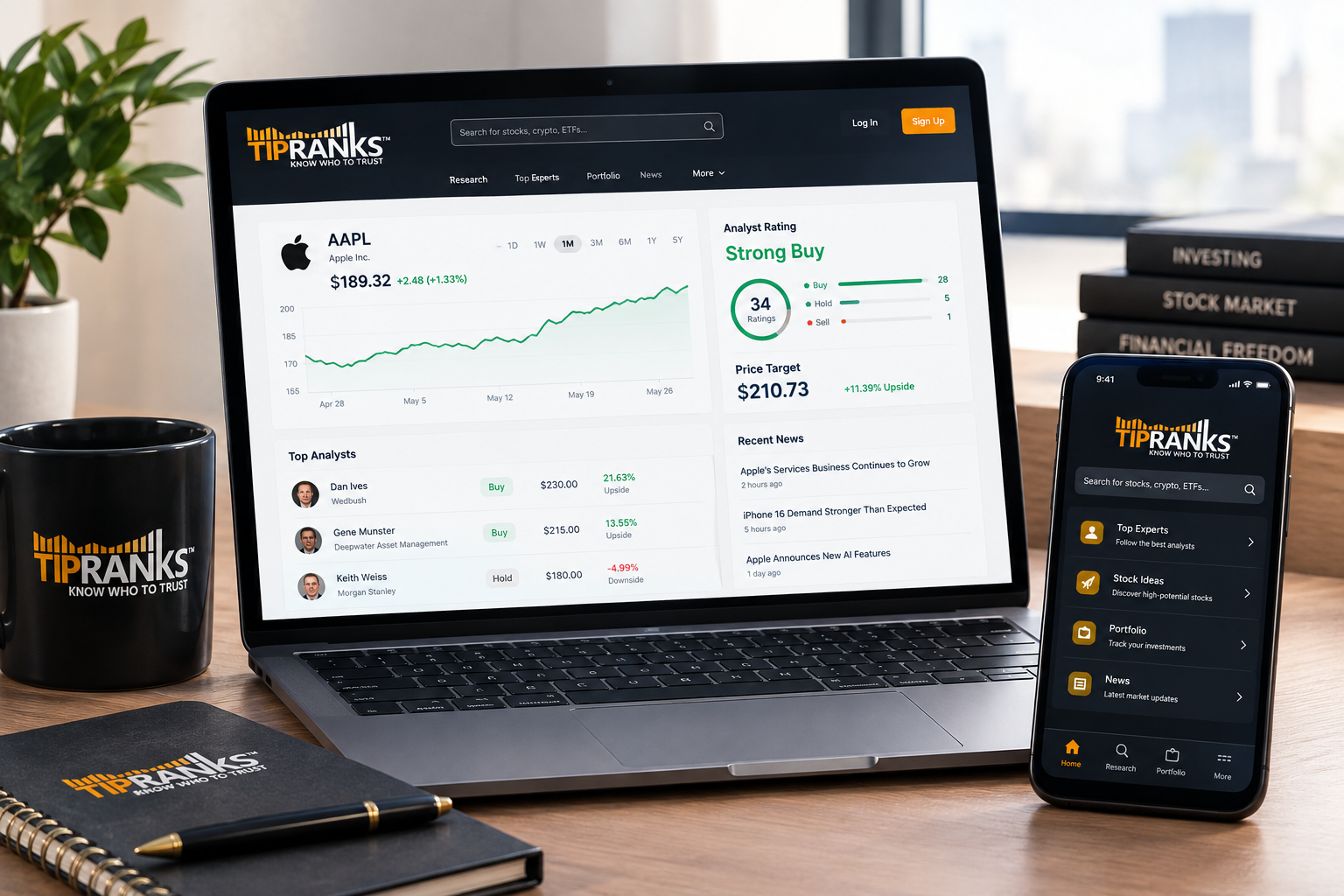
- Analyst accuracy scoring (success rate plus average return) that you can't easily get elsewhere at this price
- Smart Score pulls 8 factors into one sortable 1 to 10 number, which makes ranking a watchlist fast
- Analyst, insider, and hedge fund data on the same stock page, no tab switching
- Premium includes email alerts on up to 30 stocks plus the full Top Stocks lists
- 30-day money-back guarantee on paid tiers, which functions as a real trial
- Free Basic tier lets you judge the interface before paying anything
❌ What could be better
- Smart Score gives you a signal with no written thesis, so investors who want reasoning will find it thin
- The $29.95/mo headline is annual billing at roughly $359 upfront, and the presentation causes avoidable frustration
- Ultimate costs about $240 more a year for features many long-term investors never open
- Heavy promotional cadence means loyal subscribers see better prices offered to new ones
- Coverage thins noticeably outside US large caps
- Nothing here is intraday, so day traders are paying for the wrong product
Who should pay for TipRanks, and who should skip it?
Match your own profile against the use case TipRanks Reddit fans describe most: swing traders and position investors who read analyst coverage.
Pay for it if you're a swing trader or long-term position investor who reads analyst coverage and wants to know whose coverage is worth reading. That's the exact use case the product was built for, and it delivers.
Also a fit if:
- You hold 10 to 30 US-listed positions and want scored portfolio monitoring with alerts
- You want insider and institutional activity summarized instead of pulling filings yourself
- You do your own chart and fundamental work and need a consensus check layer on top
Skip it if:
- You day trade. Nothing here operates on an intraday clock
- You want written investment theses. This is a data platform, not an analysis publication
- You primarily invest in micro caps, foreign listings, or niche ETFs where coverage is sparse
- You're a passive index investor. You do not need an 8-factor score on VTI
- Your total portfolio is $2,000. A $359 subscription is roughly 18% of your capital. No research tool earns that. Use free tools first, and the free AI stock tools guide is where to start
What do TipRanks Reddit users switch to instead?
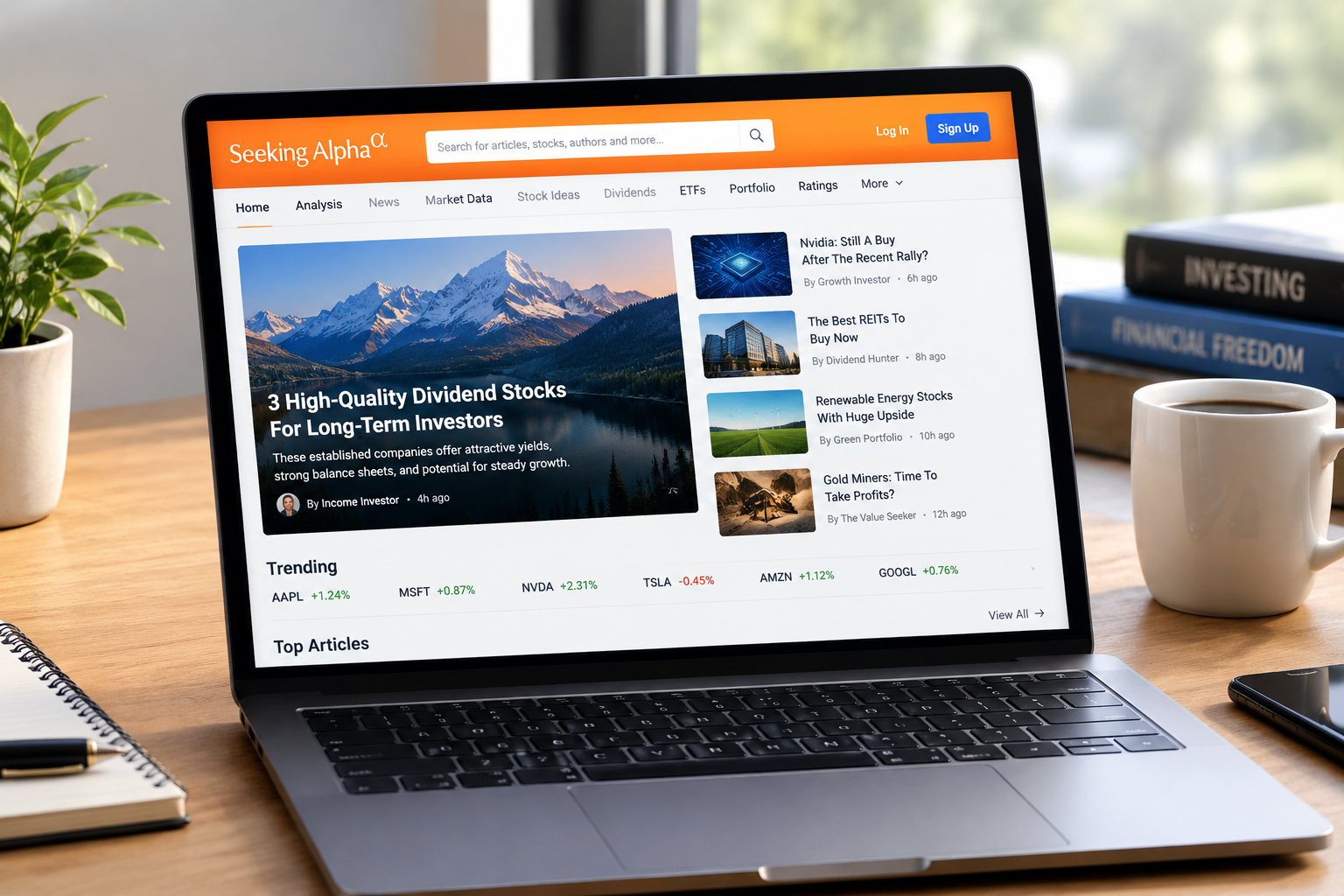
Users who cancel TipRanks usually leave for written analysis or for a cheaper data view, not for a better consensus tracker. The four names that come up most are Seeking Alpha, Zacks, Morningstar Investor, and Simply Wall St. Each solves a different problem.
Seeking Alpha. The destination for people whose actual complaint was "I wanted the reasoning." Crowd-sourced written analysis plus its own quant grades, so you get the argument and the number. The tradeoff is variable author quality and a lot of reading. Suits long-term investors who want a thesis they can push back against. Our full breakdown is in the Seeking Alpha review, and the Seeking Alpha vs Motley Fool comparison covers the analysis-versus-picks question.
Zacks. Built around earnings estimate revisions, which is a narrower and more mechanical signal than Smart Score's 8 factors. Suits traders who specifically want to trade estimate momentum and earnings surprises, and who don't need insider or fund data.
Morningstar Investor. Independent analyst research with fair value estimates and moat ratings, plus best-in-class fund and ETF coverage. Suits buy-and-hold investors and anyone whose portfolio is mostly funds, where TipRanks coverage is weakest. It won't help you time anything.
Simply Wall St. Visual, snapshot-style fundamental analysis at the lowest price of this group. Suits beginners and international investors who want a readable company overview without a terminal-grade interface. It's shallower on expert tracking by design. See the Simply Wall St review for detail.
Pricing across all four moves with promotions, so confirm current rates at the source before you commit. The pattern worth noticing: nobody switches because they found better analyst accuracy tracking. They switch because they wanted a different job done.
The Alpha Score Breakdown
The score blends FullStack Alpha desk research with public user sentiment, including TipRanks Reddit threads, and lands highest on Transparency.
TipRanks scores 78 out of 100 across five pillars, 20 points each. The score comes from FullStack Alpha desk research plus public user sentiment, and the pillar split is provisional.
| Pillar | Score |
|---|---|
| Signal Quality | 16 / 20 |
| Transparency | 17 / 20 |
| Price-to-Value | 14 / 20 |
| Usability | 16 / 20 |
| Community Verdict | 15 / 20 |
Where the pillars land in plain language:
- Signal quality: strongest on analyst performance data, weaker as a timing signal. Smart Score correlates with heavily covered momentum names.
- Transparency: above average for this category. The 8 Smart Score factors are named and clickable, which is more than most "proprietary AI" tools disclose.
- Price-to-value: Premium at about $359/yr is defensible for the analyst dataset. Ultimate at about $599/yr is harder to justify for most users.
- Usability: fast time to first useful output, undercut by page density and in-product promotion.
- Community verdict: real and mixed. The data gets respect, the commercial experience draws consistent criticism, and the gap between those two is the finding.
How to get the best deal on TipRanks
Every step below answers a complaint that keeps surfacing in TipRanks Reddit threads, from billing surprises to the Ultimate upsell.
- Start on Basic ($0) for one evening. Judge the layout, not the data. If the interface annoys you at zero dollars, it'll annoy you at $359.
- Buy Premium, not Ultimate. You can upgrade later. The $240 annual gap buys features most subscribers never open.
- Never pay list price without checking for a current promotion. Discounts run frequently. Waiting a week costs you nothing.
- Use the 30-day money-back guarantee as the trial. Put a calendar reminder at day 21. Run at least one real earnings-season workflow inside the window.
- Test it on your actual holdings, not on the demo names. Load your portfolio into Smart Portfolio in week one. If coverage on your names is thin, that's your answer.
- Decide before day 30 whether you changed a single decision because of it. If you can't name one, cancel. A subscription you don't act on is a gym membership with a nice app.
Want to compare TipRanks with the tools Reddit users switch to? Browse the FullStack Alpha AI stock tool directory and filter by price, category and what each tool actually does.
TipRanks Reddit FAQ
Is TipRanks Premium worth $359 a year?
It's worth it if you regularly read analyst price targets and act on them, because knowing each analyst's success rate and average return changes how you weigh those targets. It's not worth it if you want written investment theses or if you day trade.
What's the real difference between TipRanks Premium and Ultimate?
Ultimate adds expanded insider activity, risk factor analysis, more portfolios and alerts, and VIP support for about $240 more per year (roughly $599 versus $359). Upgrade only if insider and institutional data is central to your strategy.
Is the TipRanks Smart Score accurate?
Smart Score is a composite of 8 factors on a 1 to 10 scale, and it's best treated as a ranking filter rather than a prediction. It tends to favor heavily covered stocks with positive momentum, so a high score often confirms an existing trend rather than anticipating a new one.
Can you cancel TipRanks and get a refund?
Both paid tiers are promoted with a 30-day money-back guarantee. Request the refund inside that window and keep a record of the date you subscribed, because after 30 days you're negotiating rather than claiming.
Does the free TipRanks plan give you enough to work with?
No, and it isn't meant to. Basic shows limited core research tools and stock data, which is enough to evaluate the interface and not enough to evaluate the research. Use it as a look, not a trial.
Is TipRanks good for day trading?
No. Analyst ratings update daily, insider data follows regulatory filing timelines, and Smart Score isn't built for intraday decisions. Day traders need real-time scanners and flow tools instead.
Does TipRanks cover international stocks and ETFs?
Coverage is strongest on US-listed large and mid caps. Micro caps, foreign listings, and niche ETFs get noticeably thinner expert data, which is the most common accuracy-related complaint from non-US investors.
Is TipRanks better used alone or with another tool?
With another tool. It answers "what does the expert data say" and doesn't answer "what does the chart say" or "what's the written case." Most satisfied subscribers pair it with a charting platform and one source of written analysis.
What does TipRanks Reddit sentiment say overall?
Useful data, annoying company. The analyst accuracy rankings earn real respect, while billing presentation, upsells and email volume draw most of the criticism.
Are TipRanks Reddit complaints about the data or the billing?
Mostly billing and marketing. The headline $29.95/mo is the annual rate, about $359 upfront, and that presentation is the most repeated theme. The main analytical complaint is that Smart Score has no written reasoning behind it.
Should I trust TipRanks Reddit reviews?
Read them, but weight them. Reddit skews negative because people post when they cancel or get surprised by a charge, so treat billing gripes as solvable and structural complaints as the ones that matter.
What do TipRanks Reddit users switch to?
Seeking Alpha, Zacks, Morningstar Investor and Simply Wall St come up most. People usually leave for written analysis or a cheaper data view, not for a better analyst tracker.
What Alpha Score does TipRanks get?
78 out of 100, built from FullStack Alpha desk research and public user sentiment. The provisional split is Signal Quality 16, Transparency 17, Price-to-Value 14, Usability 16 and Community Verdict 15.
How credible is TipRanks?
Credible on the data. It packages public analyst ratings, Form 4 insider filings and 13F fund holdings, and Reddit complaints are about the commercial experience, not fake numbers. The limits are structural: analyst ratings lag the move, 13F data is 45 days stale, and coverage thins outside US large caps.
Is TipRanks legit on Reddit?
Yes. Reddit treats TipRanks as a real product with useful analyst data, and the criticism centers on the annual billing presentation, the Ultimate upsell and email volume. Both paid tiers carry a 30-day money-back guarantee, which works as your trial.
What is better than TipRanks?
Nobody switches for better analyst accuracy tracking, so better depends on the job. Seeking Alpha fits investors who want written reasoning, Morningstar Investor fits fund-heavy buy-and-hold portfolios, Zacks fits earnings-revision traders, and Simply Wall St fits beginners who want readable fundamentals.
Which is better, TipRanks or Zacks?
TipRanks is better for analyst track records plus insider and hedge fund data on one page. Zacks is better if you specifically trade earnings estimate momentum and surprises and don't need insider or fund data.
Final verdict: what TipRanks Reddit sentiment means for your money
Strip out the billing noise and TipRanks Reddit sentiment is more favorable than the complaint threads make it look.
TipRanks is a good data product with a mediocre commercial experience, and the Reddit complaints reflect exactly that split. Buy it for the analyst accuracy layer. Don't buy it expecting a research service.
By trader type:
- Day traders: skip it. Wrong clock, wrong data, wrong product. Nothing here helps you between the open and the close.
- Swing traders: Premium, yes. Use it as a confirmation layer on setups you found yourself. Respect the 30-stock alert cap and don't upgrade to Ultimate.
- Long-term investors: Premium, with a second source. The insider and institutional data suits your timeframe. The missing written thesis means you'll still need somewhere to read the argument.
- Beginners with small accounts: not yet. A $359 tool on a $3,000 account is a bad allocation no matter how good the tool is.
- Passive index investors: no. You're not the customer.
Your next step: pick five stocks you currently own, open them on the free Basic tier tonight, and write down what you'd actually want the paid version to tell you about each one. If that list is "whose price target should I trust," buy Premium during a promotion and use the 30-day window properly. If the list is "what's the case for owning this," your money belongs somewhere else. Cut the noise, keep the alpha.
Related reading: the full reviews index, the tool comparison hub, and how accurate are AI stock pickers.
One tool, scored five ways. There are 200+ more in the FullStack Alpha directory, filterable by category, price and what they actually do.
Browse the directory → aistockpickerapps.com
This article may contain affiliate links; we may earn a commission at no extra cost to you.
We test the tools. You get the verdict.
One email a week. What we tested, what scored, and what we'd skip. Written for traders, not for clicks.
More from FullStack Alpha