Is TipRanks Worth It? Who Should Pay and Who Should Skip (2026)
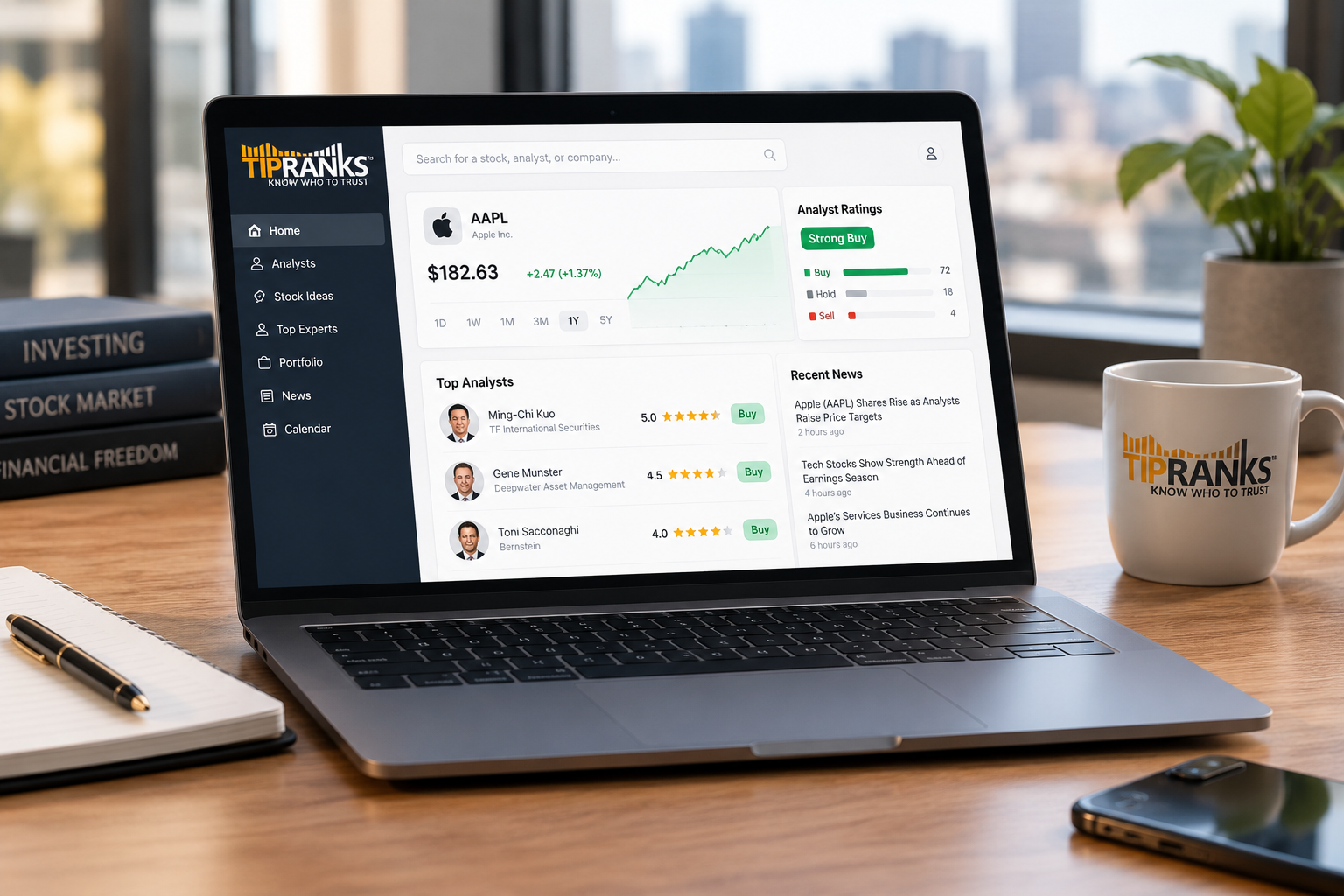
Is TipRanks worth it? For long-term investors and multi-week swing traders, yes, because Premium at $360 a year puts ranked analyst track records, insider trades and hedge fund moves on one page, while day traders and scalpers should skip it.
Quick answer
Is TipRanks worth it? Yes, if you hold positions for weeks or years and want a fast, ranked consensus check before you buy. At $30 a month list price for Premium ($360 a year), and often closer to $13.50 to $15 a month during promotions, it earns its keep as a pre-trade sanity check, not as a trade signal. If you're scalping five-minute charts, it's the wrong tool at any price. The free Basic tier is deliberately thin, so treat it as a demo and nothing more.
Is TipRanks worth it? Key takeaways
Ask is TipRanks worth it and the answer hinges on two things, what you pay and how long you hold, and these seven points cover both.
- Premium costs $30 a month or $360 a year at list price. Promo pricing has recently landed around $13.50 to $15 a month, and official promo pages advertise a 3-year Premium plan at $19.95 a month billed every 3 years.
- Ultimate costs $50 a month or $600 a year at list. That's $240 more per year than Premium for features most long-term investors will open twice.
- The Smart Score rolls 8 factors into one 1-to-10 rating, including analyst ratings, insider trades, hedge fund activity, blogger sentiment, and technicals.
- Premium includes email alerts on up to 30 stocks plus the full Top Stocks lists. That alert cap is your first real decision point if you track 60 tickers.
- Every analyst is ranked by success rate and average return, which is the single feature you can't easily replicate for free.
- There's a 30-day money-back guarantee on the advertised promo plans, so the real cost of finding out is your time, not your money.
- Day traders and scalpers should skip it. Analyst consensus and quarterly 13F data don't refresh fast enough to matter inside a session.
Is TipRanks worth it? The short answer
Yes for position investors and swing traders, no for anyone trading intraday. TipRanks answers one narrow question well: of the experts making noise about this stock, which ones have actually been right before?
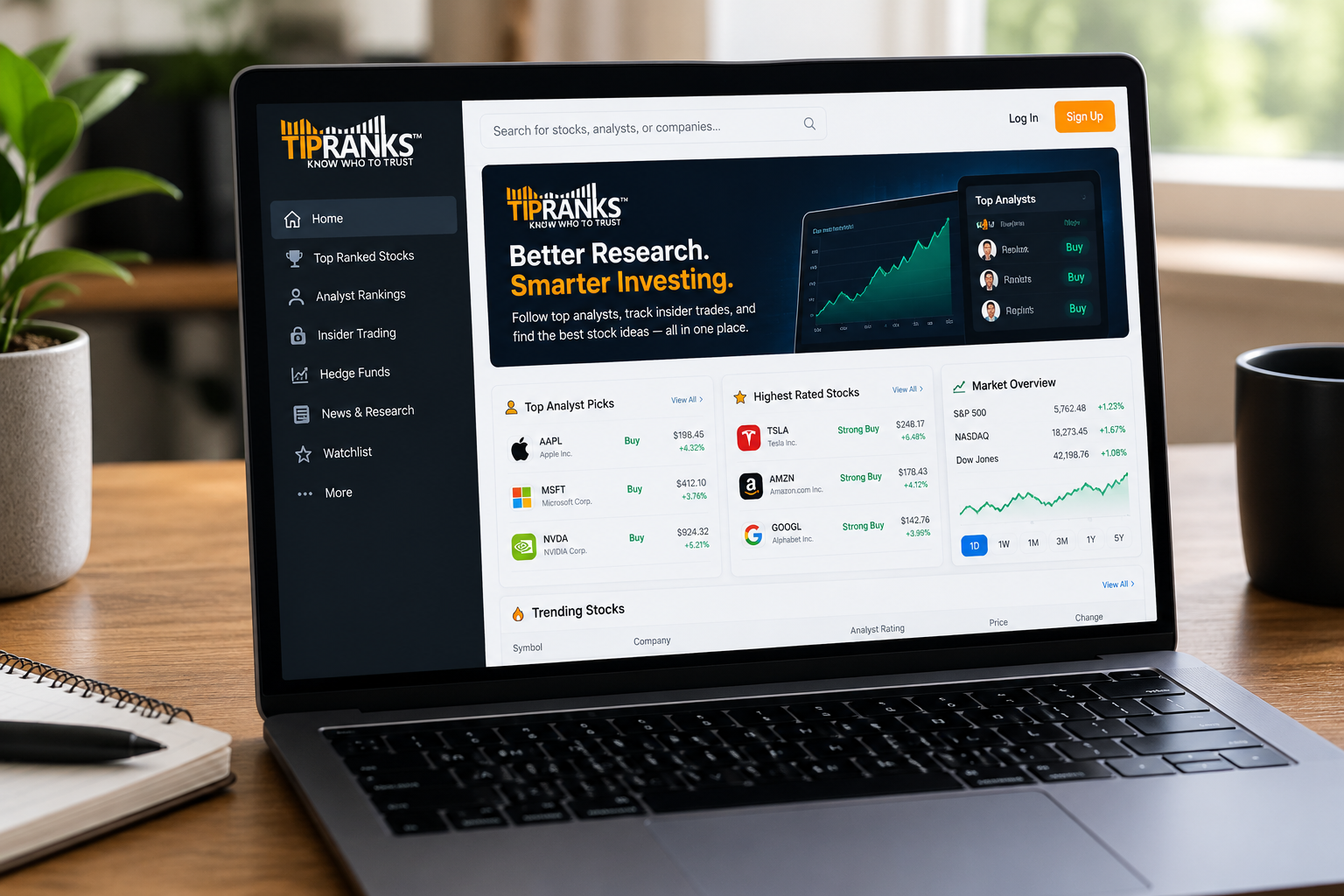
That question matters more than most people admit. A price target from an analyst with a 42% hit rate and a price target from one with a 72% hit rate look identical on a financial news chyron. TipRanks separates them, publicly, with a track record attached. That's the product. Everything else is packaging.
Here's the honest trade-off. You're paying roughly the price of two movie tickets a month to compress four browser tabs into one page: analyst ratings with accuracy scores, insider buying and selling, hedge fund position changes, and a single composite score. If you currently spend 30 minutes per stock assembling that picture by hand, the math works in about a week. If you were never going to look at analyst ratings anyway, you're buying a gym membership for a gym you don't visit.
The decision rule: pay for TipRanks if you make between 2 and 30 buy decisions a year and you want a second opinion with receipts. Skip it if your entries are triggered by price action on a chart.
One more thing before the detail. TipRanks is research, not a recommendation engine. A Smart Score of 9 is not a green light, and nobody at TipRanks is promising you a return. Treat the score as one input in your process, sized and stopped like every other position.
What do you get for the money, and is TipRanks worth it at each tier?
The tier you pick matters more than the brand, because Premium delivers nearly all of the value and Ultimate adds $240 a year on top.
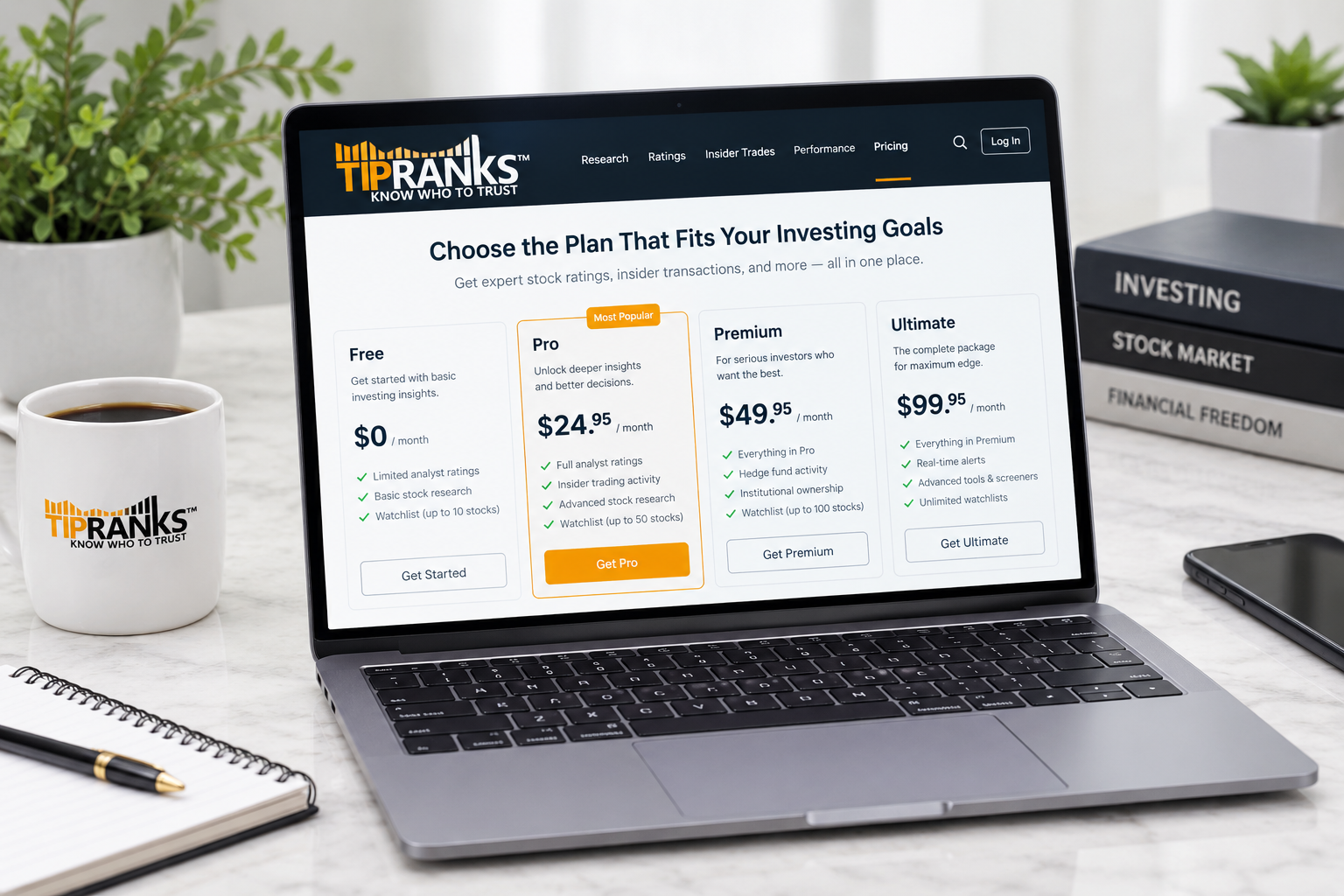
Three tiers, and the gaps between them are where people overpay. Basic is free, Premium is $30 a month ($360 a year), and Ultimate is $50 a month ($600 a year), with promo pricing regularly cutting Premium to roughly $13.50 to $15 a month and Ultimate to roughly $22.50 to $25 a month.
Basic (free). You get the interface, partial analyst data, and enough of a taste to know whether you like the layout. Most of the genuinely useful numbers, the full analyst rankings, the complete Top Stocks lists, are behind the wall. That's not a scandal, it's a funnel. Use it for a week to test whether you'd actually open the site.
Premium ($30/mo list, $360/yr). This is the tier that matters. You get the full ranked analyst database, insider transaction detail, hedge fund activity, the Smart Score on every covered stock, the Top Stocks lists, and email alerts on up to 30 stocks. For a self-directed investor running a 15 to 25 name portfolio, that 30-stock alert cap is workable. For someone maintaining a 70-ticker watchlist, it's a real constraint you should know about before you pay.
Ultimate ($50/mo list, $600/yr). The extras skew toward heavier, faster, more data-hungry use. If you can't name the specific Ultimate feature you need before you subscribe, you don't need Ultimate. $240 a year is a meaningful sum to spend on a tab you'll never click.
What the money actually buys you, concretely
- Analyst performance records, so a 12-month price target arrives with the analyst's historical accuracy attached.
- Insider transactions, sourced from SEC Form 4 filings, which corporate insiders must file within two business days of a trade.
- Hedge fund position changes, built from Form 13F filings, which institutional managers file quarterly with a filing deadline 45 days after quarter end.
- A single 1-to-10 Smart Score per stock combining 8 factors.
- Curated Top Stocks lists you can use as a starting universe.
- Email alerts on up to 30 stocks at the Premium tier.
The edge case worth naming: that 13F lag. A hedge fund's "new position" may be up to four and a half months old by the time you read it. TipRanks displays the data accurately, and the data itself is stale by design. Anyone using 13F flows as a timing signal has misunderstood the filing calendar, not the tool.
Who is TipRanks worth it for, and who should skip it?
The quickest filter is whether you buy individual stocks at all, since TipRanks rewards stock pickers and does little for index investors.
Pay if you're a self-directed investor who buys individual stocks and wants a consensus check with a track record behind it. Skip if you're passive, intraday, or already paying for written research you actually read.
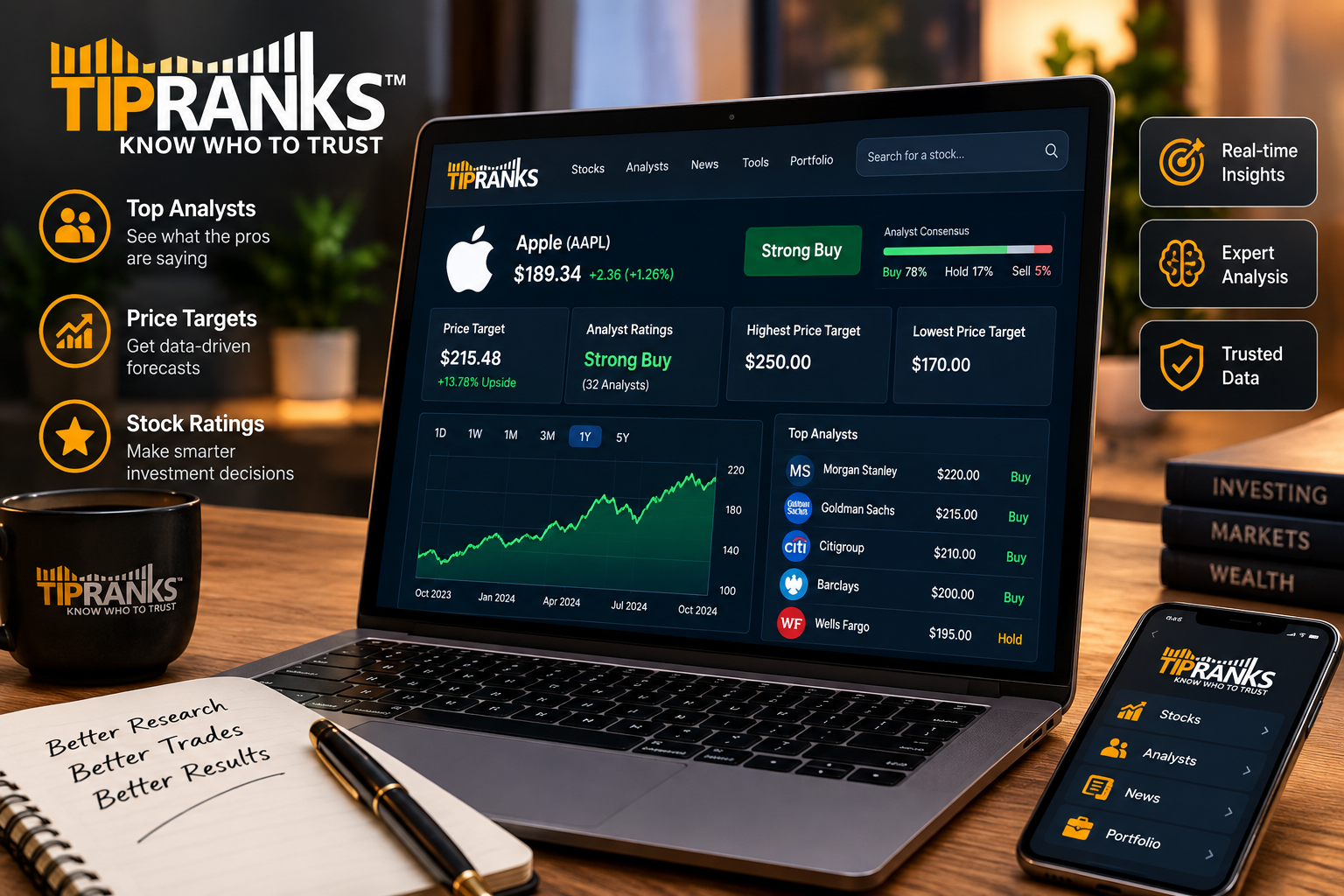
Pay for it if you are:
- A long-term position investor holding 10 to 40 names for a year or more, doing your own diligence, and tired of not knowing which analyst on TV has ever been right.
- A multi-week swing trader who uses charts for entries but wants a fundamental and sentiment filter on the watchlist before anything earns a slot.
- An investor who already checks insider activity manually. If you've ever pulled a Form 4 off SEC EDGAR by hand, TipRanks saves you real time every single week.
- Someone running a concentrated portfolio under 30 positions. The Premium alert cap fits you perfectly.
Skip it if you are:
- A day trader or scalper. Analyst consensus updates on an earnings and sell-side calendar. Your holding period is minutes.
- A passive index investor. You don't pick stocks, so ranked analyst accuracy is trivia.
- Someone who wants to be told what to buy. TipRanks hands you a score and a data table. It does not hand you a thesis.
- An investor who needs the reasoning. The Smart Score is a quant signal, meaning it's generated by a model from measurable inputs, not written by a human explaining why. If you want three pages of argument on why the margin story is broken, this is the wrong shelf.
- Already paying for two research subscriptions. Adding a third doesn't sharpen your process. It multiplies your excuses for analysis paralysis.
The common mistake: buying Premium and then never changing a decision because of it. A research tool pays for itself in two ways only, by stopping a bad buy or by giving you the conviction to hold a good one. Track that. If after 90 days you can't name one trade TipRanks altered, cancel.
Is TipRanks worth it for day traders, swing traders, scalpers, and long-term investors?
TipRanks gets more useful the longer your holding period. That's the whole answer, and the reason is structural rather than a knock on the product.
Day traders: skip. Your inputs are the tape, volume, the level 2 book, and the news catalyst hitting right now. Analyst ratings move on a schedule measured in weeks. A Smart Score of 8 tells you nothing about whether a gap fill is coming at 10:15. If you want intraday tooling, that's a different category entirely, covered in our AI day trading tools guide.
Scalpers: skip, firmly. You need execution speed and order flow. You need nothing TipRanks sells. Paying $360 a year for consensus data you'll never consult is just a subscription tax on your P&L.
Swing traders (days to weeks): conditional yes. Useful as a filter, not a trigger. The workflow that works: build your watchlist from technicals, tight consolidation, clean basing patterns, support you can define, then run each candidate through TipRanks to check for insider selling or a collapsing analyst consensus before you commit size. It's a veto tool. Let the chart pick the entry.
Long-term investors: yes, this is the target customer. You make few decisions, each one carries real capital, and a 20-minute consensus check before a $10,000 purchase is cheap insurance. At promo pricing near $15 a month, one avoided mistake covers several years of subscription.
Quick example. You like a mid-cap industrial that's been basing for six weeks. The chart is clean. You open TipRanks, see a Smart Score of 8, four analysts upgraded in the last quarter with above-average accuracy records, and one officer who sold a small sliver under a scheduled plan. Nothing there stops the trade, so you take the setup with your normal position size and a stop below support. Total time spent: four minutes. That's the correct use of this product.
| Investor type | What they use TipRanks for | Pay or skip | Cheaper alternative |
|---|---|---|---|
| Long-term position investor | Analyst accuracy, insider trends, Smart Score before a buy | Pay (Premium) | Free broker analyst reports from Fidelity or Schwab |
| Multi-week swing trader | Consensus and insider veto on watchlist names | Pay (Premium, annual) | TipRanks free Basic plus Finviz free screener |
| Dividend and income investor | Insider buying, hedge fund ownership, sentiment check | Pay only if you hold 10+ individual names | Morningstar Investor or Simply Wall St |
| Active momentum trader (days) | Fast sentiment scan on a gapper | Skip mostly | Free Basic tier plus a news catalyst tool |
| Day trader | Nothing that updates fast enough | Skip | Benzinga Pro or a real-time scanner |
| Scalper | Nothing | Skip | A better broker and faster data feed |
| Passive index investor | Curiosity only | Skip | Free tier, or nothing at all |
Top 5 TipRanks features that justify the fee
If these five features would change even one buy decision a quarter, the answer to is TipRanks worth it is probably yes.
These five are what you're actually paying for. Ranked by how much they change a decision.
1. Ranked analyst track records
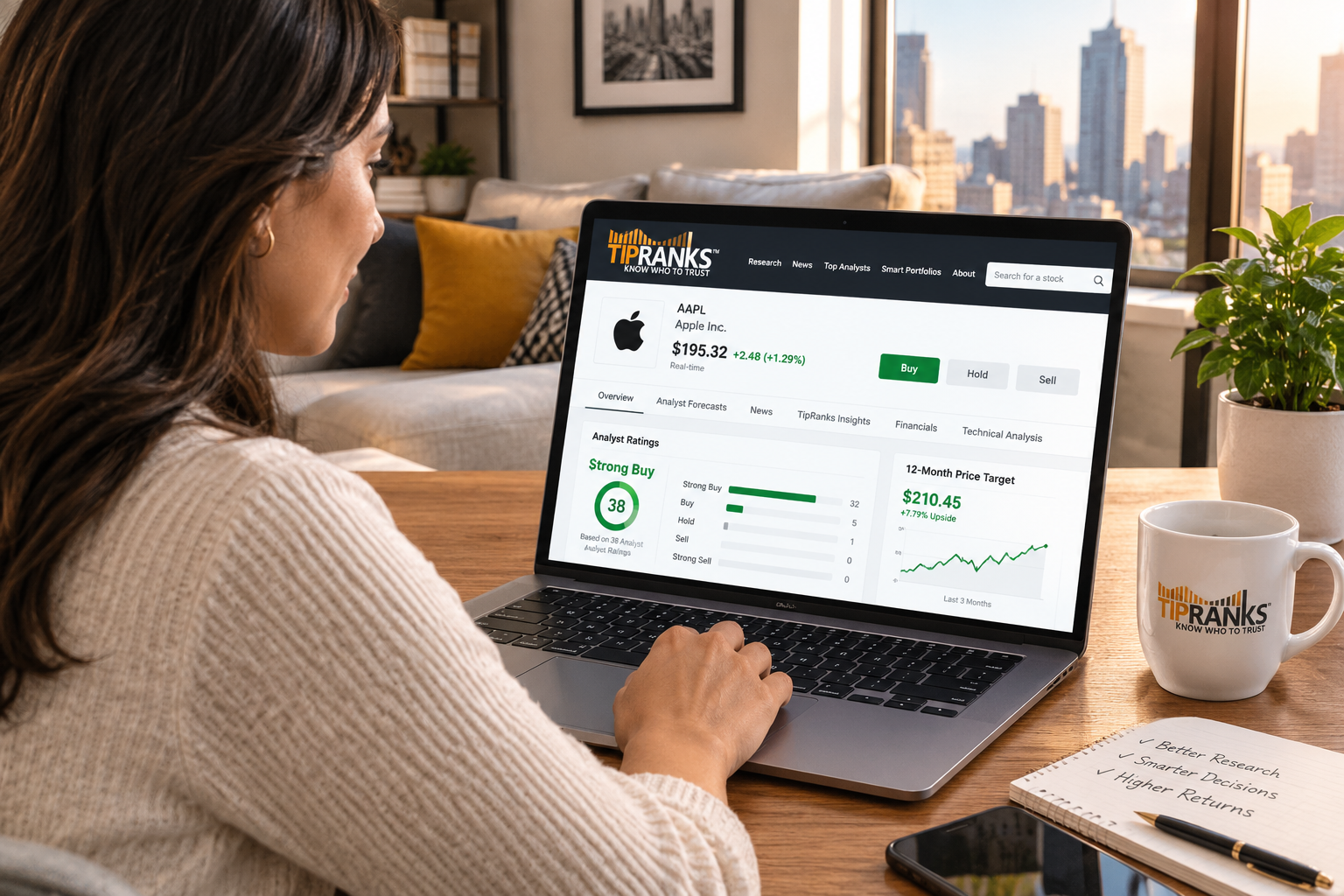
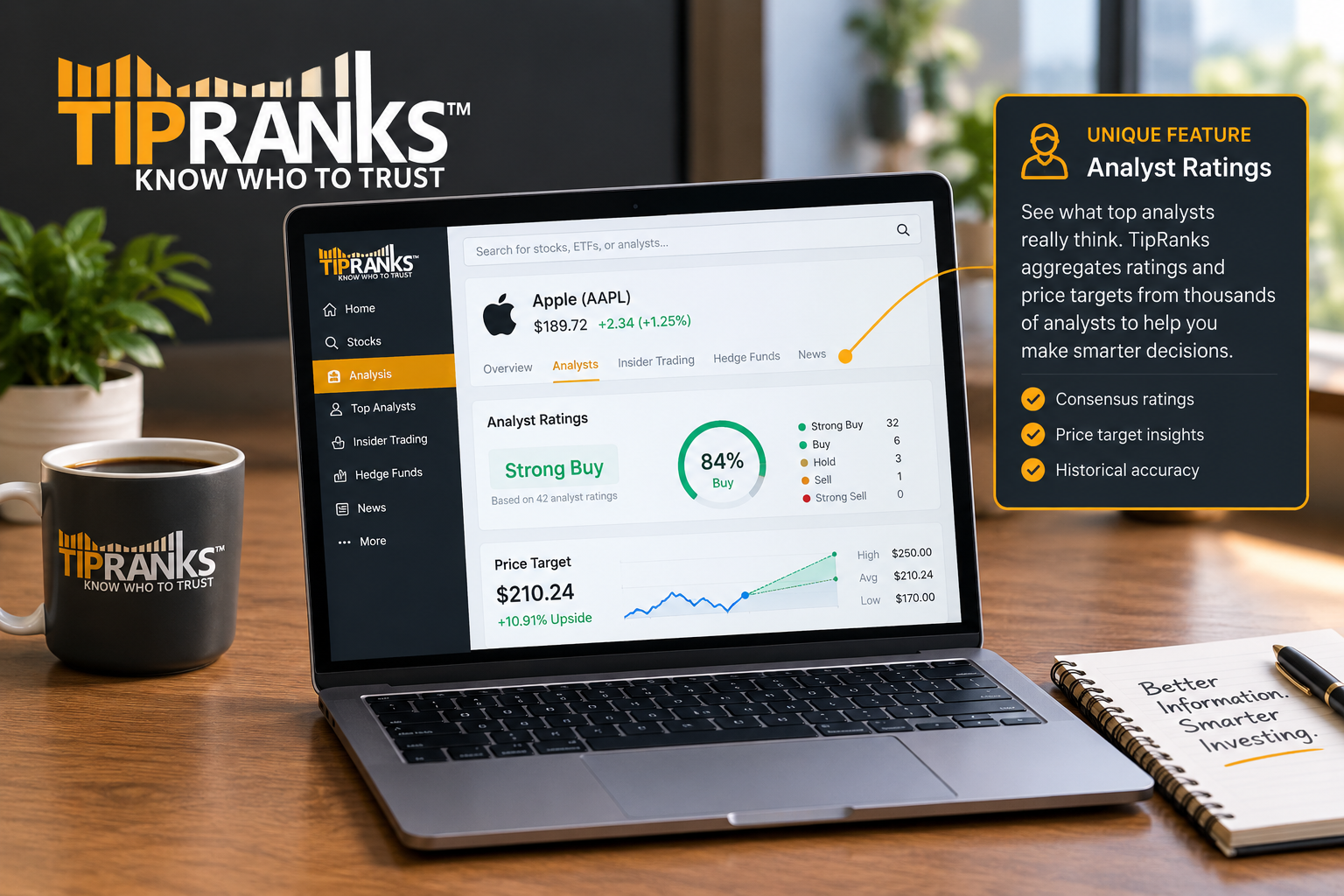
This is the franchise feature. Every analyst carries a success rate and an average return on their calls, so a price target stops being an opinion and becomes an opinion with a résumé. Nothing in the free world does this at the same depth. When you see four buy ratings on a stock, TipRanks lets you ask the only useful follow-up: are these four people any good?
2. The Smart Score, used correctly
One number, 1 to 10, built from 8 factors including analyst ratings, insider activity, hedge fund flows, blogger sentiment, technicals, and more. Used as a first-pass filter on a list of 30 candidates, it's genuinely efficient. Used as a buy button, it's a way to lose money politely. A composite score compresses information, and compression always discards detail. Know which detail you're discarding.
3. Insider trades on the same page as everything else
Form 4 filings become useful when they're sitting next to the analyst consensus and the price chart instead of buried in EDGAR. Consistent open-market buying by multiple officers is one of the few sentiment signals with real informational content. TipRanks puts it where you'll actually see it, which is half the battle with any data point.
4. Hedge fund activity alongside the rest
Same logic, different filing. 13F data is quarterly and lagged, so it's context rather than a trigger. Knowing that eight funds with decent records added to a name over the last two quarters is a reasonable input for a multi-year thesis. It is not a reason to buy on Tuesday.
5. Email alerts on up to 30 stocks (Premium)
Underrated, and the feature that most quietly changes behavior. Alerts on a defined list of 30 stocks mean you stop refreshing your portfolio 14 times a day and start reacting to actual events. The cap is the point. A tool that forces you to choose your 30 most important tickers is doing you a favor.
What is TipRanks actually like to use week to week?
Is TipRanks worth it after the first month? That depends on whether it becomes a weekly habit, and here is what that habit looks like.
Fast to learn, easy to skim, and better as a checkpoint than a home page. The stock page is dense but organized, and the time to first useful output is short, which matters more than feature count for anyone with a full-time job.
The realistic weekly workflow for a working investor:
- Sunday, 20 minutes. Run your watchlist names through TipRanks. Note any Smart Score that dropped two points or more, any cluster of insider selling, any analyst downgrade from a high-accuracy name.
- Set alerts on your live positions plus your top candidates, up to the 30-stock Premium cap.
- Before any buy, do a four-minute consensus check. Look for disagreement between the score and your thesis. Disagreement is information.
- Monthly, scan one Top Stocks list for a single new idea. One. Not twelve.
Where it gets annoying. The interface pushes upgrade prompts at you on the free tier, aggressively enough that Basic feels less like a plan and more like a countdown. And because the Smart Score is a model output with no written narrative attached, you'll sometimes stare at a 9 with no idea why the model likes it. That's not a bug in the product, it's the category. Quant scores explain what, never why.
The failure mode to watch for. Score-chasing. Buying every 10 and selling every 4 turns a research tool into a mechanical strategy you never tested. If you want a systematic approach, backtest it properly first, and read how we test tools before you trust any vendor's numbers, including these.
Pros and cons: is TipRanks worth it on balance?
Weigh these lists against your own process, since the cons mostly bite day traders and heavy watchlist users rather than position investors.
What we like
- Analyst rankings by success rate and average return, which genuinely can't be replicated free at this scale.
- The Smart Score compresses 8 factors into one number, which saves real time on a 30-name screen.
- Insider trades and hedge fund moves sit on the same stock page as the analyst data. No tab juggling.
- Premium's 30-stock email alerts replace compulsive portfolio checking with event-driven attention.
- A free Basic tier plus a 30-day money-back guarantee on promo plans means low friction to test.
- Frequent promotions bring effective Premium cost to roughly $13.50 to $15 a month, which changes the value math substantially.
What could be better
- The Smart Score is a quant signal with no written analysis behind it. If you want the reasoning, you'll find it thin.
- The free tier hides most of the useful data, so Basic functions as a demo rather than a usable plan.
- Ultimate costs $240 more a year than Premium for extras many long-term investors will never open.
- Hedge fund data inherits the 13F lag, up to 45 days after quarter end, which limits it to context only.
- The 30-stock Premium alert cap is tight if you monitor a broad watchlist.
- Promotional pricing means the list price and your renewal price may differ sharply, so read the renewal terms.
What are the best TipRanks alternatives?
Comparing substitutes is the fastest way to answer is TipRanks worth it, because the same money buys very different research elsewhere.
Pick the alternative that matches what you're actually missing. TipRanks is strong on expert track records and weak on written analysis, so most sensible substitutes fix one of those two things.
Seeking Alpha suits the investor who wants the argument, not just the score. You get written analysis from contributors plus quantitative ratings, which is the exact opposite balance of TipRanks. Choose it if you read 3,000-word theses and want dissenting views in the comments. It's noisier, and the signal is human rather than modeled. Our Seeking Alpha review covers the tiers, and the Seeking Alpha versus Motley Fool comparison is useful if you're deciding between written research services.
Zacks suits the investor who trades on earnings estimate revisions. Its rank system is built around analyst estimate momentum, which is a narrower and more mechanical input than the Smart Score's 8 factors. Choose it if your process is explicitly earnings-revision driven. Skip it if you want insider and institutional data, because that isn't the focus.
Morningstar Investor suits the long-horizon, valuation-first investor, especially anyone with meaningful money in funds and ETFs alongside stocks. You get analyst-written qualitative research and fair value estimates. Choose it if you think in decades and care about moats and expense ratios. Skip it if you want sentiment, technicals, or anything resembling a trading input.
Simply Wall St suits the visual learner and the newer investor. Its snowflake-style graphics make fundamentals legible in about ten seconds, which is a real skill. Choose it if balance sheets intimidate you and you want fundamentals presented cleanly. Skip it if you need analyst accuracy data or insider flow. Our Simply Wall St review has the detail.
The honest read: none of these four does what TipRanks does with analyst accuracy scoring. And TipRanks doesn't do what Seeking Alpha and Morningstar do with written reasoning. If you were going to pay for two research tools, one quant score plus one written source is a more sensible pairing than two of the same thing. Verify current pricing for each on their own sites, since promotional terms shift constantly.
The Alpha Score Breakdown: is TipRanks worth it by the numbers?
For readers asking is TipRanks worth it, the score lands where this review does: strongest on Transparency, softest on Price-to-Value.
TipRanks scores 78 out of 100 across five pillars, 20 points each. The score comes from FullStack Alpha desk research plus public user sentiment, and the pillar split is provisional.
- Signal Quality: 16 of 20, the analyst accuracy database and Form 4 insider data arrive in usable time for a position investor. The 13F-derived hedge fund view inherits a structural quarterly lag.
- Transparency: 17 of 20, the 8 factors behind the Smart Score are named publicly, though the weighting and the written reasoning behind any individual score are not exposed.
- Price-to-Value: 14 of 20, Premium at promotional rates near $13.50 to $15 a month is defensible value. Ultimate at $600 a year list is a harder case for most long-term investors.
- Usability: 16 of 20, short time to first useful output, dense but skimmable stock pages, persistent upgrade prompts on the free tier.
- Community Verdict: 15 of 20, drawn from public user sentiment on the product.
How do you get the best TipRanks price?
Price is the one lever you fully control here, and promotions move it a lot.
Never pay the $30 monthly rate. Promotions on Premium are frequent enough that list price is close to a rounding error in the decision.
The five-step buying sequence:
- Run the free Basic tier for one full week. Open it every day. If you skip three days, you have your answer and you've saved $360.
- Buy Premium, not Ultimate. Start at $30 a month list or whatever the current promo is. You can move up later. Moving down after you've paid $600 is a worse feeling.
- Choose annual over monthly if you'll use it. $360 a year equals $30 a month with no gap, and official promo pages advertise Premium yearly at $29.95 a month billed annually.
- Consider the 3-year plan only if you're certain. Promo pages have advertised $19.95 a month billed every 3 years, which is a real discount and a three-year commitment to a research habit you may not keep. Be honest about your track record with subscriptions.
- Use the 30-day money-back guarantee as a real test window. Set a calendar reminder for day 25. If you can't name a decision the tool changed, get the refund.
The renewal trap. Deep intro discounts mean the price you pay in year two may be substantially higher than year one. Write your renewal date in your calendar with the renewal amount next to it. This is the single most common way people overpay for research software, and it takes 30 seconds to prevent.
Want to see what the same money buys elsewhere? Browse the FullStack Alpha AI stock tool directory and filter research tools by price and category.
FAQ: is TipRanks worth it?
Is the free TipRanks plan enough on its own?
No, for most purposes. Basic shows you the interface and partial data, and the analyst rankings, complete Top Stocks lists, and alerts sit behind Premium. It's a functional demo, not a working research plan.
Is the TipRanks Smart Score accurate?
The Smart Score is a quantitative model combining 8 factors into a 1-to-10 rating, and TipRanks publishes performance data for it. Any vendor-published performance figure is vendor-claimed until independently audited, so treat it as one input in your process, not as a forecast. No score predicts price.
Should I buy TipRanks Premium or Ultimate?
Premium, unless you can name the specific Ultimate feature you need before you pay. Ultimate costs $50 a month ($600 a year) at list versus Premium's $30 a month ($360 a year), and that $240 annual difference buys extras many long-term investors never open.
Can I cancel TipRanks and get a refund?
Official promo pages advertise a 30-day money-back guarantee on the advertised plans. Confirm the exact terms for the plan you're buying at checkout, since guarantees vary by promotion and by tier.
Is TipRanks good for beginners?
It's approachable, and that's a double-edged thing. A new investor can read a Smart Score in five seconds without understanding what's inside it, which encourages score-chasing. If you're starting out, learn what the 8 factors mean first, then use the number.
Does TipRanks tell you what to buy and sell?
No. TipRanks aggregates and ranks expert opinion and gives you a composite score. It does not issue personalized recommendations, and nobody there knows your risk tolerance, your time horizon, or your position size.
Is TipRanks worth it for options traders?
Only for directional swing positions held for weeks. For intraday or short-dated options, the data cadence is far too slow to matter. Look at options flow scanners instead.
Does TipRanks replace a stock screener?
Not fully. The Top Stocks lists and Smart Score filtering give you idea generation, and dedicated screeners offer deeper filter control on fundamentals and technicals. Many investors pair TipRanks with a free screener, which is a reasonable setup.
Is TipRanks worth it for long-term investors?
Yes, they are the target customer. A four-minute consensus check before a large buy is cheap insurance, and at promo pricing near $15 a month one avoided mistake can cover years of subscription.
Is TipRanks worth it for day trading?
No. Analyst ratings move on a weeks-long calendar and 13F data is quarterly, so nothing in TipRanks updates fast enough for an intraday holding period.
Which is better, TipRanks or Seeking Alpha?
It depends on the job. TipRanks ranks analysts by track record and scores stocks with a quant model, while Seeking Alpha gives you written analysis plus quant ratings. On FullStack Alpha's provisional scores TipRanks gets 78 and Seeking Alpha 75, and Seeking Alpha Premium lists at $299 a year versus $360 for TipRanks Premium.
Is TipRanks worth it at full price?
Premium at $360 a year list is fair for an investor making real stock-picking decisions. Promotions often cut it to roughly $13.50 to $15 a month, so there is rarely a reason to pay list.
What Alpha Score does TipRanks get?
78 out of 100, built from FullStack Alpha desk research and public user sentiment. The provisional split is Signal Quality 16, Transparency 17, Price-to-Value 14, Usability 16 and Community Verdict 15.
What is better than TipRanks?
Nothing on this list beats TipRanks at analyst accuracy scoring, so better depends on what you are missing. Seeking Alpha and Morningstar Investor add written reasoning, Zacks suits earnings-revision traders, and Simply Wall St makes fundamentals easy to read. Many investors pair one quant tool with one written source.
How accurate are TipRanks predictions?
TipRanks does not make its own price predictions; it tracks the analysts who do and ranks them by success rate and average return. The Smart Score is a quant model, and any vendor-published performance figure is vendor-claimed until independently audited. Use it as one input, never as a forecast.
Is Zacks or TipRanks better?
Zacks is better if your process runs on earnings estimate revisions. TipRanks is better if you want analyst track records, insider trades and hedge fund activity on one page, which Zacks does not focus on.
Final verdict: is TipRanks worth it for you?
Is TipRanks worth it? For position investors and multi-week swing traders, yes; for anyone trading intraday, no.
Long-term position investors: pay. Premium at $360 a year list, and near $15 a month on promotion, is a fair price for ranked analyst accuracy, insider data, and hedge fund context in one place. This is who the product was built for.
Multi-week swing traders: pay, at the Premium tier only. Use it as a veto on your watchlist, never as an entry trigger. The chart picks the setup, TipRanks tells you whether the experts and the insiders are quietly disagreeing with you.
Active momentum traders (days): mostly skip. The free tier covers your occasional sentiment check. Put the money toward faster data.
Day traders and scalpers: skip. Nothing here updates on your clock.
Passive index investors: skip. You don't pick stocks, so ranked analyst records are entertainment.
Anyone tempted by Ultimate: skip it until Premium hits a wall you can name. $240 a year is a lot to spend on optionality you haven't tested.
Your next step: open the free Basic plan today, add your five largest holdings, and check whether the analyst accuracy data or the insider activity tells you anything you didn't already know. If it does, buy Premium annually on the current promotion and set a day-25 reminder to evaluate honestly. If it doesn't, you just saved $360 and learned something about your own process. Cut the noise, keep the alpha.
Related reading: our full reviews index and the AI stock pickers guide.
Worth it depends on what you're replacing. The FullStack Alpha directory has 200+ AI stock tools filterable by price, so you can see what the same money buys elsewhere. Check the alternatives → aistockpickerapps.com
Sources
- TipRanks pricing and plan pages, 2026 (tipranks.com)
- U.S. Securities and Exchange Commission, Form 4 insider reporting requirements and Form 13F quarterly filing rules (sec.gov)
Affiliate disclosure: some links on this page may earn FullStack Alpha a commission at no extra cost to you.
We test the tools. You get the verdict.
One email a week. What we tested, what scored, and what we'd skip. Written for traders, not for clicks.
More from FullStack Alpha