

TradeAlgo Review: 4.7 on Trustpilot, F at the BBB
Short on time? The TradeAlgo Alpha Score scorecard breaks the 41/100 down by pillar, with pricing and the verdict, in about 90 seconds.
See the score
This TradeAlgo review lands the verdict fast because the numbers already disagree with each other: TradeAlgo scores 41 out of 100 on the FullStack Alpha Score, carries a 4.7 TrustScore from nearly 2,000 Trustpilot reviewers, and holds an F rating from the Better Business Bureau over 16 unanswered complaints.
Quick Answer
TradeAlgo is a dark pool alert and AI trading signal platform (its flagship product is called TradeGPT) that scores 41 out of 100 on the FullStack Alpha Score. Four of five pillars are weak: transparency, price-to-value, signal quality and community verdict. The one pillar that holds up is usability, largely because of consistent, specific praise for the platform's human mentors. The BBB shows an F rating and 16 unanswered complaints. Trustpilot shows 4.7 out of 5. Both are accurate. They are measuring different things.
Key Takeaways
- The Alpha Score is 41/100. Signal Quality 10/20, Transparency 5/20, Price-to-Value 7/20, Usability 13/20, Community Verdict 6/20.
- What it sells: Terminal (dark pool, options flow and AI screener), TradeGPT, a live analyst room with 1-on-1 mentorship, AI Options Alerts, and The Signal newsletter, the only product with published prices and a 30-day money-back guarantee.
- The rating split is real, not a fluke. BBB customer reviews average 1.57 out of 5 from 7 reviews and the company holds an F rating; Trustpilot shows 4.7 from 1,997 reviews; SmartCustomer shows 4.2 from 647.
- Price is a moving target. The Signal newsletter publishes plans from $15 a month to $1,995 a year, but the core platform and mentorship packages carry no published price, and complaints describe packages between $2,250 and $3,000.
- Refund terms shifted. The main TradeAlgo terms say all sales are final with no cash refunds. An archived December 2022 version promised a 6-month money-back guarantee, and both versions carry the same October 8, 2021 "last updated" date. The separate Signal newsletter terms, updated August 1, 2026, include a 30-day money-back guarantee.
- The mentorship praise is genuine and specific. Named mentors show up repeatedly on Trustpilot and SmartCustomer.
- Walk away if you need a published price before you talk to anyone, or if you can't get comfortable with "all sales are final."
- This tradealgo review is built entirely from public records: the BBB profile, Trustpilot, SmartCustomer, TradeAlgo's own site and terms, and Reddit.
What is TradeAlgo, and what does it actually sell?
TradeAlgo is a New York-based fintech company (also listed with the BBB as TA Fintech Inc.) that sells AI-driven trading signals, dark pool alerts, and a live analyst mentorship program built around individual stocks and options. The platform's headline product is TradeGPT, an AI assistant the company markets alongside a separate feature called Dark Market Activity.
Any honest tradealgo review has to start with what the company is actually charging for, because that's where most of the confusion begins. TradeAlgo bundles three distinct things under one brand:
- Software. A dashboard with charting, watchlists, and alert feeds, including the dark pool alerts feature that flags large block trades.
- AI output. TradeGPT, described on the company's own site as trained on financial data and capable of generating trade ideas.
- Human mentorship. A live analyst room and named coaches who work directly with subscribers on strategy and discipline.
That third piece matters more than most reviews give it credit for. Reviewers overwhelmingly separate their feedback into two buckets: praise for a specific mentor by name, and complaints about billing, sales calls, and refunds. Almost nobody in the public record complains about a mentor by name. Almost nobody praises the sales process. Keep that split in mind. It's the throughline of this entire tradealgo review.
TradeAlgo's own disclaimer states plainly that the company is "not registered with the SEC or licensed as an investment adviser." That single line matters more than any marketing copy on the homepage, and we'll come back to it when we look at how TradeGPT is described.
What are TradeAlgo's five main products?
TradeAlgo sells more than one product, and they don't all carry the same risk. These are the five it leads with, described the way TradeAlgo's own site describes them, with our note on each.
No affiliate link and no commission here, just the lineup.
🖥️ Terminal
TradeAlgo describes Terminal as its dark pool, options flow and AI screener workspace. It's the software half of the pitch, and reviewers describe the dashboard as quick to learn.
Our note: its Dark Market Activity feature shows the size of a block trade, not its direction, and TradeAlgo hasn't published how it works.
🤖 TradeGPT
The company's AI assistant, pitched with the line "ask anything about the market."
Our note: TradeAlgo's own disclaimer says it is not registered with the SEC or licensed as an investment adviser, so treat TradeGPT's answers as research prompts.
👥 Live analyst room and 1-on-1 mentorship
The Platinum plan bundles the full platform with a live daily analyst session, which TradeAlgo lists at 9:30 to 10:30 a.m. ET. Separate 1-on-1 mentorship offers private coaching sessions on demand.
Our note: this is the part satisfied customers praise by name, again and again.
🔔 AI Options Alerts
Live options alerts that TradeAlgo says are publicly tracked.
Our note: a public log beats no log, but a self-reported record isn't an audit.
📰 The Signal newsletter
A free daily AI market briefing, with paid tiers from $15 a month to $1,995 a year.
Our note: it's the one TradeAlgo product with published prices and a written 30-day money-back guarantee.
Practical takeaway: Judge each product on its own. The mentorship draws the most praise and The Signal has the clearest terms. The core platform packages are where the price and refund complaints cluster.
TradeAlgo Alpha Score: 41/100
TradeAlgo's overall Alpha Score is 41 out of 100, built from five pillars worth 20 points each. Four of the five pillars land in critical territory. Only one, usability, holds up under scrutiny.
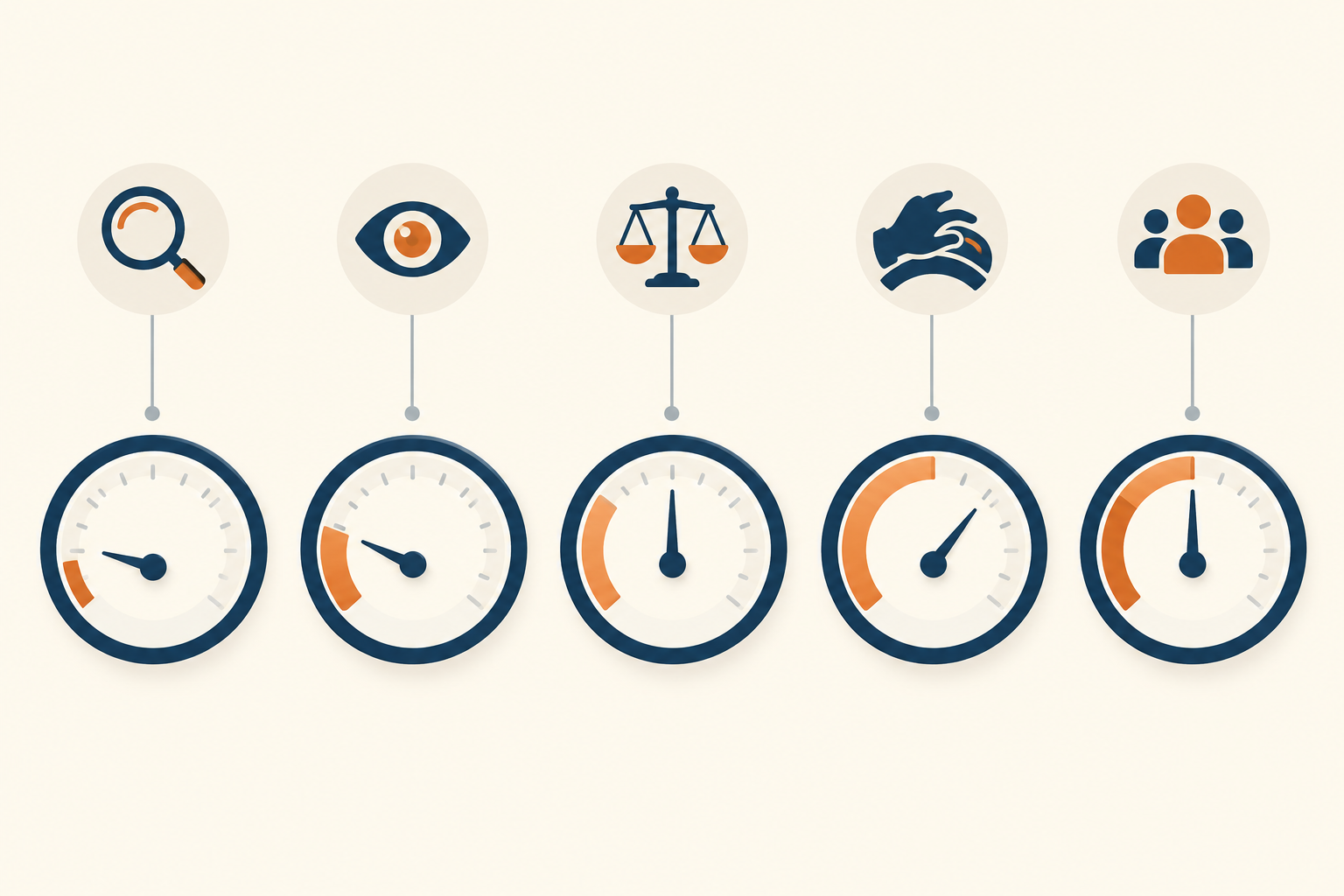
Signal Quality: 10/20. Dark Market Activity and TradeGPT have no published methodology and no audited track record on the public record. TradeAlgo does publish selected model examples and says its Signal alerts are logged, but those are self-reported and, by its own label, hypothetical, not audited. A signal feature you can't verify is a claim, not a result.
Transparency: 5/20. The weakest pillar in this review. Core platform prices are absent from TradeAlgo's own product pages. The pricing link redirects to a sign-in screen instead of a price sheet. Complaints describe prices set on phone calls, not published rate cards. There is no public explanation of how Dark Market Activity or TradeGPT actually generate their output.
Price-to-Value: 7/20. You cannot judge value against a price you can't see in advance, and the current terms say every sale is final once you commit.
Usability: 13/20. The one pillar that holds up. Reviewers describe a quick signup process, a dashboard that doesn't require a manual, and a mentorship program members return to specifically by name.
Community Verdict: 6/20. The public record contradicts itself so sharply that averaging it would hide the real story, which is exactly why this article treats the spread, not a blended number, as the finding.
Total: 41/100. A score this low, with a usability pillar this high, tells you exactly where the risk sits: not in the software experience, but in what you're told before you pay and what happens if you want your money back.
Why do the ratings disagree so badly?
The ratings disagree because different platforms are structurally built to capture different kinds of feedback, and TradeAlgo's numbers happen to sit at the extreme end of that gap on every side. This is the center of this tradealgo review, not a side note.

Here's the actual spread:
- BBB: 1.57 out of 5 from 7 customer reviews. F rating. 16 complaints in three years, all shown as unanswered, 1 closed in the last 12 months.
- Trustpilot: 4.7 TrustScore from 1,997 reviews, 229 posted in the last 12 months. 90% five-star, 3% one-star. TradeAlgo pays for a Trustpilot business subscription and has replied to 23% of negative reviews.
- SmartCustomer: 4.2 out of 5 from 647 reviews, 92% five-star. The profile is claimed by the business and marked as a paying business account, with many reviews tagged as manual invitations.
Read that spread with a plain rule: complaint forums like the BBB skew negative because people only show up there when something already went wrong. Invitation-based platforms and business-claimed profiles skew positive because the invitation usually goes out after a good interaction, and a paying business account can respond, curate, and shape the visible record. Neither number alone tells you the truth. The gap between a 1.57 and a 4.7 is the actual data point, not noise to average away.
A BBB reviewer's update dated September 1, 2026 says the company is now in contact with them to resolve the issue, which is worth including here for balance. It shows some engagement happening, even if the broader BBB file shows 16 unanswered complaints sitting alongside it.
If you searched "tradealgo review" after a cold call and landed on a page showing only the Trustpilot number, you got half the picture. If you landed only on the BBB file, you got the other half. This review exists to show you both.
What does TradeAlgo cost, and why is it so hard to pin down?
TradeAlgo's cost is genuinely inconsistent across its own public materials, which is the single biggest transparency problem this tradealgo review identifies. There is no one number to quote, and that's the point.
Here's what's published where:
- TradeAlgo's main pricing page link redirects to a sign-in screen instead of showing a price.
- Its own company-written review article states a $65 a month figure.
- Its Signal newsletter pricing page lists plans from $15 a month (or $149 a year) up to $1,995 a year.
- BBB complaints describe charges from under $200 to about $3,000, with several packages between $2,250 and $3,000.
- A Reddit r/options commenter (October 2024) describes a service costing $2,500 or more with no refund after high-pressure calls.
- A Reddit r/Daytrading commenter (May 2024) says two reps called within five minutes of signup, both pitching about $3,000.
Notice which numbers are published and which aren't. The published figures belong to The Signal newsletter and a company-written blog post. The core platform and mentorship packages, the products the complaints describe, carry no price on the product pages we checked. Based on this record, the number for those depends on the call, not the product page.
This is exactly the pattern the FullStack Alpha Transparency pillar is built to catch: a company that will not put its own price where you can read it before you're on the phone with someone whose job is to get you to say yes. If you take one thing from the tradealgo price and tradealgo cost sections of this review, take this: write down every number you're quoted, with the date and the name of the rep, before you agree to anything.
What do the BBB complaints actually say?
The BBB profile for TradeAlgo, opened December 2, 2022 and also listed under TA Fintech Inc. in New York, shows an F rating tied to a failure to respond to 16 complaints filed over three years. That rating, by BBB's own stated reasoning, is about response, not about the underlying claims themselves.
Reading the file in order:
- October 13, 2023 (review): A reviewer states a rep kept repeating a promotional price of "one ninety nine," which the reviewer took to mean a much smaller figure, until the signup link showed $199. The reviewer declined. It's a small example of why a spoken price is worth nothing until you see it in writing.
- October 23, 2023 (complaint): A complainant states they asked about the money-back guarantee before purchasing, received a copy of it, requested a refund on June 28, 2023, and had not received one by October 22, 2023, four months later, reporting a loss of $2,250.
- October 31, 2024 (complaint): A complainant states they were told $200 a month on an initial call, then charged $3,000 a year at signup, with later calls pitching an additional $2,000.
- January 10, 2025 (complaint): A complainant asks to be removed from the company's calling list and states they do not recall signing up in the first place.
- March 26, 2026 (review): A customer since October 2025 states that posting critical reviews was followed by waves of calls and emails offering assistance.
TradeAlgo not working for you the way it was pitched? The complaint pattern above is less about software bugs and more about what happens after the sale: refund timelines stretching past four months, calls continuing after a stated request to stop, and price figures that shift between the first call and the invoice. None of these complaints allege that the trading tools themselves failed to load or function. The friction, based on this record, sits in billing and follow-up, not in the dashboard.
One complainant in this file states they don't recall signing up at all. That detail matters for anyone reading this tradealgo review after a cold call: if you didn't initiate contact, that's worth writing down before you engage further.
What do satisfied customers praise, and is it the software?
Satisfied customers overwhelmingly praise named individual mentors, not the algorithm, and that distinction is the resolution this entire tradealgo review keeps circling back to.
Specific, named praise found in the public record:
- A Trustpilot reviewer (September 4, 2026) states a mentor named Roman helped them stay focused without feeling overwhelmed.
- A Trustpilot reviewer (August 23, 2026) credits four mentors by name: Eric, Roman, Dane, and Brian.
- SmartCustomer reviews from February 2026 praise a mentor known by the nickname "Mr. Confluence."
Notice what's absent from that list: nobody is naming TradeGPT or Dark Market Activity as the reason they're satisfied. The praise clusters around people, live coaching, and the analyst room. That's a real, verifiable strength, and it's the entire reason the Usability pillar scores 13 out of 20 instead of sitting down with the other four.
Refunds do happen for some customers, which is worth stating plainly for balance. A Trustpilot reviewer (December 18, 2025) states the service didn't fit their needs and that TradeAlgo refunded their money. That single data point matters because it shows the current "all sales are final" language in the terms of service isn't applied as an absolute wall in every case, even though it's written as one.
So is TradeAlgo good for beginners specifically for the mentorship? Based on the public record, the coaching component is where beginners report the most value, provided the price and refund terms are fully clear before any card gets charged. That's a meaningfully different question than whether the AI signals themselves are worth paying for, and this review treats them separately because the reviewers themselves treat them separately.
How good is the dark pool data itself?
Dark pool alerts, including TradeAlgo's Dark Market Activity feature, show that a large block trade printed off the public exchange tape. They do not, and cannot, tell you whether that block was a buyer or a seller, which is the single most important limitation of this entire category of tool.

Here's the plain mechanics behind that limit, explained the way any trader vetting a dark pool alert service should hear it once:
- What a dark pool print shows: size. A large order executed away from the lit exchanges, reported after the fact.
- What it doesn't show: direction. The print alone does not tell you if that size was institutional buying, institutional selling, or a hedge against an options position.
- Why that matters for a signal service: an alert that says "big order just printed" without directional context is a fact, not a trade idea. Turning that fact into an actionable signal requires additional modeling that the provider either publishes and defends, or doesn't.
TradeAlgo has no published methodology and no audited track record for Dark Market Activity on the public record we reviewed. That's not a claim about whether the feature works. It's a statement about what can and cannot be verified from the outside, and it's the specific reason Signal Quality scores 10 out of 20 rather than higher.
Does TradeAlgo actually make money for the people using it? No public, audited performance data answers that question one way or the other. We found none for TradeAlgo, and none for the comparable dark pool alert products we've reviewed. Treat any win-rate claim from any vendor in this category, including TradeAlgo, as vendor-stated until you see an independent audit. Our Unusual Whales review and Cheddar Flow review walk through how two competitors in this exact category handle disclosure, for comparison.
What is TradeGPT, and what does the company claim it does?
TradeGPT is TradeAlgo's branded AI assistant, and the company's own marketing language describes it in terms that go well beyond what a signal tool can responsibly claim. That gap between marketing language and the company's own legal disclaimer is worth reading side by side.
TradeAlgo's company-written Trustpilot description calls TradeGPT "the world's most powerful AI trading agent" and uses the phrases "personal financial advisor" and "trade recommendations." TradeAlgo's own review article, published February 23, 2026, states TradeGPT is trained on over 50 million financial data points, and describes Dark Market Activity as a feature that "reveals institutional orders that never hit the public tape." The company's site footer claims it processes over 50 billion events daily.
Now set that language next to TradeAlgo's own disclaimer page, which states the company is "not registered with the SEC or licensed as an investment adviser." A tool marketed with the phrase "personal financial advisor" while its own legal page states it is not a licensed adviser is a contradiction worth sitting with before you act on anything it generates. Software that produces trade ideas is not the same thing as personalized investment advice from a licensed professional, and the distinction is not cosmetic. It determines what protections, if any, apply to what you're told.
No independent audit of TradeGPT's output accuracy exists in the public record as of this writing. The 50-million-data-point and 50-billion-events figures are the company's own claims, not independently verified benchmarks, and this tradealgo review treats them as such.
What do TradeAlgo's own terms say about refunds?
TradeAlgo's current terms of service state plainly: "all sales are final, and we do not offer cash refunds." That's the operative policy today, and it stands in direct contrast to what the company's own terms said less than four years earlier.
An archived version of TradeAlgo's terms of service, dated December 2022, stated that subscribers were entitled to a 6-month money-back guarantee. Both the current version and the archived December 2022 version display the exact same "last updated" date: October 8, 2021. In plain terms, the substance of the refund policy changed between the two versions, but the date the site tells you the terms were last updated did not move to reflect that change.
That's the specific finding behind the Transparency pillar's low score. A terms page that doesn't update its own timestamp when the actual policy changes gives a reader no reliable way to know which version applied on the day they signed up.
Read against the BBB file, this matters directly: the October 23, 2023 complainant describes requesting a refund under a money-back guarantee they'd been sent a copy of, then waiting four months without resolution. Whether that guarantee matched the archived December 2022 language or something else entirely isn't something an outside reader can confirm from the public record. What can be confirmed is that the current platform policy, as published today, offers no cash refunds. The same terms say the company will work with unhappy buyers on "a replacement product or an alternative service."
One newer product works differently. The Signal, TradeAlgo's newsletter and alert service, runs on its own terms of service, last updated August 1, 2026, and those terms include a 30-day money-back guarantee on paid Signal subscriptions. That's a real improvement, and it's in writing. It covers The Signal only, not the core platform or mentorship packages, which remain under the all-sales-final terms.
Read the current TradeAlgo terms of service and the company's disclaimer directly before signing up for anything.
TradeAlgo vs Unusual Whales vs Cheddar Flow
| Tool | Price on product page | Entry price | Refund terms | BBB accreditation |
|---|---|---|---|---|
| TradeAlgo | Platform: not shown, pricing link redirects to sign-in. The Signal: published | The Signal: $15/mo to $1,995/yr. Platform packages: $2,250 to $3,000 reported in complaints | Platform: all sales final, no cash refunds. The Signal: 30-day money-back guarantee | Not accredited, F rating |
| Unusual Whales | Published | $50/mo (Retail Basic) | All sales final | Not verified |
| Cheddar Flow | Published | $85/mo (Standard, after 7-day free trial) | Self-refund within 48 hours of charge (April 2026 policy) | Not verified |
The pattern in that table tells its own story: two competitors in the same dark pool alert category publish a findable price on their own product pages. TradeAlgo publishes prices for its newsletter, but not for the core platform the complaints describe. That single difference is the clearest tradealgo vs other trading bots comparison point available from public sources.
Pros and cons
Pros
- Mentorship draws consistent, specific praise on more than one review platform, with students naming mentors repeatedly
- Reviewers describe quick signup and an intuitive dashboard
- A live analyst room and education that long-term members value
- Some customers report receiving refunds
- The Signal newsletter publishes its prices and carries a written 30-day money-back guarantee
- A real operating company with a public BBB file, not an anonymous funnel
Cons
- Core platform prices are not shown on product pages; complaints describe prices set on sales calls
- Complaints describe platform packages between $2,250 and $3,000
- BBB rating of F, not accredited, 16 complaints unanswered
- Main platform terms say all sales are final with no cash refunds, after an earlier 6-month guarantee
- Complaints describe repeat sales calls, including after requests to stop
- Complaints describe refund requests that went unfulfilled for months
- No published methodology or audited track record for Dark Market Activity or TradeGPT
- Marketing calls TradeGPT a "personal financial advisor," while the disclaimer says TradeAlgo is not a registered adviser
What should you do if you have already been charged?
If you've already been charged by TradeAlgo or a similar service and want your money back, start with paperwork, not phone calls. This is general consumer guidance, not legal advice.
- Gather your records. Save receipts, the dates of every call, and any screenshots of price quotes or guarantees you were shown.
- Request a refund in writing. Cite any specific guarantee you were sent or shown, and keep a copy of what you send.
- Contact your card issuer. Ask about disputing the charge, especially if the price you were quoted verbally doesn't match what you were billed.
- File a complaint with the BBB or your state attorney general. Public complaint files, like the one referenced throughout this tradealgo review, exist because they create a paper trail other consumers can read.
- For continued calls: ask, in writing, to be placed on the company's internal do-not-call list. Also register your number with the National Do Not Call Registry if you haven't already.
None of these steps guarantee a resolution. They do create a documented record, which is the single most useful thing you can have if a dispute goes further.
How do you vet any trading service before a sales call?
Vet a trading service before you ever pick up the phone, because the sales call is precisely where price and terms tend to become negotiable in the wrong direction. This isn't specific to TradeAlgo. It's the standard the FullStack Alpha Score applies to every tool it reviews.
- Find the published price on the product page itself. If the pricing link redirects to a sign-in screen instead of a number, that's your first flag.
- Read the refund policy before you're on a call, not during one. Screenshot it. Terms pages change.
- Check the "last updated" date against the actual content. If the policy language clearly shifted but the date didn't, treat every version as unverified.
- Search the company's name plus "BBB" and "Trustpilot" separately, not just one or the other. Read the spread, not one number.
- Ask for the methodology behind any signal or AI feature. "Proprietary" with no further explanation is not an answer.
- Never agree to a price on a call you didn't initiate. If you don't recall signing up for anything, say so and hang up.
Run any dark pool alert or AI signal tool through that checklist before you commit a card number. It costs you ten minutes and it's the same process this review followed to get to 41 out of 100.
How we evaluated TradeAlgo for this review
FullStack Alpha did not buy a TradeAlgo subscription or take a sales call to write this tradealgo review. This assessment comes entirely from public records: the BBB profile and complaint file, Trustpilot, SmartCustomer, TradeAlgo's own website, terms, and disclaimer, The Signal's separate terms and pricing page, an archived version of its terms, and public Reddit discussion. Read our How We Test page for the full methodology behind every Alpha Score on the site.
For context on how the same evaluation approach applies elsewhere in this category, our Unusual Whales review and Cheddar Flow review cover two competitors that publish their pricing directly. If you're comparing broader AI stock tools outside this one category, our Trade Ideas review and Tradytics review sit in the same testing framework.
Final verdict
This tradealgo review lands on a specific answer for a specific reader: walk away from the core platform if you need a published price before a phone call, or if "all sales are final" is a dealbreaker for you. That covers most people reading this after a cold call.
TradeAlgo is not the right fit if you're price-sensitive, allergic to sales calls, or someone who wants a written refund policy you can rely on before you ever pick up the phone. The Transparency and Community Verdict scores here, 5 and 6 out of 20, aren't close calls.
It may be worth a closer look, with clear-eyed expectations, if what actually draws you is the mentorship and live analyst room, and you go in having already confirmed the exact price and refund terms in writing before any card gets charged. Judge the coaching on its own terms. Judge the AI signal features separately, and hold them to the same audited-track-record standard you'd demand from any tool making similar claims.
If all you want is the research, The Signal is the one TradeAlgo product with published prices and a written 30-day money-back guarantee. That makes it the lowest-risk way to judge the company's work for yourself, as long as you cancel inside the window if it doesn't earn its keep.
If you want a dark pool alert tool that shows its price before you ever have to make a call, our Unusual Whales review and Cheddar Flow review are the two closest published comparisons in this category. For AI-driven stock picking outside the dark pool niche specifically, our Danelfin review and Tradytics review sit through the same five-pillar test.
This page carries no affiliate relationship with TradeAlgo and never will.
We test the tools. You get the verdict.
One email a week. What we tested, what scored, and what we'd skip. Written for traders, not for clicks.
Frequently asked
Our verdict on TradeAlgo
TradeAlgo scores 41: mentorship students praise by name, sold through prices you only hear on a sales call.