

Alpaca Trading Review: Free to Trade, $99 to See Clearly
Short on time? The Alpaca Alpha Score scorecard breaks the 77/100 down by pillar, with pricing and the verdict, in about 90 seconds.
See the score
Quick Answer
This Alpaca trading review lands at 77 out of 100. Alpaca lets you trade US stocks, ETFs and options commission-free with real money, and it runs the same code in paper and live mode, which is rare among brokers. The catch: the free data feed only shows you IEX, not the full market, and full coverage costs $99 a month. Fill-quality complaints and a 2026 FINRA fine mean execution is the pillar to watch, not the pricing.
Key Takeaways
- Alpaca's free plan trades live money commission-free on US stocks, ETFs and options, which is unusual for an API-first broker.
- Top features: commission-free API trading, a free paper account on the same API, SDKs in five languages, a market data API with a $99 full-market upgrade, and a TradingView integration for placing orders from charts.
- Full-market, all-exchange data costs $99 a month (Algo Trader Plus); the free tier is IEX-only and withholds the latest 15 minutes of history.
- There is no official mobile app and the web dashboard is basic. This is a keyboard-first broker, not a phone-first one.
- Paper trading and live trading run on the exact same API, so strategy code doesn't need a rewrite to go live, but paper results don't account for slippage, dividends or regulatory fees.
- Execution quality is the weak pillar: developer communities report recurring fill-quality complaints, and FINRA fined Alpaca $300,000 in March 2026 over late trade reporting.
- Individuals in 195+ countries can open an account, though Canadian residents currently cannot, and Alpaca's newer international operations serve businesses more than solo traders.
- The ideal user writes Python (or Go, Node.js, C# or Java) and wants a broker that gets out of the way of the code, not a broker with a polished app.
What is Alpaca and who is it actually for?
Alpaca is a commission-free, API-first brokerage built for people who trade through code, not through a tap-to-buy app. Alpaca Securities LLC is the regulated entity behind US stock, ETF and options trading, and it's a real broker registered with FINRA, not a sandbox or a data vendor wearing a broker costume.

The product answers "what is Alpaca trading and how does it work" in one sentence: you open a brokerage account, get API credentials, and send orders programmatically using the same endpoints whether you're testing on paper money or trading with your own cash. There's no separate consumer trading platform layered on top. The API is the platform.
What can you actually trade on Alpaca? US-listed stocks, ETFs, and options are the core, all commission-free for self-directed individual accounts. Crypto is available in select US states and select international jurisdictions, priced separately (more on that in the fees section below).
This Alpaca trading review is built for two kinds of readers. First, the retail trader who can write Python and wants to automate an entry and exit instead of watching charts all day. Second, the trader outside the US asking a blunt question: can I even open this account? Both get a straight answer in this piece.
Who Alpaca is not for: anyone who wants to open an app, look at a chart, and tap buy. If your idea of a trading platform is Robinhood or Webull with candlesticks and a green button, Alpaca's basic web dashboard and missing mobile app will frustrate you fast. Alpaca is a backend, not a storefront.
Any honest alpaca trading platform review published before mid-2026 is worth double-checking. Alpaca revised its fee schedule on September 1, 2026 and updated its market data documentation on July 16, 2026, so figures from a 2024 or early-2025 writeup may already be stale.
What are Alpaca's top five features?
Alpaca doesn't try to win you over with a slick app. It wins developers with the tools underneath.
These five features are why people who trade through code pick it.
🔌 Commission-free API trading
Trade US stocks, ETFs and options with real money and $0 commissions, all through an API. Index options run $0.50 a contract, and crypto is priced separately where it's available.
For an automated strategy, commissions are a tax on every signal. Alpaca removes that tax, though regulatory pass-through fees still apply on sells.
🧪 Paper trading on the same API
A free paper account with $100,000 in simulated money that runs on the exact same API as live trading.
Tested code moves to live without a rewrite. Just know that paper fills skip slippage and fees, so small live size is the real test.
🧰 SDKs, Postman and an OpenAPI spec
Official SDKs in Python, Go, Node.js, C# and Java, a public Postman workspace, a downloadable OpenAPI spec, an MCP server, and an llms.txt file for AI coding tools.
You can test endpoints before you write a line of code, which makes the first hour of building far less painful.
📡 A market data API with a clear upgrade path
The free plan streams real-time IEX data for up to 30 symbols, with history back to 2016 and the latest 15 minutes withheld. Algo Trader Plus, at $99 a month, adds every US exchange, OPRA options data, unlimited equity websocket symbols and 10,000 API calls a minute.
Accounts with $100,000 or more in net deposits get Algo Trader Plus free.
📈 TradingView order integration
Connect your Alpaca account to TradingView and place orders straight from the charts.
It's the bridge for traders who read charts by eye and automate everything else.
Practical takeaway: Build on paper for free, prototype on the IEX feed, and pay for Algo Trader Plus only when your strategy needs the full tape.
Alpaca Alpha Score: 77/100
This Alpaca trading review scores the broker on five pillars, 20 points each, adapted for a brokerage rather than a signal tool. The split verdict in one line: a best-in-class developer experience, with a contested execution record.
Execution Quality: 13/20. The weak link. Fill-quality complaints recur in developer threads, paper trading doesn't model slippage or fees, and a 2026 FINRA fine for late trade reporting sits on the record. This is the pillar that should slow down anyone about to run size through the platform.
Cost Transparency: 18/20. The strongest pillar, and it deserves credit for it. Alpaca publishes its data plan limits, rate limits, the 15-minute historical restriction and the 30-symbol websocket cap on public docs, no account required. It tells you exactly why and when you'll need to upgrade before you sign up.
Price-to-Value: 16/20. Commission-free live trading through a full broker API is rare, and the free paper account runs the same code. The $99-a-month data upgrade is the honest asterisk on an otherwise strong number.
Usability: 14/20. Excellent for developers (SDKs, Postman, OpenAPI, one codebase for paper and live). Poor by conventional broker standards: no official mobile app, a bare-bones web dashboard, and account setup that trips up non-developers.
Community Verdict: 16/20. Developer forums, especially Reddit's algorithmic trading community, tend to praise the API design. Thin consumer review volume is expected for a developer product and isn't held against it here.
How well does Alpaca actually execute trades?
Execution is where this Alpaca trading review gets critical, and it should. Alpaca scores 13 out of 20 on Execution Quality, the lowest pillar on the board, and the gap between a clean API and a clean fill is exactly the problem.
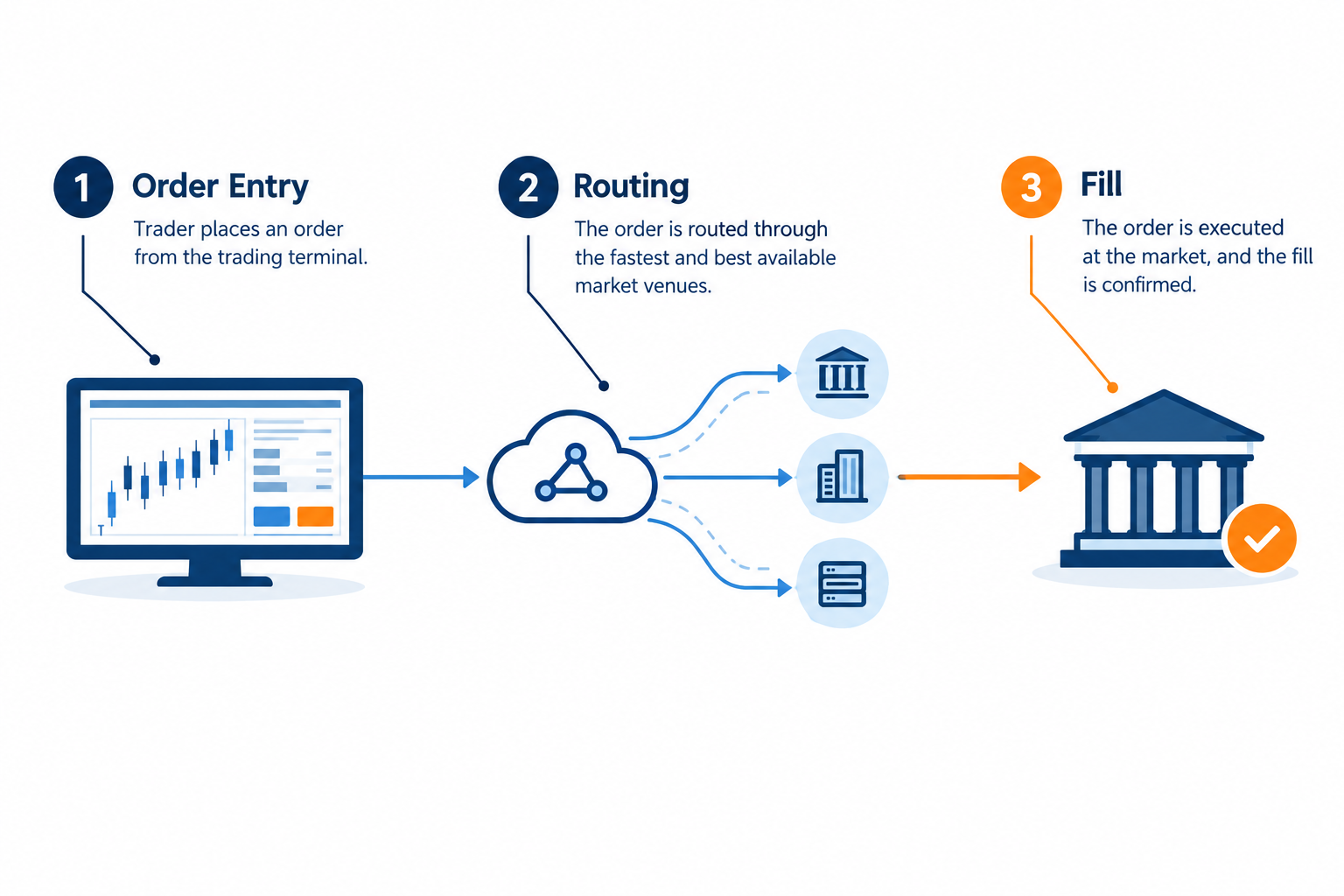
Three specifics matter here:
- Fill-quality complaints recur in developer communities. Traders running live strategies have reported inconsistent execution quality on Alpaca compared to what their backtests or paper runs suggested. It's a recurring pattern in those threads, and it's worth weighing before you route real capital through the platform.
- Paper trading flatters live performance. Alpaca's paper environment doesn't simulate slippage, dividends or regulatory pass-through fees. A strategy that looks profitable on paper can post a different result once real spreads, real fills and real fees enter the picture. This is the single most common trap for a new automator: treating a clean paper backtest as proof a live strategy works.
- The regulatory record includes a 2026 fine. FINRA fined Alpaca $300,000 on March 17, 2026 for reporting roughly 1.87 million trades late. That matter is closed, but it's a documented data point on execution and operational discipline, not noise you can wave away.
None of this means Alpaca is broken. It means the execution layer is the part of the stack you verify yourself, not the part you assume works because the API documentation reads well. The practical takeaway: if your strategy is sensitive to fill price (tight scalps, thin-liquidity names, fast reversals), test with small size on live money before you scale, and don't trust a paper Sharpe ratio as a live Sharpe ratio.
What does Alpaca really cost to run for a year?
Alpaca's core trading is free: $0 commission on US-listed stocks, ETFs and options for individual self-directed accounts. Your real annual cost is almost entirely a market data decision, not a trading decision, and that's the piece most alpaca trading pricing questions actually boil down to.
Here's the alpaca trading commission and fees breakdown, straight from Alpaca's published fee schedule:
- Stocks and ETFs: $0 commission. Regulatory pass-through fees (SEC and FINRA fees) apply on sells, as at most US brokers.
- Options: $0 commission on standard equity options, with small per-contract regulatory fees. Index options are the exception at $0.50 per contract.
- Crypto: 0.15% maker and 0.25% taker at the entry tier, available in some US states and select international jurisdictions.
- Market data: free (Basic) or $99 a month (Algo Trader Plus). This is the number that actually decides your annual cost.
Does Alpaca trading have options trading? Yes, and it's commission-free at the standard tier, with the $0.50 index-options exception noted above.
Run the math on a typical automator. If you trade only stocks and ETFs and stick with IEX-only real-time data, your annual cost is close to zero beyond regulatory pass-through fees. Add options and it's still close to zero. The moment your strategy needs full-market data, OPRA options data, or more than 30 websocket symbols, you're paying $99 a month, or $1,188 a year. Accounts with $100,000 or more in net deposits get Algo Trader Plus free.
Practical takeaway: price out your strategy's data needs before you build it. A strategy that needs full-exchange tick data on 50 symbols is a $1,188-a-year strategy whether you admit it upfront or discover it three months in.
What does the free plan actually let you do?
The free plan (Basic) is a real trading account with a limited data window, and understanding that window is the whole game. It is not full-market coverage, and no honest alpaca trading review should describe it that way.
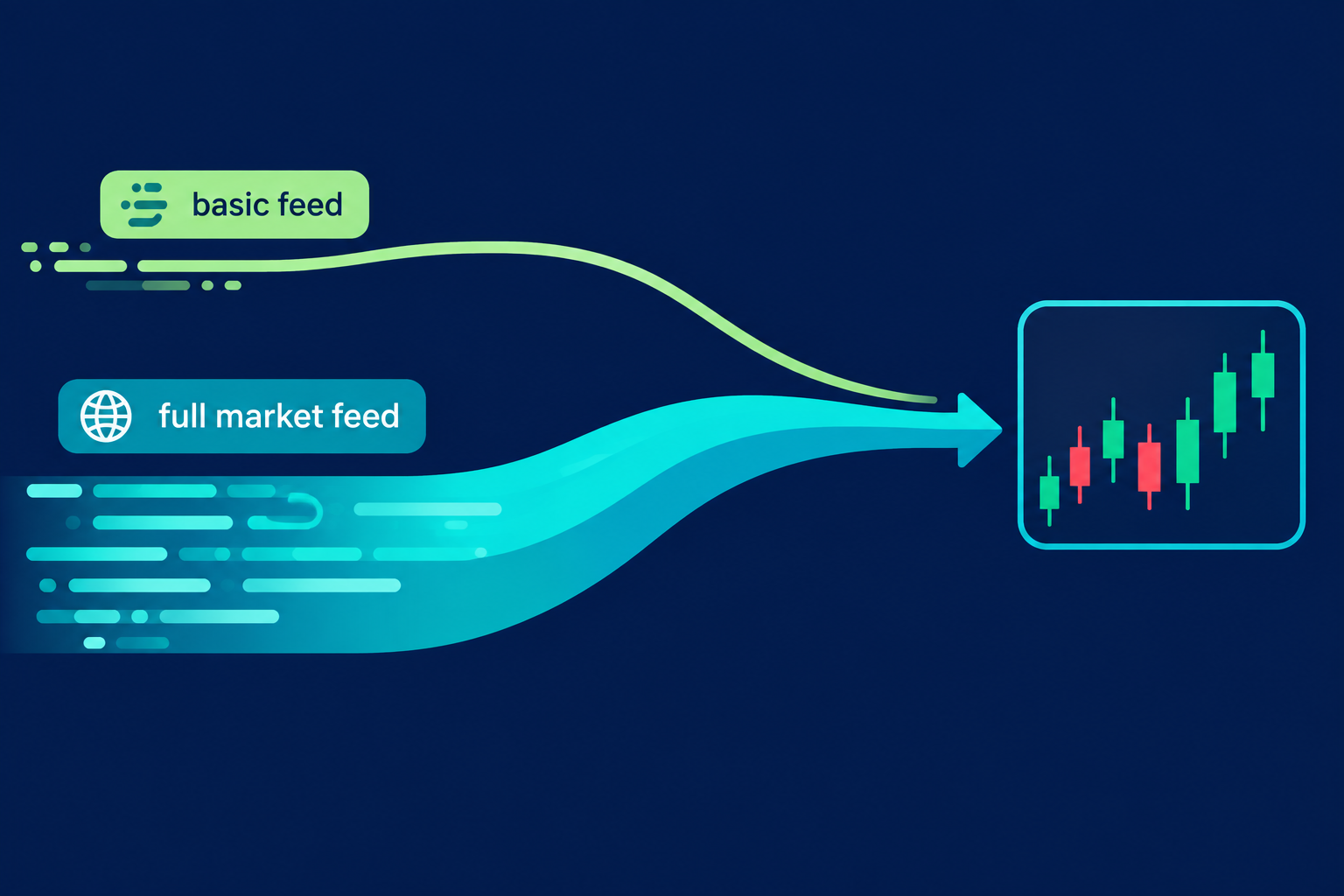
Basic includes:
- Real-time US equities from IEX only, one exchange, not the consolidated tape across all US exchanges
- An indicative (not live-firm) options feed
- 30 equity websocket symbols at a time
- 200 options quotes
- 200 API calls a minute
- Historical data back to 2016, with the latest 15 minutes withheld
That 15-minute historical restriction is not a footnote. If your backtest or signal logic needs the most recent bar, the free plan hides it from you by design. Same with the 30-symbol websocket cap: a watchlist-driven strategy scanning 60 names hits a wall on Basic before it hits a wall on capital.
Algo Trader Plus, at $99 a month, removes all three limits: real-time data from every US exchange covering 100% of market volume, OPRA options data, unlimited equity websocket symbols, 1,000 options quotes, 10,000 API calls a minute, and no historical restriction.
Decision rule: if you're prototyping a strategy on a handful of large-cap names with a few-minute lag tolerance, Basic is genuinely usable and free. If your edge depends on seeing the whole tape in real time or scanning more than 30 symbols at once, budget for the $99-a-month plan before you start, not after your live results don't match your backtest.
Why does trading paper and live on the same code matter?
Paper trading and live trading run on Alpaca's exact same API, and only the base URL changes between them. That single design choice is the biggest structural advantage in this Alpaca trading review, and it's also the source of the platform's biggest blind spot.
The advantage: you build and test a strategy against a free paper account funded with $100,000 in simulated money, available to anyone globally with just an email address, no funding required. When the strategy is ready, you point the same code at the live endpoint. No rewrite, no re-plumbing, no "it worked in the sandbox but broke in production" surprise from mismatched APIs. That's a real engineering win most retail brokers don't offer, and it's the core reason developer communities keep pointing new automators toward Alpaca for the sandbox and API layer even when they route execution elsewhere.
The blind spot: paper trading does not simulate slippage, dividends, or regulatory fees. A strategy can post a clean paper track record for months and still underperform live, because the paper fill assumes you got exactly the price you asked for, every time, with no cost drag from real-world friction. That's the trap referenced earlier in the execution section, worth repeating here because it's specifically a paper-versus-live issue, not a live-execution issue.
For context on how the API itself fits into a broader automated trading stack, our AI trading bots guide covers where a broker like Alpaca sits relative to signal generation and execution logic, and our piece on whether AI trading bots actually work is worth reading before you assume a green paper equity curve means anything on its own.
Practical takeaway: treat paper trading as a code-correctness check, not a profitability check. Run a strategy on small live size for a stretch before you trust the paper numbers as a forecast of live results.
How hard is Alpaca to get started with?
Getting started with Alpaca is easy if you write code and hard if you don't, and that split is exactly what its Usability score of 14 out of 20 is measuring. This is a case where a mid-range number reflects a real strength paired with a real gap, not a mediocre product.
For developers, the onboarding is genuinely strong:
- Official SDKs in Python, Go, Node.js, C# and Java
- A public Postman workspace to test endpoints before writing a line of code
- A downloadable OpenAPI spec
- An llms.txt file built for AI coding tools
- An MCP server and a command-line tool for scripting account actions directly
That's a broader developer toolkit than most retail brokers bother building. If you've ever fought a broker's undocumented, inconsistent API, Alpaca's docs are a noticeably different experience.
For everyone else, the picture flips. Alpaca staff mentioned a mobile app on the roadmap back in 2023, and we found no official app. The web dashboard covers basic order entry, and a TradingView integration lets you place orders on your Alpaca account from TradingView, but neither is built to replace a full trading platform. Tutorial creators who walk viewers through Alpaca often point to account setup, meaning KYC, identity verification and funding, as the step where would-be automators quit before they write a line of trading code.
Is Alpaca trading good for beginners? Not in the conventional sense. If "beginner" means someone who wants a guided app experience, the answer is no. If "beginner" means someone new to trading but comfortable writing basic Python, Alpaca is approachable specifically because the paper account removes financial risk while you learn the mechanics.
Practical takeaway: if you can't write a for-loop, budget time to learn one, or pick a broker built around a screen instead of a script. If you can, Alpaca's onboarding friction is entirely front-loaded into account setup, not into the API itself.
What are Alpaca's account minimums and day trading rules?
Two thresholds matter for anyone planning to trade actively on Alpaca. Get both right before you fund anything.
The first threshold is the $100,000 net-deposit mark. Cross it and Alpaca gives you the $99-a-month Algo Trader Plus data plan free, a real incentive built into the account structure rather than a marketing offer.
The second threshold is day trading on a margin account. For years, the pattern day trader (PDT) rule required $25,000 in account equity before a margin account could make four or more day trades inside five business days. FINRA has proposed replacing that rule, and Alpaca's own documentation describes the change as awaiting SEC approval, followed by a transition period.
Can you day trade with Alpaca with less than $25,000? Under the long-standing rule, a margin account below $25,000 is capped at three day trades in any five business days. Whether that still applies on the day you read this depends on where the FINRA proposal and Alpaca's rollout stand. Don't build a strategy around a number you read in an article, including this one. Confirm it against Alpaca's current account documentation first.
Practical takeaway: if your strategy depends on frequent same-day round trips, verify current day-trading margin rules on Alpaca's account documentation before funding, not after you've already placed your third same-day trade of the week.
Is Alpaca safe, and what does its regulatory record show?
Alpaca Securities LLC, the entity handling stock, ETF and options trading, is a member of both FINRA and SIPC, under FINRA CRD 288202. That membership matters: it means your cash and securities are protected against custody failure (the brokerage collapsing or mishandling your assets), not against market losses. SIPC never covers a bad trade, only a broken custodian.
Crypto works differently. Alpaca Crypto LLC, the entity that handles crypto trading, is registered with FinCEN as a money services business but is not a member of FINRA or SIPC. That means crypto holdings on Alpaca sit outside SIPC protection entirely. If you hold both stocks and crypto on the platform, only the securities side carries that custody-failure safety net.
The regulatory record itself has two closed matters worth knowing about. FINRA fined Alpaca $300,000 on March 17, 2026, for reporting approximately 1.87 million trades late, a record you can verify directly on FINRA BrokerCheck. Separately, the SEC fined Alpaca $400,000 in September 2024 over staff communications on unapproved channels. Both matters are closed. Neither matter, as described on BrokerCheck, involved client funds, but both are real entries on the compliance history.
Practical takeaway: if SIPC protection matters to your decision, keep that distinction sharp: Alpaca Securities LLC has it, Alpaca Crypto LLC does not. Anyone weighing crypto through Alpaca specifically for safety reasons should reconsider the assumption.
Can you use Alpaca outside the United States?
Individuals in 195+ countries can open an Alpaca brokerage account through its US broker entity, according to Alpaca's international account page, with the UK and Portugal given as working examples. That's a genuinely wide footprint for a US-regulated broker, and it answers the international half of this Alpaca trading review directly: yes, in most places, but check the list first.
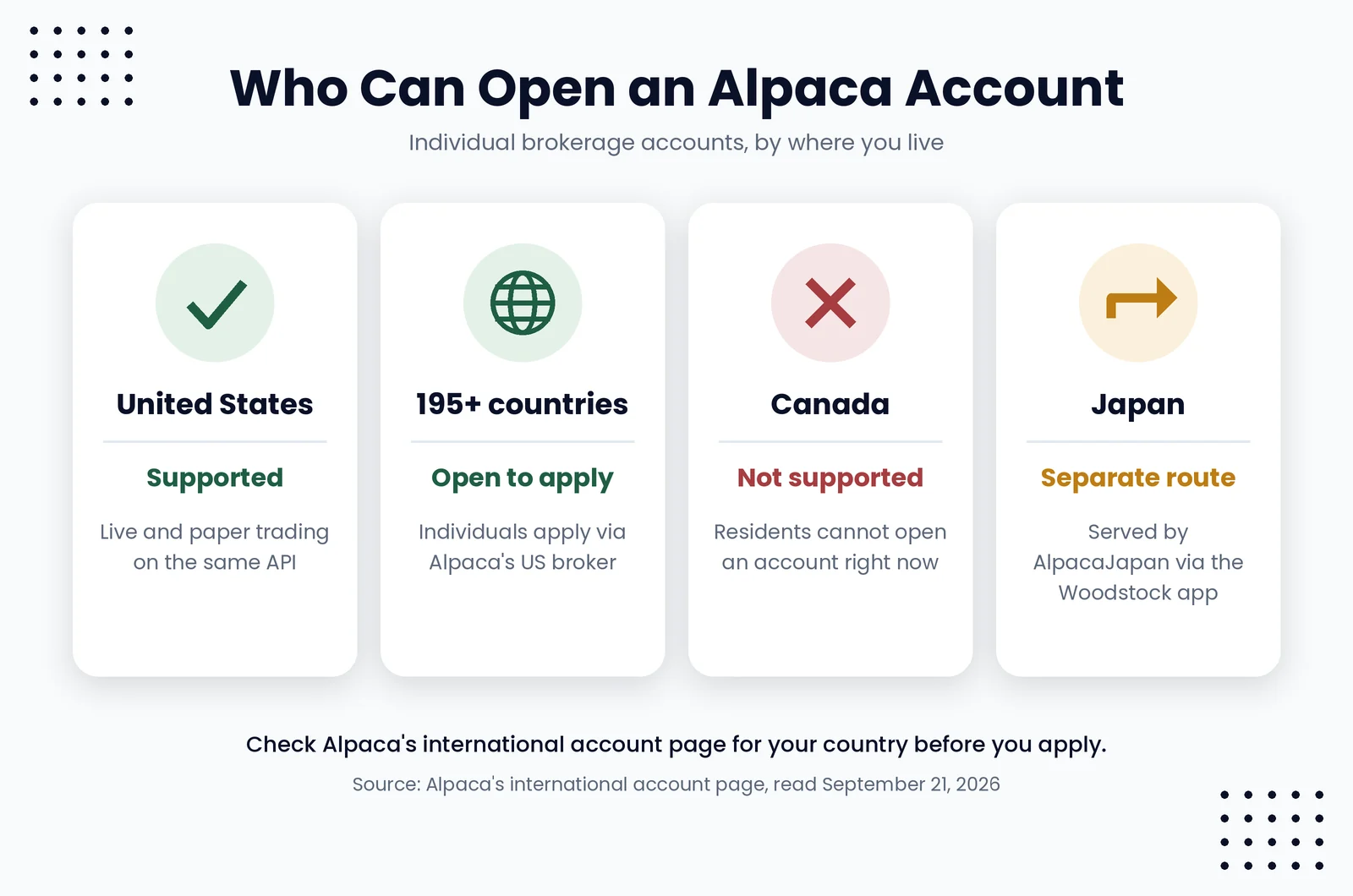
The clearest exception: Canadian residents are not currently supported. If you're in Canada, Alpaca is off the table for now regardless of what the general 195-country figure suggests.
Japan works differently from most other countries. Residents there are served through AlpacaJapan, a separate operation, via the Woodstock app, rather than through Alpaca's US broker account directly.
Two newer international moves are aimed at businesses, not individual traders, and it's worth being precise about that distinction so nobody applies expecting the wrong product. Alpaca's European operation, built through its WealthKernel acquisition completed April 21, 2026, serves companies building trading apps on top of Alpaca's infrastructure. Its India move through GIFT City, still subject to regulatory approval, is the same story: infrastructure for businesses, not a direct consumer account for individuals in India.
Practical takeaway: if you're opening an alpaca brokerage account from outside the US, check Alpaca's current international account page for your specific country before you start the application. The 195-country figure is real, but it's not universal, and the exceptions (Canada, Japan's separate structure) are exactly the kind of detail a country-list page will confirm faster than a general review can.
What do real developers say about Alpaca?
The recurring read across Reddit's algorithmic trading community is consistent: Alpaca has one of the cleanest broker APIs in retail trading, and fill-quality complaints show up often enough to be a pattern, not a one-off. Both things are true at once, and neither cancels the other out.
That split shows up in how experienced builders actually structure their stack. A common setup described in developer discussion: use Alpaca for the API and the paper-trading sandbox, pull full-market data from a dedicated data vendor when the free feed isn't enough, and route execution-sensitive strategies through a larger, execution-focused broker. Alpaca becomes the development and testing layer, not necessarily the only broker in the picture.
On customer service specifically, there isn't a deep, established body of consumer-style reviews to draw from, and that's expected for a developer-first product rather than a red flag. Alpaca doesn't get the volume of app-store reviews a mobile-first broker like Webull or Robinhood collects, because its user base skews toward people who troubleshoot in GitHub issues and Reddit threads rather than leaving star ratings. If you want a broker with a large, easily searchable body of consumer sentiment about phone support wait times, this isn't where you'll find it.
If you're evaluating other tools that sit alongside a broker like this in a broader trading stack, our Webull review and QuantConnect review cover two different directions builders take: a mobile-first consumer broker, and a full backtesting engine for strategies before they ever touch live capital.
Practical takeaway: treat Reddit's algorithmic trading community as your best free due-diligence source for Alpaca specifically. It's where fill-quality issues get discussed in real detail long before they show up in a formal review.
Alpaca vs Interactive Brokers vs Tradier
| Feature | Alpaca | Interactive Brokers | Tradier |
|---|---|---|---|
| Platform fee | $0 (free), $99/mo for Algo Trader Plus data | Not verified | $0/mo (Lite), $10/mo (Pro) |
| US stock commissions | $0 | $0.005/share, $1 min (Pro Fixed); $0 (Lite, US residents only) | $0.35/trade (Lite); $0 (Pro) |
| Real-time data on base plan | IEX only | Not verified | Not verified |
| API access | Included, all plans | Included, both plans | Included, all plans |
| Paper trading | Free, $100,000 simulated, same API as live | Not verified | Not verified |
| Mobile app | No official app | Not verified | Not verified |
This alpaca trading vs interactive brokers comparison comes down to what you're optimizing for. IBKR Pro Fixed charges per share ($0.005 a share, $1 minimum) but is built for execution control and global market access. IBKR Lite is commission-free like Alpaca but restricted to US residents. Tradier splits the difference on commissions: free with a per-trade fee, or $10 a month for zero commissions, with API access on every plan.
Pros and cons
Pros:
- The free plan trades live money, commission-free on US stocks, ETFs and options
- Paper and live run on the same API, so tested code moves to live without a rewrite
- Data limits, rate limits and fees are published openly on public docs
- Historical data back to 2016 on the free plan
- SDKs in five languages, plus Postman, an OpenAPI spec and an MCP server
- Individuals in 195+ countries can open accounts
- Alpaca Securities is a FINRA and SIPC member
Cons:
- Fill-quality complaints recur in developer communities
- Paper trading ignores slippage, dividends and fees, so it flatters results
- Free real-time equities data is IEX only, not the full market
- The free plan withholds the latest 15 minutes of historical data
- The free websocket caps you at 30 equity symbols
- Full-market data costs $99 a month
- No official mobile app and only a basic web dashboard
- Crypto sits with Alpaca Crypto LLC, outside SIPC and FINRA
- Canadian residents cannot open accounts
- A FINRA fine in 2026 for late trade reporting
What are the best alternatives to Alpaca?
The right alternative depends on which weak spot you're trying to fix, not on which broker has the best headline. This alpaca trading review points builders in three directions depending on the gap.
If execution quality is the concern, Interactive Brokers is the standard comparison. It's a heavier, more established broker with API access on every plan and a longer institutional track record, though its Lite (commission-free) tier is US-residents-only, and its Pro Fixed tier charges per share instead of trading free.
If your priority is a low monthly cost for API trading, Tradier is worth a look: free with a small per-trade charge, or $10 a month with zero stock and equity-option commissions, API included either way. Check its market data terms separately. The $10 plan is about commissions, and it is not a like-for-like swap for the full-market data Alpaca charges $99 for.
Alpaca trading vs Robinhood which is better depends entirely on what you're building. Robinhood is a mobile-first, consumer-facing broker built around an app and a buy button. Alpaca is the reverse: no polished app, but a full API and a paper-trading sandbox built for automation. They mostly compete for different jobs. If you want to tap a screen, Robinhood's lane fits. If you want to run code against a documented broker API with a free paper account, Alpaca is built for that job.
For readers building the strategy layer, not just picking the broker, our TradingView review and the broader AI trading tool reviews directory cover the charting and signal side that pairs with an execution-only broker like Alpaca.
Decision rule: choose Alpaca if your bottleneck is API quality and paper-to-live continuity. Choose Interactive Brokers if your bottleneck is execution and global reach. Choose Tradier if your bottleneck is a low monthly cost for commission-free API trading, and confirm its data terms before you count on full-market coverage. Choose neither, and pick a mobile-first broker instead, if you just want a chart and a buy button.
How we evaluated this Alpaca trading review
FullStack Alpha did not fund an Alpaca account for this piece. This review reflects a document and disclosure review: Alpaca's own market data documentation, its paper trading docs, its fee schedule, its international account pages, FINRA BrokerCheck, Interactive Brokers' and Tradier's public pricing pages, and developer discussion on Reddit. See our full How We Test methodology for how every broker and tool on the site gets scored.
Sources
- Alpaca Market Data API documentation, docs.alpaca.markets, updated July 16, 2026
- Alpaca fee schedule, alpaca.markets, revised September 1, 2026
- FINRA BrokerCheck, brokercheck.finra.org, firm summary 288202
- Alpaca international account eligibility page, alpaca.markets/learn, updated March 11, 2026
Final verdict
For the Python-capable automator who wants to test a strategy on paper and flip it to live money without rewriting a line of code: yes. This alpaca trading review lands on a genuine recommendation for that reader, with one condition attached: budget the $99-a-month data plan if your strategy needs more than IEX and 30 symbols, and don't trust your paper results until you've seen how they hold up on small live size.
For anyone who wants a chart, a search bar, and a buy button on their phone: no. Alpaca has no official mobile app and a bare web dashboard, and that's not a bug to wait out, it's the product's actual shape. Go look at a mobile-first broker instead, and if you're weighing that path, our Webull review is a reasonable next stop.
Picking a broker is one decision. Picking what runs on top of it is the next one. The FullStack Alpha directory lists 200+ AI stock tools by category and price. Browse the directory at aistockpickerapps.com.
FullStack Alpha may earn a commission if you buy through links on this page, at no extra cost to you.
We test the tools. You get the verdict.
One email a week. What we tested, what scored, and what we'd skip. Written for traders, not for clicks.
Frequently asked
Our verdict on Alpaca
Alpaca scores 77: a best-in-class developer experience with a contested execution record.