

Zacks Review 2026: The Rank Works. The Security Record Doesn't.
Short on time? The Zacks Alpha Score scorecard covers pricing, the verdict and what traders actually say, in about 90 seconds.
See the score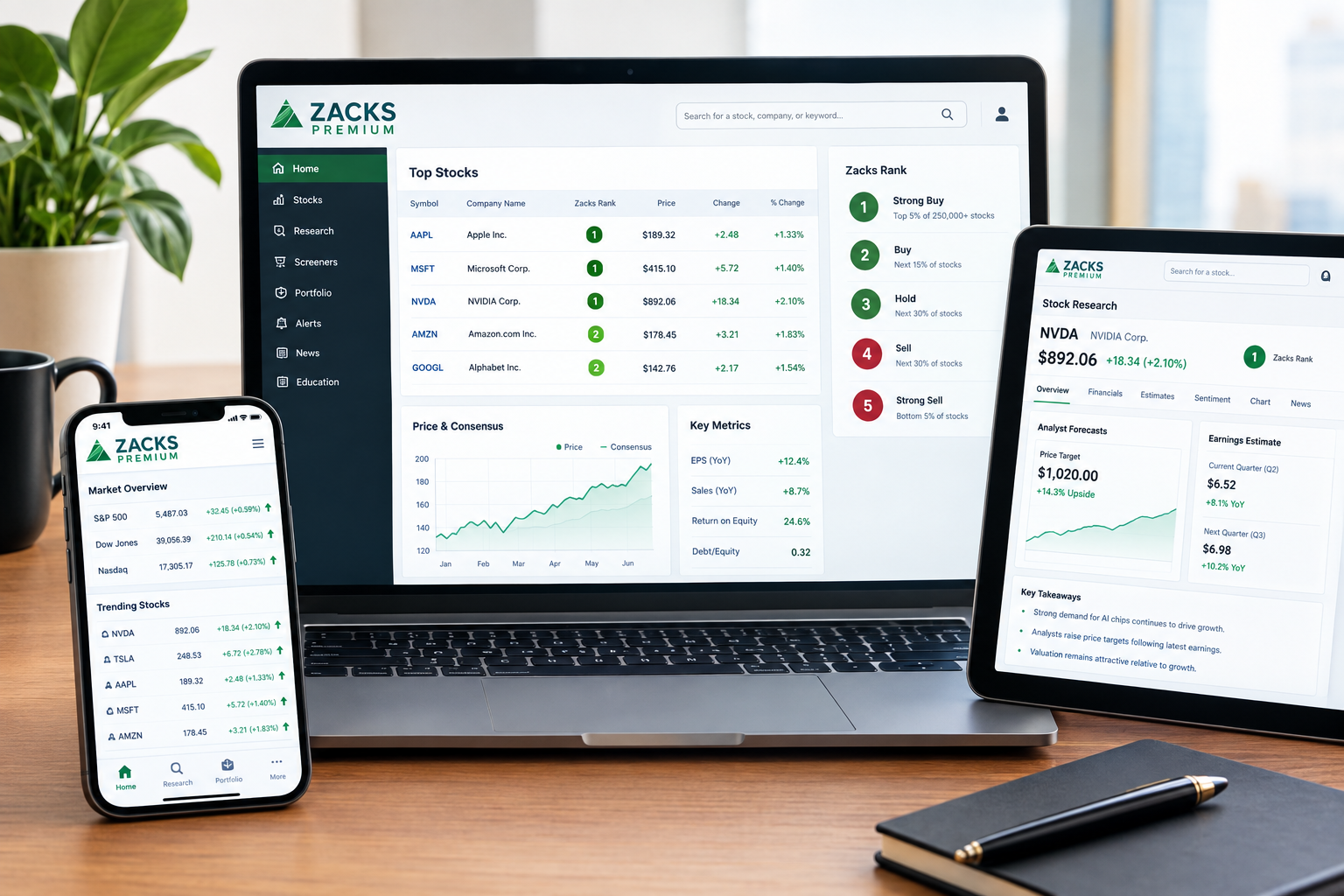
Quick answer
This Zacks review scores the platform at 58/100 on our Alpha Score, desk-researched and last tested September 21, 2026: the Rank is worth a look, the security record says proceed with caution. The Zacks Rank, a 1-to-5 estimate-revision signal, has real practitioner credibility and a genuinely useful daily #1 Strong Buy list. The company has also disclosed three separate data security incidents between January 2023 and February 2025, and that history should factor into whether you hand it your card number and your login credentials.
Zacks review: key takeaways
- The Zacks Rank runs 1 to 5 (Strong Buy to Strong Sell), built from analyst earnings-estimate revisions, not price charts or sentiment.
- Zacks Premium costs $249 a year, confirmed at checkout as of this test; a 30-day free trial lets you sample it first.
- Three documented security incidents hit Zacks between 2023 and 2025: roughly 820,000 customers in January 2023, 8.8 million records leaked on a hacking forum in June 2023 (passwords stored as unsalted SHA-256), and about 12 million email addresses surfaced via Have I Been Pwned in February 2025.
- The iOS app sits at 4.19 stars from 3,993 lifetime Apple ratings, but 38 of the last 50 reviews are 1 or 2 stars, which tells you the recent experience is worse than the headline number suggests.
- Trustpilot puts Zacks at 3.7 out of 5 from 173 reviews, a mixed score that leans on billing and cancellation complaints.
- The Zacks Rank changes almost daily as estimates get revised, so a #1 today is not a standing recommendation, it's a snapshot.
- Zacks Ultimate runs $299 a month, or $2,995 paid annually, and adds services most individual investors won't touch.
What does Zacks actually do?
A Zacks review has to separate the one tool that works from the noise around it, so start with the job the platform does.
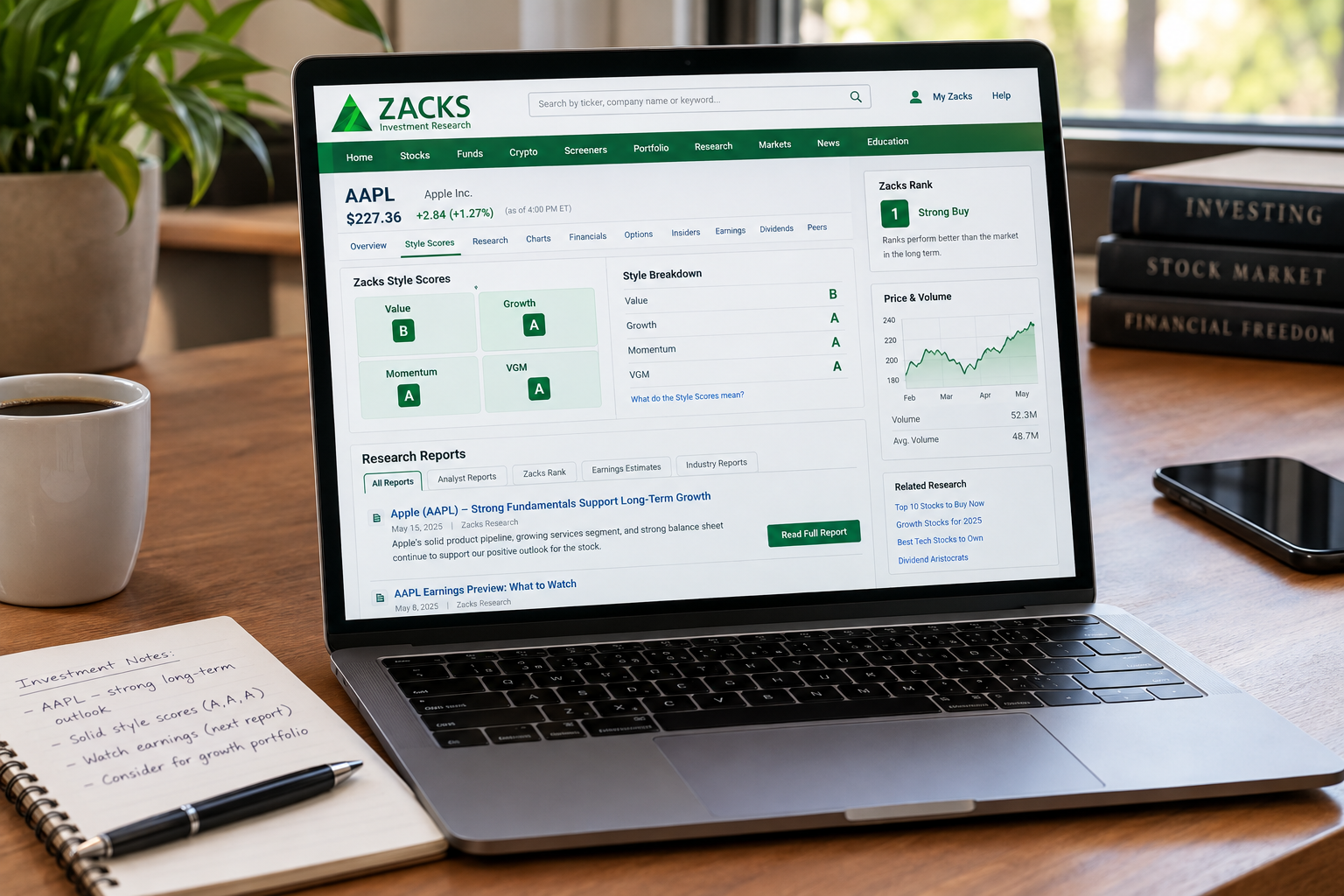
Zacks Investment Research turns Wall Street analyst behavior into a tradeable signal. Instead of asking you to read forty analyst notes, it tracks whether those analysts are raising or cutting their earnings estimates and scores every covered stock from 1 (Strong Buy) to 5 (Strong Sell).
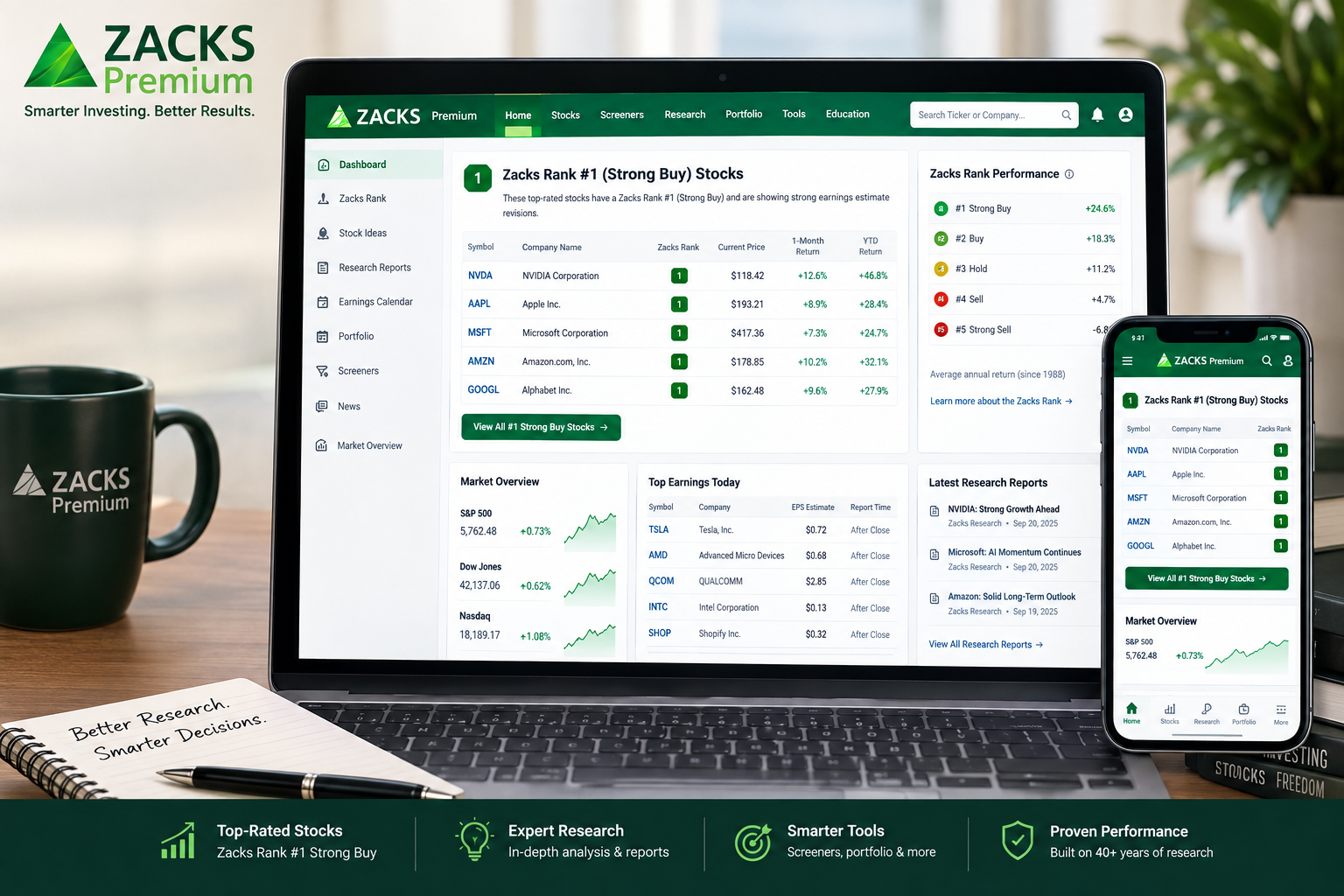
Here's how each piece maps to something you actually need:
- The Zacks Rank gives you a single number that reflects analyst estimate momentum, so you can screen thousands of names down to the handful where the smart money on the sell side is getting more bullish, not less.
- The daily #1 Strong Buy list saves you the job of manually rebuilding a shortlist every morning. It updates once a day and only a small slice of the roughly 4,000 covered stocks earn a #1 at any given time.
- Earnings ESP (Expected Surprise Prediction) compares the "most accurate" analyst estimate against the broader consensus, flagging stocks more likely to beat or miss before the earnings report hits the wire. That's the closest thing on the platform to a genuine edge.
- Style Scores grade each stock A through F on Value, Growth, and Momentum, giving you context for why a stock earned its Rank.
- The stock screener lets you combine the Rank, Style Scores, and Earnings ESP into a custom filter, which matters if you're the type of investor who wants to build a repeatable process instead of chasing headlines. If you're comparing this approach against other screening tools, our guide to AI stock screeners is a useful next stop.
- Equity Research reports hand you a written analyst thesis on individual names, useful if you want the "why" behind the number.
The problem is the packaging. Zacks buries these tools under a wall of daily articles, "Bull of the Day" emails, and headline-driven commentary that reads more like content marketing than research. The Rank is the product. Everything else is noise wrapped around it.
Zacks review: how does the Zacks Rank work?
The Zacks Rank scores every covered stock from 1 (Strong Buy) to 5 (Strong Sell) using four inputs built entirely on analyst earnings-estimate revisions, not price action or technical setups. It's a quantitative filter, not a chart pattern.
The four factors, in plain English:
- Agreement: are analysts revising their estimates in the same direction, or is the group split? More consensus in the direction of a raise pushes the Rank higher.
- Magnitude: how large is the recent change to the consensus estimate? A small nudge matters less than a sharp upward revision.
- Upside: the gap between the "most accurate" estimate (Zacks weights recent, timely forecasts more heavily) and the broader consensus. A wide gap in the bullish direction is a signal.
- Surprise: the stock's history of beating or missing earnings estimates. A track record of beats adds weight to a bullish Rank.
Those four factors combine into the single 1-to-5 number. A #1 Strong Buy means analysts are getting more optimistic about near-term earnings, in agreement, and the stock has a track record of surprising to the upside. A #5 Strong Sell is the mirror image.
How to actually use it: treat the Rank as a filter, not a trigger. Pull the daily #1 list, then run it through your own risk-reward check, position sizing rules, and entry criteria. The Rank tells you where analyst sentiment is shifting. It doesn't tell you where support and resistance sit, whether the stock is overextended, or what a clean setup looks like on the chart.
Why churn matters: the Zacks Rank moves almost every trading day as new estimate revisions come in. A stock can be a #1 on Monday and a #3 by Friday with no news of its own, just because analysts across the group revised numbers on other names in the same sector. That's not a flaw exactly, it's how a revision-based model is supposed to work. But it means a snapshot #1 is not a standing recommendation. Buying and holding based on a single day's Rank without a re-check is a mistake we see people make constantly, and it's the single biggest misuse of this tool.
Has the Zacks Rank been backtested?
Every Zacks review quotes the same performance chart. Here is what that chart is, and what it is not.
Zacks publishes its own long-run performance claims for the Rank, and those numbers come from the company itself, not an independent audit. Treat them as a vendor claim, not a verified fact, and check the current methodology page before you lean on any specific figure.
Zacks has stated, in its own published materials, that #1 Strong Buy stocks have historically outperformed #5 Strong Sell stocks by a wide margin over multi-decade periods. That's the company's own claim about its own product. We are not going to repeat a specific outperformance number here as if it were independently audited, because it hasn't been verified by a third party we can name and link.
What we can verify:
- The Rank methodology itself is publicly documented, which is more transparency than a lot of "proprietary AI" stock pickers offer.
- The Rank is a snapshot, not a static bet. Churn (the daily shuffling of stocks between 1 and 5) means any historical return figure is measuring a strategy that re-sorts constantly, not a buy-and-forget list.
- No independent, third-party audited track record for the current version of the Rank is publicly available as of this test. If Zacks publishes one with a named auditor, that would materially change this section.
The practical takeaway: use the Rank as a screening input backed by a public methodology, not as a guaranteed-return claim. Nobody, including Zacks, should be promising you a number. If a marketing email tells you what the #1 list "returned" this year, read it as advertising copy first.
How good is the Zacks stock screener?
The screener is the part of this Zacks review most readers skip, and it should not be.
The Zacks screener is genuinely useful for narrowing a large universe of stocks down to a short list, and it's likely the best-built feature on the platform outside the Rank itself. It gets you from roughly 4,000 covered names to a workable watchlist in a few clicks.
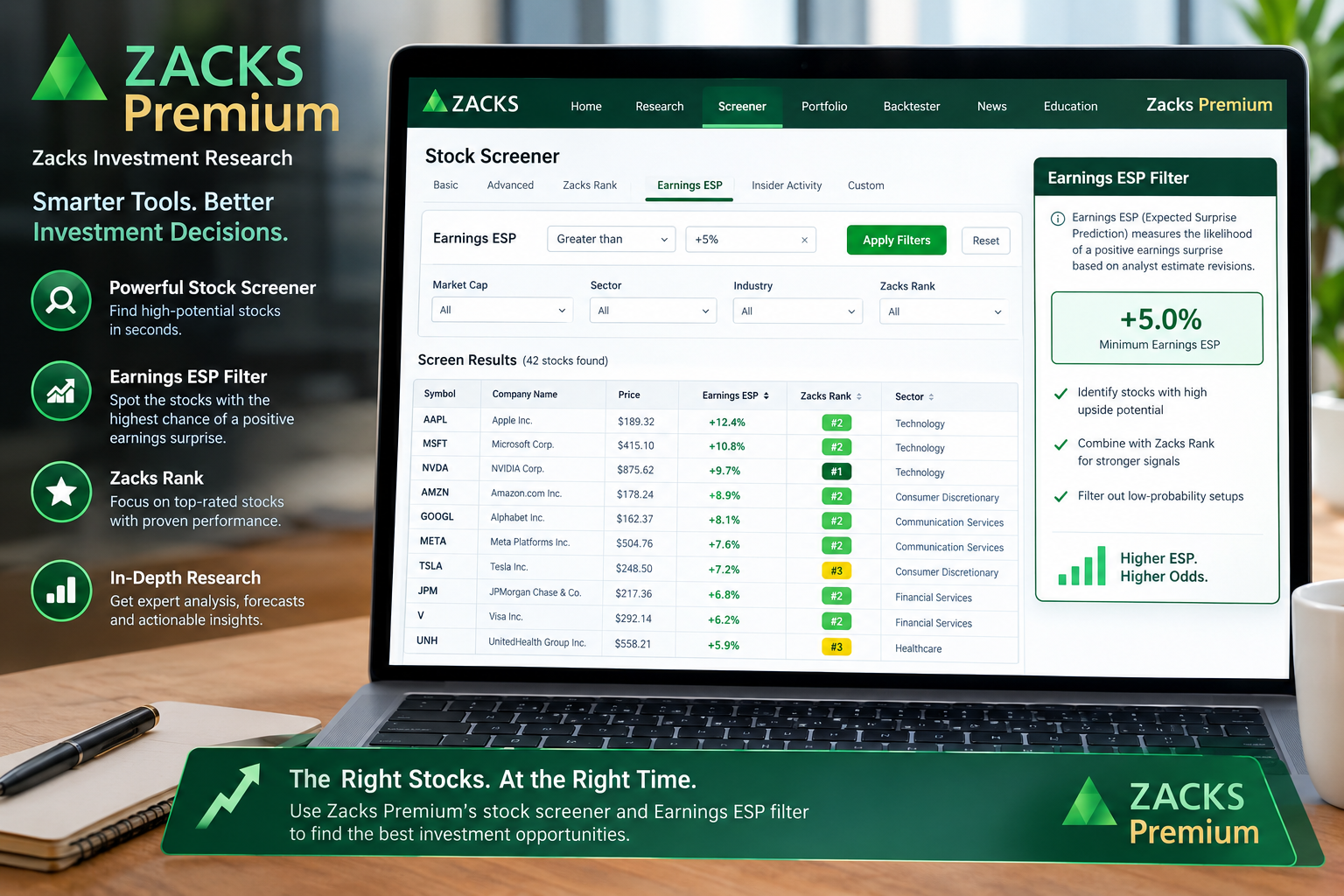
What you get:
- Custom screens where you build filters combining the Zacks Rank, Style Scores, sector, market cap, and standard fundamentals like P/E and revenue growth.
- Premium prebuilt screens, curated combinations (for example, "Zacks Rank #1 stocks with an A Momentum Style Score") that save you from building logic from scratch.
- The Earnings ESP filter, which lets you isolate stocks with a positive Expected Surprise Prediction ahead of a report, useful during earnings season if you trade around catalysts.
- Export to CSV, so you can move a shortlist into a spreadsheet or another tool for further work.
Decision rule: if you already know how to build a filter and just need clean, revision-based data to filter on, the screener earns its place. If you're brand new to screening and want a slicker, more visual interface, it will feel dated next to newer AI-native tools, several of which we break down in our AI stock pickers guide.
Common mistake: running a screen once and treating the output as a permanent buy list. Given how often the Rank component churns, a screen you ran last month is stale today. Re-run it, don't bookmark the results.
What does Zacks integrate with?
Integrations are thin, and any honest Zacks review should say so before you pay.
Zacks is a web-first research tool, not a trading platform, and it does not connect to your brokerage account or provide charting. That's a meaningful gap if you want one screen that does everything.
What's missing and what that means for you:
- No broker linking. You can't sync a Fidelity, Schwab, or Robinhood account to auto-track positions against Zacks Rank changes. You're manually cross-referencing.
- No charting. There's no price-action workspace here. If you want to layer support and resistance, moving averages, or volume analysis on top of the Rank, you'll need a separate charting tool.
- Email is the default delivery method for a lot of Zacks content, including the daily "Bull of the Day" and "Value Stock of the Day" newsletters. Useful if you like a curated inbox, annoying if you don't want another daily email to unsubscribe from later.
- The mobile app is the weak link. Zacks is built to be used on a desktop browser. The app exists, but as the review data below shows, recent users are not happy with it.
If your process depends on charting plus fundamentals plus broker sync in a single pane of glass, Zacks will feel incomplete. If you treat it as one input, a revision-based screening layer that feeds into a separate execution and charting workflow, it fits fine.
What is the Zacks security record?
This is the section that makes this Zacks review different from the rest: three documented incidents, each dated and sourced.
Zacks Investment Research has disclosed three separate data security incidents between January 2023 and February 2025, and that pattern, not a single event, is the real concern for anyone considering a paid subscription.
Here's the documented timeline:
- January 2023: a breach disclosure affecting roughly 820,000 customers.
- June 2023: approximately 8.8 million records surfaced on a hacking forum. Reporting on this incident noted that passwords were stored as unsalted SHA-256 hashes, a weaker practice than the salted, modern hashing algorithms (like bcrypt or Argon2) that make stolen password databases far harder to crack.
- February 2025: about 12 million email addresses tied to Zacks were reported by Have I Been Pwned, the breach-notification service run by security researcher Troy Hunt.
Three incidents in roughly two years is not a one-off IT mistake. It's a pattern, and unsalted password hashing in 2023 was already a known bad practice, not an emerging one.
What a subscriber should actually do about it:
- Use a unique password for Zacks, never one you've reused on a bank, brokerage, or email account. If you've reused a Zacks password anywhere else, change it now.
- Turn on two-factor authentication wherever Zacks offers it, and check your account settings after this review's publish date in case that's changed.
- Check your email against Have I Been Pwned (haveibeenpwned.com) periodically. If your address shows up tied to the Zacks breaches, assume any password you used there is compromised.
- Watch for phishing that references your Zacks activity. Leaked email lists get used for targeted phishing, and a message that name-drops your subscription or holdings can look more legitimate than a generic scam.
- Weigh the trade-off explicitly. The Rank has real analytical value. That doesn't cancel out a security record you should factor into your decision, especially if you're paying with a card on file for auto-renewal.
How much does Zacks Premium cost?
Price is where a Zacks review gets practical, so here is the tier map with the caveat that you should confirm the number at checkout.
Zacks Premium runs $249 a year, with no standard published monthly plan, and a 30-day free trial to test it before you pay. Confirm the live price at checkout, since promotional annual offers below $249 do show up periodically.
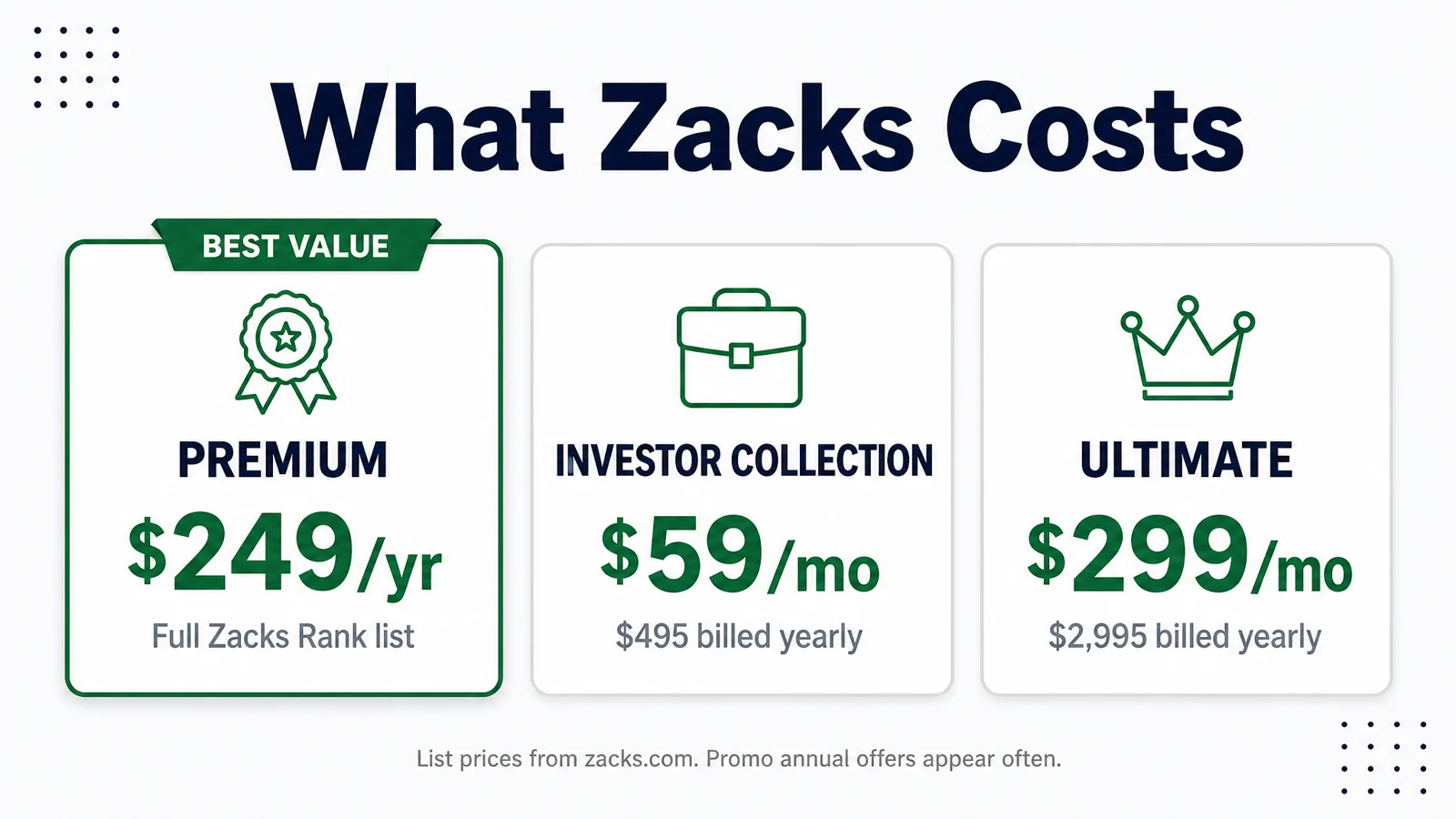
The tier breakdown:
| Tier | Price | What you get |
|---|---|---|
| Free membership | $0 | Basic Zacks Rank on individual tickers, quotes, articles |
| Zacks Premium | $249/yr | Full #1 Strong Buy list, Premium screens, Earnings ESP filter, Focus List, Style Scores, Equity Research reports |
| Zacks Investor Collection (bundle including Premium) | $59/mo ($495/yr) | Premium plus additional bundled services |
| Zacks Ultimate | $299/mo ($2,995/yr) | All Zacks services combined |
Decision rule: if you're only going to use the Rank, the screener, and the Earnings ESP filter, stick with base Premium at $249 a year. That's the tier that matches the pros in this review. Ultimate at $2,995 a year is built for people actively using every Zacks service, not casual screeners, and most individual investors won't recoup that price difference in usable features.
How to get the best deal: run the 30-day free trial first and actually use the screener and the #1 list before your card gets charged. Set a calendar reminder three days before the trial ends. That's the single most common subscription complaint across review sites, people forgetting to cancel and getting charged for a full year they didn't mean to buy.
Zacks Premium vs Seeking Alpha vs Morningstar vs Simply Wall St
| Zacks Premium | Seeking Alpha Premium | Morningstar Investor | Simply Wall St | |
|---|---|---|---|---|
| Rating method | Zacks Rank 1-5, estimate revisions | Quant + author + Wall Street ratings | Star rating + Economic Moat, fair value estimate | Visual "Snowflake" score across value, future, past, health, dividend |
| Price | $249/yr | Paid annual tier, priced separately from Zacks | Paid annual tier, priced separately from Zacks | Paid annual tier, priced separately from Zacks |
| Screener | Custom + Premium prebuilt screens, Earnings ESP filter | Custom quant-factor screener | Screener tied to Morningstar's fundamental data | Simplified visual screener, less granular filtering |
| App quality | Weak; 4.19 Apple rating but 38 of last 50 reviews are 1-2 stars | Generally functional companion app | Generally functional companion app | Mobile-friendly, visual-first design |
| Security record | Three disclosed incidents, 2023 to 2025 | No comparable public breach history found in this review's research | No comparable public breach history found in this review's research | No comparable public breach history found in this review's research |
For a full breakdown of the two competitors most people ask about, our dedicated Seeking Alpha review and Simply Wall St review go deeper than a single table row can.
What do real users say about Zacks?
A Zacks review written from the sales page is worthless. Here is what subscribers say, praise and complaints both.
Real user sentiment on Zacks splits hard between the desktop research experience and everything else, especially the mobile app and email volume. That split shows up consistently across Apple's App Store and Reddit threads.
- Apple App Store: the lifetime average sits at 4.19 stars from 3,993 ratings, which looks solid until you check recency. Of the last 50 reviews, 38 are 1 or 2 stars. Positive older reviews praise the Rank and the research depth. Recent critical reviews center on app crashes, login issues, and aggressive upsell prompts inside the app itself.
- Reddit: threads in investing subreddits repeatedly flag Rank churn as the top complaint, describing the daily shuffling of the #1 list as feeling like "checking a weather report" rather than getting an investment thesis. That's a fair description of what a revision-based model actually does day to day, and it's worth knowing going in rather than being surprised by it.
- Trustpilot: 3.7 out of 5 from 173 reviews, a middling score weighted down by billing and cancellation complaints rather than complaints about the Rank's usefulness.
- The "13 percent YTD" claim: some Zacks marketing emails and social posts have touted a specific year-to-date return figure for the #1 Strong Buy list. That's a vendor-supplied number, not an independently audited return you can verify from a named third party. Read any specific percentage in a Zacks marketing email as advertising copy, and check the current, published methodology yourself before repeating it.
The pattern across every source: people who use Zacks strictly for the Rank and the screener on a desktop browser are generally satisfied. People who rely on the mobile app, or who expected the daily email content to be actionable research, are not.
Zacks Alpha Score breakdown
This Zacks review scores five pillars at 20 points each, and the breakdown sits before any affiliate link on purpose.
Zacks Premium scores 58 out of 100 on our Alpha Score, built from five pillars worth 20 points each, based on desk research across the six public sources we check for every tool. Full methodology lives at How We Test.
| Pillar | Score | Why |
|---|---|---|
| Signal Quality | 14/20 | The Rank is a real, publicly documented estimate-revision model with genuine practitioner respect, and the Earnings ESP filter adds a useful second signal. It loses points because daily churn means the signal requires active re-checking, not one-time use. |
| Transparency | 10/20 | The Rank's four inputs (Agreement, Magnitude, Upside, Surprise) are publicly explained, which beats a black-box model. But the long-run performance claims are Zacks' own numbers, with no named independent audit backing them. |
| Price-to-Value | 14/20 | $249 a year is reasonable for what base Premium unlocks, and the 30-day free trial removes most of the risk of testing it. It doesn't score higher because Ultimate's price jump ($2,995/yr) buys features most subscribers won't use. |
| Usability | 11/20 | The desktop screener and Rank pages work well once you learn the layout. The mobile app drags this score down hard, and the site's content volume (daily emails, headline articles) actively buries the tools that matter. |
| Community Verdict | 9/20 | Recent App Store sentiment has turned sharply negative (38 of the last 50 reviews at 1-2 stars), Trustpilot sits at a mixed 3.7, and Reddit threads consistently cite Rank churn as a source of confusion. This is the lowest pillar on the board, and it should be. |
| Total | 58/100 |
Two pillars sitting below 12 out of 20 is a real signal, not a rounding error. Transparency takes the hit for unaudited return claims, and Community Verdict takes the hit for a mobile experience and security history that recent users are actively calling out. The Rank pillar carries the score. The rest of the platform drags it down.
Who should subscribe to Zacks Premium?
The practical end of any Zacks review: who actually gets value here.
Zacks Premium fits active individual investors and swing traders who build decisions around earnings revisions, surprises, and quantitative screening, and who are disciplined enough to treat a #1 Rank as an input, not a final answer.
You're a good fit if:
- You want a systematic, revision-based signal to filter a large stock universe rather than reading forty analyst notes yourself.
- You're comfortable running the screener regularly and re-checking Rank changes rather than setting and forgetting a list.
- You primarily work on a desktop browser and don't need the mobile app to carry the workflow.
- You're willing to actively harden your account (unique password, two-factor authentication) given the platform's breach history.
Who should skip Zacks Premium?
Skip Zacks Premium if you need charting, broker integration, or a reliable mobile experience, or if you're not willing to actively manage your account security given three disclosed breaches since 2023.
Skip it if:
- You trade primarily from your phone. The app's recent review trend (38 of the last 50 Apple reviews at 1-2 stars) makes this a real functional risk, not a minor inconvenience.
- You want charting or price-action tools baked in. There's none here. You'll need a separate platform for that layer.
- You're not going to actively use the screener. If you'd just glance at the #1 list once a week without cross-checking it, you're paying $249 for a headline you're not using.
- Security history is a dealbreaker for you. Three incidents in roughly two years, including unsalted password hashing disclosed in 2023, is a fair reason to walk away, and nobody should talk you out of that instinct.
Zacks review FAQ
Is Zacks worth it?
Zacks Premium is worth it for active investors who will actually run the screener and cross-check the Zacks Rank regularly. It's a weak fit for casual investors who just want a set-and-forget buy list, since the Rank changes almost daily.
Is the Zacks Rank accurate?
The Zacks Rank is built on a publicly documented methodology (Agreement, Magnitude, Upside, Surprise), which is more transparent than most proprietary stock-picking tools. Its long-run outperformance claims come from Zacks itself and have not been independently audited by a named third party, so treat specific return figures as vendor claims.
How often does the Zacks Rank change?
The Zacks Rank can change daily as analysts revise earnings estimates. A stock rated #1 Strong Buy one day can move to #2 or #3 within days with no company-specific news, since the Rank reflects shifting analyst sentiment across the market.
Was Zacks hacked?
Yes. Zacks disclosed three separate security incidents: roughly 820,000 customers affected in January 2023, about 8.8 million records leaked in June 2023 with passwords stored as unsalted SHA-256 hashes, and roughly 12 million email addresses reported via Have I Been Pwned in February 2025.
Is the Zacks free trial real?
Yes, Zacks offers a 30-day free trial of Premium. Set a reminder near the end of the trial window, since the subscription auto-renews into the paid annual price if you don't cancel first.
How does Zacks compare to Motley Fool?
Zacks is built around a quantitative, estimate-revision signal (the Rank) and a screener, while Motley Fool Stock Advisor is built around a small number of monthly stock picks with written rationale and no comparable screening tool. They solve different problems: Zacks for screening a large universe, Motley Fool for a curated, narrower pick list. Read our Motley Fool Stock Advisor review for the full breakdown.
How do I cancel Zacks Premium?
Cancel through your Zacks account settings or by contacting Zacks customer service before your renewal date. Several Trustpilot reviews flag cancellation and billing as friction points, so confirm the cancellation in writing and check your card statement the following month.
What is Earnings ESP?
Earnings ESP (Expected Surprise Prediction) compares the "most accurate" analyst estimate against the broader Zacks Consensus Estimate to flag stocks more likely to beat or miss an upcoming earnings report. It's used most often alongside the Zacks Rank heading into earnings season.
Is Zacks Rank #1 Strong Buy a buy signal?
No. A #1 Rank means analysts are raising estimates faster than for most stocks, which has historically been a useful filter, but the rank can change within days. Treat it as a screen, then run your own entry, sizing and stop rules.
Who owns Zacks Investment Research?
Zacks Investment Research is a privately held firm founded in 1978 by Len Zacks and based in Chicago. Its research feeds Zacks.com, the Premium and Ultimate services, and licensed data on sites like Yahoo Finance and Nasdaq.com.
Should I still use Zacks after the data breaches?
If the Rank fits your process, yes, with precautions: use a unique password, enable two-factor authentication where offered, avoid storing payment details you do not need on file, and check haveibeenpwned.com for your email.
Is the Zacks rating reliable?
The Zacks Rank has a real, documented logic (estimate revisions), and Zacks publishes its own long-run performance figures for #1 ranked stocks. It is reliable as a screen, less so as a timing tool, because ranks change often and the published returns assume monthly rebalancing most retail investors never do.
Which is better, Morningstar or Zacks?
Morningstar is built for long-term fund and stock investors who want fair value estimates and analyst reports. Zacks is built around short-term estimate momentum. Buy-and-hold investors usually prefer Morningstar; swing traders and earnings-season traders get more from the Zacks Rank.
What stocks are ranked #1 by Zacks?
The #1 Strong Buy list changes daily and is only visible in full to Premium subscribers. Around 5 percent of covered stocks hold a #1 at any time, and the list is sorted by the latest estimate revisions, not by fundamentals.
Zacks review: final verdict
The Zacks Rank earns a look. The platform around it earns caution. That's the honest split after this test, and neither half cancels the other out.
The four-factor estimate-revision model behind the Rank is publicly documented, respected among practitioners, and genuinely useful as a screening input, especially paired with the Earnings ESP filter during earnings season. That's a real tool, not a gimmick.
But $249 a year buys you a platform with a weak mobile app, a content firehose that buries its own best feature, and three disclosed security incidents in roughly two years, including a 2023 breach where passwords sat in an outdated, unsalted hash format. That last part isn't a design opinion. It's a documented fact, and it belongs in your decision alongside the Rank's track record.
Subscribe if you're an active screener-and-checklist investor who will use the Rank as one input in a broader process, work mainly from a desktop, and are willing to lock down your account with a unique password and two-factor authentication. Skip it if you need mobile reliability, charting, or a clean security history, or if you'd just glance at a #1 list once a week and call that a strategy.
One next step: run the 30-day free trial, build one custom screen combining the Rank and Earnings ESP, and decide inside that window, before your card gets charged, whether you'll actually use it enough to justify $249.
Cut the noise, keep the alpha. See how we test AI stock tools and screeners at aistockpickerapp.com.
Sources checked for this Zacks review
- Zacks Investment Research
- Zacks Premium
- Zacks Mobile App on the Apple App Store
- Zacks reviews on Trustpilot
- SecurityWeek: data of 8.8 million Zacks users emerges online
- Security Affairs: Zacks Investment Research data leak
- Infosecurity Magazine: Zacks Investment Research breach
- CyberInsider: Zacks breach impacting 12 million accounts
- Have I Been Pwned
- r/ValueInvesting thread on the Zacks Rank
- r/ValueInvesting thread on Zacks research
- Seeking Alpha Premium pricing
- Morningstar Investor
This post contains affiliate links. If you subscribe through one, we may earn a commission at no extra cost to you.
We test the tools. You get the verdict.
One email a week. What we tested, what scored, and what we'd skip. Written for traders, not for clicks.